
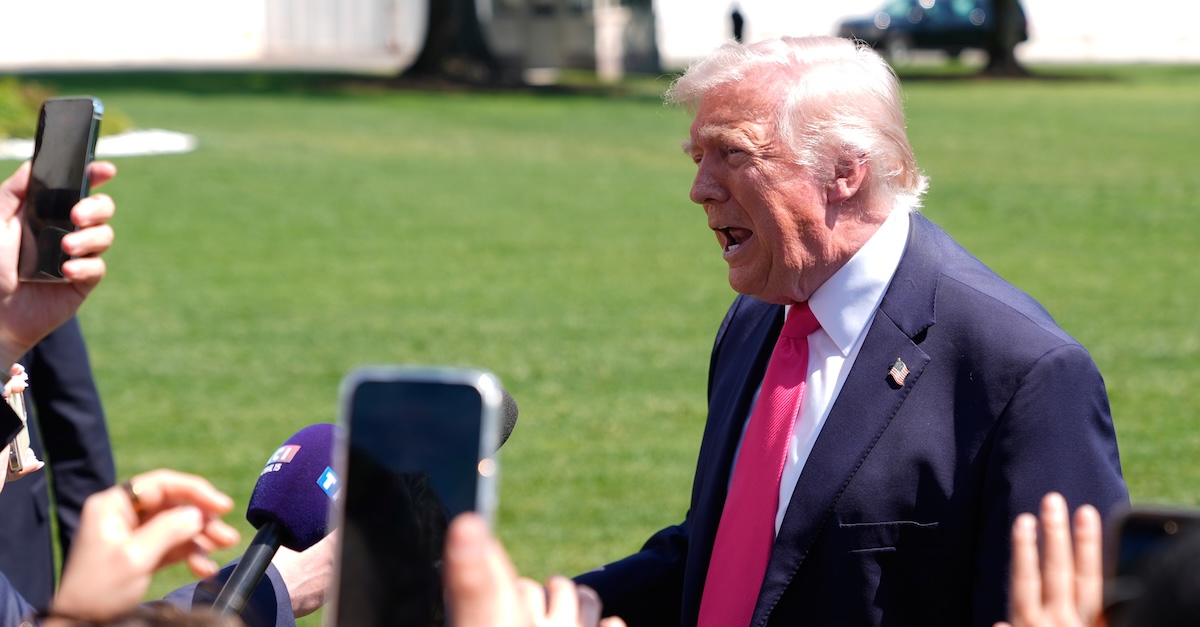
President Donald Trump speaks with reporters before departing on Marine One from the South Lawn of the White House, Thursday, April 16, 2026, in Washington (AP Photo/Manuel Balce Ceneta).
In July 2025, with the Trump administration in damage control mode over its handling of the Jeffrey Epstein files, the Wall Street Journal was set to drop a bombshell. President Donald Trump threatened to sue the Journal for defamation before the article ran, followed through on the threat, and has alleged ever since that a so-called “Birthday Book” letter marking his former friend”s 50th birthday in 2003 is a “fake thing.”
Trump’s case was dealt a “stunning blow,” legally speaking, just months after he filed what seemed to be an urgent complaint against Rupert Murdoch’s newspaper and reporters, as the estate of the late sexual predator handed Congress a letter that matched the one the Journal reported on. And now, the defendants not only seek dismissal, but also ask U.S. District Judge Darrin P. Gayles, a Barack Obama appointee, to force Trump to pay up for filing a “meritless” case.
“This lawsuit is ‘without merit’ under Florida’s anti-SLAPP law,” said the motion to dismiss for failure to state a claim.
Strategic Lawsuits Against Public Participation like Trump’s case, the filing went on, must receive a “well warranted” and “mandatory award of the attorneys’ fees and costs” for forcing the Journal to defend itself against “meritless litigation.”
Crucially, the Journal said, the House Oversight Committee’s document dump meant Trump would “never” be able to show the article was “materially false” — let alone published with actual malice.
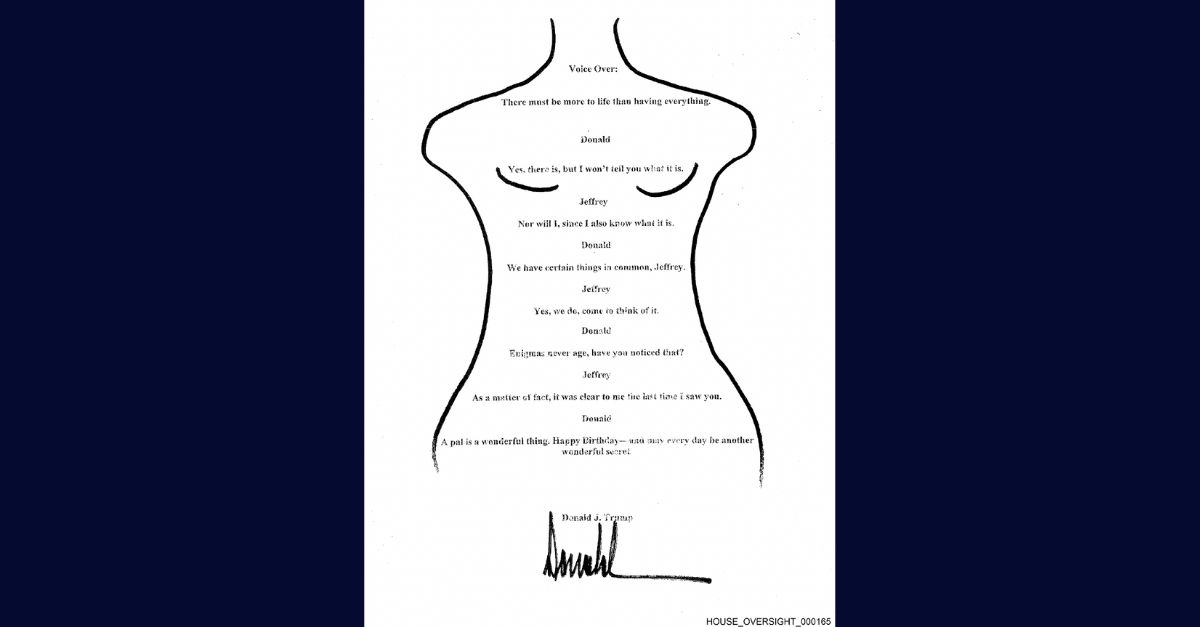
The Jeffrey Epstein birthday book letter, signed by ‘Donald’ (House Oversight Committee via Epstein’s estate)
A WSJ article from September on the estate materials was bylined by Khadeeja Safdar and Joe Palazzolo, the same reporters Trump sued. The opening line of the story declared that Congress had “a letter with President Trump’s signature” on it “that he has said doesn’t exist.”
On Wednesday, the defendants said the development should put an end to the case because it “negates—rather than supports—an actual malice finding.”
“[T]he Sept. 8 Article compares the signature in the Birthday Book (which only includes Plaintiff’s first name) with Plaintiff’s signature in other letters (which likewise only include his first name): Plaintiff tellingly does not dispute that resemblance (because he cannot),” the filing says.
If Trump is ultimately forced to pay his opponent’s legal bills for bringing a “meritless” federal case in Florida, it wouldn’t be the first time.
Just one month ago, the 11th U.S. Circuit Court of Appeals declined to disturb the $1 million in sanctions Trump and his lawyers face for filing a “frivolous” RICO lawsuit “without any merit” against Hillary Clinton and a collection of Democrats and entities the president blamed for conspiring to bankroll “an unthinkable plot” to tar the 2016 Trump campaign, cloud his first term through “a sinister link” to Russia, and harm his business interests.
The district judge who tossed the case called Trump “a prolific and sophisticated litigant who is repeatedly using the courts to seek revenge on political adversaries” and “the mastermind of strategic abuse of the judicial process,” who “knew full well the impact of his actions.”


