
Nearly thirty years after rapper Tupac Shakur was fatally shot on a Las Vegas street, the criminal justice system is finally putting someone on trial for his murder. On August 11, 2026, jury selection began in the case against Duane “Keffe D” Davis, a 63-year-old former gang leader accused of orchestrating the September 1996 drive-by shooting that killed one of hip-hop’s most iconic voices. Davis faces a single charge of murder with a deadly weapon, with a gang enhancement that could mean life in prison without parole if convicted.
The trial, expected to last about a month in Clark County District Court before Judge Carli Kierny, marks the culmination of a case that has haunted fans, law enforcement, and the hip-hop community for three decades. What makes this prosecution unusual is that the evidence against Davis comes largely from his own words, spread across a 2019 memoir, television interviews, podcast appearances, and a recorded 2008 police interview. There is no recovered murder weapon, no DNA evidence, and no surviving eyewitnesses from the vehicle that pulled up beside Tupac’s car that night.
Here is what you need to know about the defendant, the victim, the evidence, and why this case has taken three decades to reach a courtroom.
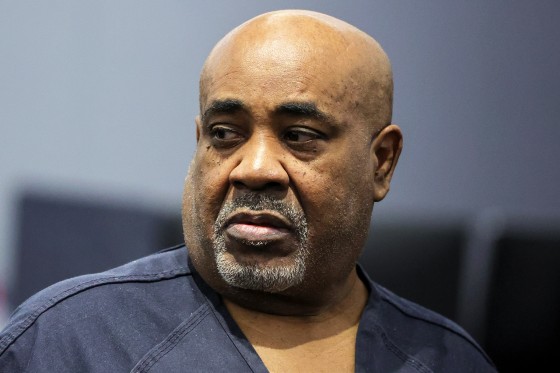
Who Is Duane “Keffe D” Davis?
Duane Keith Davis, known by his street name “Keffe D,” was a prominent figure in the South Side Compton Crips, a Los Angeles-area street gang with deep ties to the 1990s music industry. Born in Compton, California, Davis rose through the gang’s ranks to become what prosecutors have described as a “shot caller,” someone with the authority to direct operations and make critical decisions.
Davis is the uncle of Orlando “Baby Lane” Anderson, the man long suspected of being the person who pulled the trigger during the shooting that killed Tupac. Anderson was never charged and died in an unrelated gang shooting in Compton in May 1998 at the age of 23.
The man who prosecutors say orchestrated the 1996 killing of rap icon Tupac Shakur went on trial Monday, almost 30 years after the fatal drive-by shooting in Las Vegas.
Duane “Keffe D” Davis, 63, faces a single count of murder with a deadly weapon with the intent to promote,… pic.twitter.com/qNCyp9OMjp
— CBS News (@CBSNews) August 11, 2026
The Book That Became Evidence
In 2019, Davis co-authored a memoir titled “Compton Street Legend,” which offered a detailed, first-person account of his life in the South Side Compton Crips and his version of events on the night Tupac Shakur was killed. In the book, Davis described obtaining a firearm, getting into a white Cadillac with three other men, and driving around Las Vegas looking for Tupac and Death Row Records CEO Marion “Suge” Knight.
According to the book, when they found Tupac’s car, Davis claimed he passed a Glock handgun to the backseat, from where the shots were fired. A Las Vegas Metropolitan Police detective who had been assigned to the cold case reportedly read excerpts from the book to a Clark County grand jury in 2023, which ultimately issued an indictment.
Prosecutors have described the book as generally consistent with provable facts, despite containing what they called inaccuracies and “at least one substantial lie.” For instance, Davis wrote that he was wearing a “Ray Luca Crime Story suit” the night of the shooting, and prosecutors found a Polaroid photograph confirming he did own and wear that suit.
The 2008 Police Interview
Before writing his book, Davis sat down with federal and local law enforcement investigators in 2008 as part of a joint task force that was looking into both federal drug trafficking charges and the 1997 murder of Christopher “Biggie Smalls” Wallace. During that recorded session, Davis provided detailed statements about the night Tupac was shot.
Davis signed what is known as a proffer agreement before the interview, a standard legal tool that typically offers limited protections on how statements can be used. His defense attorneys have argued that this agreement amounted to immunity, meaning his statements should not be admissible in a murder trial. However, Judge Kierny ruled in late July 2026 that the recording is admissible, finding that Davis had not presented sufficient evidence of an enforceable immunity deal with Nevada authorities.
Prosecutors have also argued that any expectation of confidentiality was undermined by Davis himself when he went on to discuss the same information publicly in his book, on the BET documentary series “Death Row Chronicles,” and in multiple interviews.
What Happened: The Night of September 7, 1996
The Mike Tyson Fight
On the evening of September 7, 1996, Tupac Shakur and Suge Knight attended the Mike Tyson vs. Bruce Seldon heavyweight championship bout at the MGM Grand Garden Arena in Las Vegas. Tyson won by first-round knockout.
The MGM Grand Lobby Altercation
As Tupac, Knight, and their entourage left the arena through the hotel lobby, one of Knight’s associates pointed out Orlando Anderson, identifying him as a member of the South Side Compton Crips who had been involved in a robbery of a Death Row Records employee named Trevon “Tre” Lane at a Lakewood, California, mall earlier that summer. A Death Row medallion had reportedly been stolen during that incident.
Tupac and several members of his group attacked Anderson in the MGM Grand lobby. The assault was captured on the hotel’s surveillance cameras and would become one of the most widely circulated pieces of video in hip-hop history. This confrontation, according to prosecutors, set the chain of events in motion that led to Tupac’s death just hours later.
The Drive-By Shooting
Later that evening, Tupac and Knight left the hotel in a black BMW 750, with Knight driving and Tupac in the passenger seat. They were heading to Club 662, a nightclub operated by Knight, traveling eastbound on Flamingo Road near the Las Vegas Strip.
At approximately 11:15 p.m., a white Cadillac pulled up alongside the BMW at a red light near the intersection of Flamingo Road and Koval Lane. According to prosecutors and Davis’s own prior statements, four men were inside the Cadillac: Davis in the front passenger seat, his nephew Orlando Anderson, and two other South Side Compton Crips members, Deandrae “Freaky” Smith and Terry “Bubble Up” Brown.
At least 13 rounds were fired into the BMW. Tupac was struck four times, twice in the chest, once in the arm, and once in the thigh. Knight suffered a minor wound from a bullet fragment. Despite his injuries, Knight made a U-turn and drove the BMW in the direction of medical help. Tupac was rushed to University Medical Center’s trauma unit.
Tupac’s Death
Tupac Shakur spent six days in the hospital, heavily sedated and placed on life support before being put into a medically induced coma. He died on September 13, 1996, at the age of 25.
Timeline: From the 1996 Murder to the 2026 Trial
July 1996: Orlando Anderson and South Side Crips members attempt to rob Trevon Lane, a Death Row Records associate, at a Lakewood, California, mall. A Death Row medallion is reportedly stolen.
September 7, 1996: Tupac and his entourage attack Anderson in the MGM Grand lobby after the Tyson fight. Hours later, Tupac is shot in a drive-by on Flamingo Road. Suge Knight is also wounded.
September 13, 1996: Tupac Shakur dies at University Medical Center in Las Vegas.
November 1996: Yafeu “Yaki Kadafi” Fula, a member of Tupac’s entourage who was in the car behind the BMW and may have witnessed the shooting, is fatally shot in New Jersey.
May 29, 1998: Orlando Anderson, the suspected shooter, is killed in an unrelated gang shooting at a car wash in Compton, California, at age 23.
2008: Duane “Keffe D” Davis provides a detailed recorded statement to a joint federal-local task force investigating the Notorious B.I.G.’s murder and drug trafficking. He signs a proffer agreement before the interview.
2011: Former LAPD detective Greg Kading publishes “Murder Rap,” which includes portions of Davis’ 2008 interview and implicates Sean “Diddy” Combs in ordering a hit on Tupac and Knight. Combs has consistently denied involvement.
2018: The Las Vegas Metropolitan Police Department formally reopens the Tupac cold case, assigning Detective Clifford Mogg to the investigation.
2019: Davis co-authors his memoir, “Compton Street Legend,” offering his account of the shooting.
July 17, 2023: Las Vegas police search a residence in Henderson, Nevada, belonging to Paula Clemons, Davis’ wife.
September 29, 2023: A Clark County grand jury indicts Davis on one count of murder with a deadly weapon. He is arrested at his Henderson home and held without bail. He pleads not guilty.
2024: Davis’ multiple attempts to have charges dismissed on grounds of immunity, delay, and lack of evidence are denied by Judge Kierny. He is found guilty of fighting another inmate while in Clark County Detention Center. He changes legal teams.
February 2025: Trial is delayed from its initial March 2025 date after defense attorneys argue new evidence, including testimony from a private investigator, could prove Davis was not in Las Vegas the night of the murder.
November 2025: Trial date is reset to August 10, 2026, due to the large volume of discovery materials.
December 2025: Netflix releases “Sean Combs: The Reckoning,” a four-part docuseries featuring clips from Davis’ 2008 police interview.
April 2026: Tupac Shakur’s estate files a wrongful death civil lawsuit against Davis and unnamed co-conspirators, citing grand jury transcripts and the Netflix documentary as revealing a broader conspiracy.
July 2026: Judge Kierny rules Davis’ 2008 recorded interview admissible and rejects all remaining defense motions, including the immunity claim and a motion to suppress evidence from the search of his home.
August 10-11, 2026: Jury selection begins for Davis’ murder trial, expected to last approximately four weeks.
Also Read | Billy Strings Wife Ally Dale and Son River Roy Apostol Revealed
The Prosecution’s Case
Building a Case on the Defendant’s Own Words
The prosecution faces a challenge unusual in murder cases: there is no recovered murder weapon, no DNA linking Davis to the scene, no getaway vehicle, and no surveillance footage of the shooting itself. Instead, the case rests heavily on statements Davis made voluntarily over more than a decade.
Chief Deputy District Attorney Mark DiGiacomo and the prosecution team plan to use Davis’ own memoir, his 2008 recorded police interview, and his public statements across documentaries and podcasts as the backbone of their case. They argue that Davis was the “shot caller” who orchestrated the retaliation killing and provided the .40-caliber Glock used in the shooting.
Witnesses
Prosecutors expect to call between 35 and 45 witnesses, though not all may testify. The witness list includes:
- Leonard Jefferson, a California resident who pulled up next to the BMW that night and took a photograph that became the last known image of Tupac alive
- Denvonta Lee, a person affiliated with the South Side Crips
- Former Las Vegas Mayor Oscar Goodman
- Members of Tupac Shakur’s family, including stepbrother Maurice “Mopreme” Shakur
- Former associates of both Tupac and Davis from the Death Row Records and Bad Boy Records circles
The Cadillac’s Occupants
All four men allegedly in the white Cadillac that night are now either dead or on trial. Orlando Anderson, the suspected shooter, was killed in 1998. Deandrae “Freaky” Smith and Terry “Bubble Up” Brown have also died. Davis is the sole surviving occupant.
The Defense Strategy
Davis’ legal team, which has changed multiple times since his arrest, is led by attorneys Michael Sanft and Robert Draksovich. Their strategy centers on discrediting Davis’ own prior statements.
Contradicting His Own Book
The defense has argued that Davis fabricated or exaggerated much of what he wrote in “Compton Street Legend” and said in interviews to sell books and gain notoriety. In his first jailhouse interview after the arrest, Davis told ABC News that he is “innocent” and that he “ain’t killed nobody,” adding that he made prior statements to make money.
Davis also told police during his arrest, captured on body-camera footage: “I ain’t worried about it. I didn’t do [anything].”
The Immunity Argument
The defense’s most aggressive legal argument has been that Davis’ 2008 statements were made under a proffer agreement that amounted to immunity, and therefore cannot be used against him. Attorney Carl Arnold argued that Davis “cooperated with law enforcement over the course of more than a decade, relying on repeated assurances that his statements would not be used against him.”
Judge Kierny rejected this argument, ruling there was no evidence of an enforceable immunity agreement with Nevada authorities. Arnold then took the appeal to the Nevada Supreme Court, arguing Kierny had overstepped her authority. That appeal did not prevent the trial from going forward.
The Missing Physical Evidence
The defense has emphasized that no physical evidence ties Davis to the murder. The .40-caliber Glock was never recovered. The white Cadillac was never found. Retired Las Vegas detective Clifford Mogg testified to the grand jury that investigators were never able to identify who rented the car or determine where it came from.
The Sean “Diddy” Combs Connection
The trial exists within a broader context that includes allegations against Sean “Diddy” Combs, the founder of Bad Boy Records and a central figure in the 1990s East Coast-West Coast hip-hop rivalry.
During his 2008 police interview, Davis claimed that Combs offered him $1 million to kill both Tupac and Suge Knight. According to Davis’s account, Combs told him, “Man, I want to get rid of them dudes,” to which Davis allegedly responded that his crew could handle it quickly.
These allegations gained renewed public attention with the December 2025 release of “Sean Combs: The Reckoning” on Netflix, a four-part docuseries produced by Curtis “50 Cent” Jackson. The documentary featured clips of Davis’ 2008 interview and included testimony from former Bad Boy Records employees alleging connections between Combs and the Crips gang.
Combs has repeatedly denied any involvement in Tupac’s death. A spokesperson for Combs, who is currently serving a prison sentence after being convicted on separate charges, called the Netflix documentary “a shameful hit piece.”
In April 2026, Tupac Shakur’s estate filed a wrongful death civil lawsuit against Davis and unnamed “John Doe” defendants, citing the Netflix documentary and newly available grand jury transcripts as revealing evidence of a broader conspiracy. The lawsuit does not directly name Combs as a defendant but focuses significantly on his alleged role.
Why This Case Took 30 Years
Several factors explain the nearly three-decade gap between the murder and the trial.
Uncooperative Witnesses and Gang Culture
In the immediate aftermath of the shooting, witnesses were reluctant to speak with police. Suge Knight, who was driving the BMW, told investigators three days after the shooting that he “heard something, but saw nothing.” The code of silence that surrounded both the Bloods and Crips made information gathering extraordinarily difficult.
Death of Key Witnesses and Suspects
Orlando Anderson, the primary suspect as the triggerman, was killed in 1998 before any charges could be filed. The other two alleged occupants of the Cadillac, Deandrae Smith and Terry Brown, also died. Yafeu Fula, a potential eyewitness from Tupac’s entourage, was murdered in New Jersey just weeks after the shooting.
The Immunity Dilemma
By 2009, Las Vegas authorities had Davis’ detailed confessions from the proffer interview. However, there was concern that a judge might rule those statements inadmissible based on the proffer agreement, which would have doomed any prosecution. Authorities chose to wait rather than risk a failed case.
Davis Revived His Own Case
Ironically, it was Davis himself who gave prosecutors the opening they needed. His 2019 memoir repeated and expanded upon the statements he had made under the proffer agreement, but this time without any legal protections. By putting the same information into a commercially published book, Davis undermined his own potential immunity defense and gave investigators a fresh evidentiary path.
Nevada’s Open-Ended Murder Statute
Under Nevada law, murder charges carry no statute of limitations. This allowed prosecutors to file charges in 2023 based on evidence that had been available in various forms for over a decade, once they believed the legal obstacles could be overcome.
What This Trial Means for Tupac’s Legacy
Tupac Shakur remains one of the most influential figures in the history of music. He sold over 75 million records worldwide across 11 albums, including several released after his death. Songs like “Dear Mama,” “Changes,” “California Love,” and “Keep Ya Head Up” are considered pillars of the hip-hop canon. He was inducted into the Rock and Roll Hall of Fame in 2017.
For the Shakur family, the trial represents a chance at closure that has been decades in the making. Tupac’s stepbrother, Maurice “Mopreme” Shakur, told reporters that sitting through the proceedings would be retraumatizing, but that the family is “cautiously optimistic” that justice will finally come.
The trial is also likely to reshape public understanding of one of hip-hop’s most enduring unsolved mysteries. However, even prosecutors have acknowledged that a conviction of Davis may not reveal who actually pulled the trigger, only that Davis organized the attack and supplied the weapon.
Interesting Facts About the Case
- The murder weapon, a .40-caliber Glock 22, has never been recovered.
- The white Cadillac used in the shooting was never found, and investigators could not determine who rented it.
- Davis is the only person ever charged in connection with Tupac’s murder.
- Davis has cycled through three different legal teams since his 2023 arrest.
- While in custody awaiting trial, Davis was convicted of fighting another inmate at the Clark County Detention Center.
- The last known photograph of Tupac alive was taken by Leonard Jefferson, who pulled up alongside the BMW at a stoplight. Jefferson is expected to testify at the trial.
- Prosecutors plan to call up to 45 witnesses, including former Las Vegas Mayor Oscar Goodman.
Frequently Asked Questions
Who is Duane “Keffe D” Davis?
Duane “Keffe D” Davis is a 63-year-old former leader of the South Side Compton Crips street gang. He is the only person ever charged in connection with the 1996 murder of Tupac Shakur and is the uncle of Orlando Anderson, the man long suspected of firing the fatal shots. Davis is charged with one count of murder with a deadly weapon with a gang enhancement.
What evidence do prosecutors have against Keffe D?
The prosecution’s case is primarily built on Davis’ own words: his 2019 memoir “Compton Street Legend,” a recorded 2008 police interview, and numerous public statements in documentaries and interviews. Physical evidence is limited, as the murder weapon and getaway vehicle were never recovered.
Did Keffe D pull the trigger?
No. Prosecutors are not alleging that Davis fired the shots that killed Tupac. Instead, they allege he was the organizer or “shot caller” who directed the attack and provided the gun. The suspected triggerman was Davis’ nephew, Orlando Anderson, who was killed in 1998.
Why did it take 30 years to bring charges?
Multiple factors contributed to the delay: the death of key suspects and witnesses, a code of silence among gang members, concerns about the admissibility of Davis’ 2008 statements due to his proffer agreement, and the lack of physical evidence. Davis’ 2019 memoir, which repeated his prior confessions without legal protections, gave prosecutors a new path forward.
What is the connection between Diddy and Tupac’s murder?
Davis claimed in his 2008 police interview that Sean “Diddy” Combs offered him $1 million to kill Tupac and Suge Knight. These allegations were featured in the 2025 Netflix docuseries “Sean Combs: The Reckoning.” Combs has consistently and emphatically denied any involvement in Shakur’s death.
What sentence does Keffe D face if convicted?
If found guilty of murder with a deadly weapon and the gang enhancement, Davis faces the possibility of life in prison without the possibility of parole.
Who was Orlando Anderson?
Orlando “Baby Lane” Anderson was Davis’ nephew and a member of the South Side Compton Crips. He has long been identified by law enforcement as the most likely person to have fired the shots that killed Tupac. Anderson was beaten by Tupac and associates in the MGM Grand lobby hours before the shooting. He was killed in an unrelated gang confrontation in Compton in May 1998 at the age of 23.
How long is the trial expected to last?
The trial is expected to last approximately four weeks, with prosecutors planning to call between 35 and 45 witnesses.
Also Read | Ben Jones Marriages, Wife Alma Viator and Three Kids Revealed
Last Updated on August 11, 2026 by 247 News Around The World

