
Nearly a year after The Washington Post fired opinion columnist Karen Attiah over social media posts she made following the assassination of conservative activist Charlie Kirk, an independent arbitrator has ruled that the termination was unjustified and ordered the newspaper to reinstate her immediately with full back pay and lost benefits.
The ruling, issued on Thursday, August 21, 2026, by private arbitrator Sarah Miller Espinosa, concluded that the Post “did not have good and sufficient cause” to fire Attiah and “failed to establish the grievant engaged in gross misconduct.” The decision represents a significant victory for Attiah, who spent 11 years at the newspaper and was, at the time of her dismissal, the only Black full-time member of the Post’s opinion desk.
Here is a full account of what Attiah posted, how the Post responded, who Karen Attiah is, the broader context of the case, and what the arbitration ruling means for journalism and newsroom labor protections.
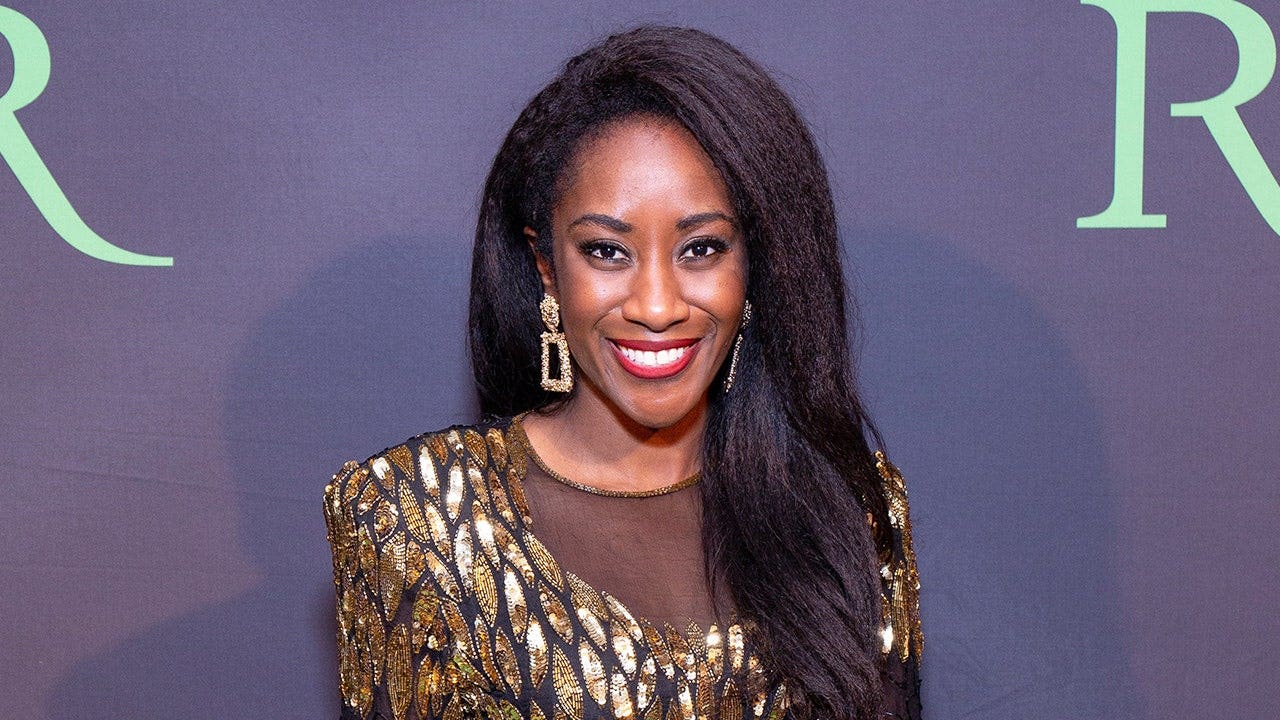
What Did Karen Attiah Say About Charlie Kirk?
On September 10, 2025, Charlie Kirk, the 31-year-old founder of Turning Point USA and a prominent conservative podcaster and ally of President Trump, was shot and killed during a public debate event at Utah Valley University in Orem, Utah. A sniper positioned on a nearby campus rooftop fired a single shot, killing Kirk approximately 20 minutes after the event began. Tyler Robinson, 23, was later charged with aggravated murder and other counts. He turned himself in the following day.
In the hours after the shooting, Attiah made several posts to her Bluesky account, where she was identified as a Washington Post columnist. The posts addressed themes of political violence, gun culture, race, and what she characterized as performative mourning.
The posts that drew the most attention included:
Post 1: “Refusing to tear my clothes and smear ashes on my face in performative mourning for a white man that espoused violence is … not the same as violence.”
Post 2: “If anything, the rush to coddle violent white men is self-protective — that we know they are not used to feeling vulnerable and mortal — and will react violently out of fear. And we will all suffer.”
Post 3: A paraphrased quote attributed to Kirk: “‘Black women do not have the brain processing power to be taken seriously. You have to go steal a white person’s slot’ — Charlie Kirk.”
The third post referenced remarks Kirk had made on his podcast in 2023 about affirmative action and Black women in professional positions, including comments about Supreme Court Justice Ketanji Brown Jackson. Some critics noted that Attiah’s paraphrasing tightened and sharpened the original language in ways that could be read as a direct quotation rather than a summary.
The Washington Post’s Response: Firing by Email
The Post acted swiftly. On September 11, 2025, one day after Kirk’s killing and within hours of the posts going viral, Attiah received a termination letter by email from Wayne Connell, the Post’s head of human resources.
It’s telling that these fake “journalists” hold on to their fake reasons for why I was fired when they can read the termination letter for themselves.
Nothing to do with quotes.
Y’all lost. The Post Lost.
Give it a rest. Touch grass. https://t.co/iduaGtKdbl pic.twitter.com/Kx21oCu0uO
— Karen Attiah (@KarenAttiah) August 24, 2026
The letter accused Attiah of “gross misconduct” and stated: “Your public comments on social media regarding the death of Charlie Kirk violate the Post’s social media policies, harm the integrity of our organization, and potentially endanger the physical safety of our staff.”
Attiah later said she was fired without a conversation, with no opportunity to explain her posts or provide context before the termination was finalized. She published the termination letter on her Substack and categorically rejected the allegation that her posts endangered colleagues.
On her Substack, Attiah wrote that she had “condemned America’s acceptance of political violence and criticized its ritualized responses — the hollow, cliched calls for ‘thoughts and prayers’ and ‘this is not who we are’ that normalize gun violence and absolve white perpetrators especially, while nothing is done to curb deaths.”
Karen Attiah Files a Formal Grievance
On September 24, 2025, Karen Attiah filed a legal grievance against the Post through the Washington Post Guild, the newspaper’s union. The grievance argued that the Post had violated its labor agreement by terminating Attiah without adequate cause and by preventing her from speaking “truthfully and forcefully about matters of vital public concern.”
The case was referred to binding arbitration, a process available under the collective bargaining agreement between the Post and its Guild.
The Arbitration Ruling
Private arbitrator Sarah Miller Espinosa issued her decision on Thursday, August 21, 2026. The ruling came down firmly in Attiah’s favor on multiple points.
Espinosa found that the Post “did not have good and sufficient cause” to fire Attiah and that it “violated” the labor agreement between the newspaper and the Guild. The central conclusion stated: “The Washington Post failed to establish the grievant engaged in gross misconduct.”
The arbitrator also specifically addressed the Post’s claim that Attiah’s posts had put staff at risk. The ruling described this justification as “wholly rejected,” noting that holding Attiah accountable for threats of violence made by third-party bad actors in response to her posts was not a legitimate basis for termination.
The ruling further stated that the posts themselves did not disparage anyone.
Espinosa ordered the Post to reinstate Attiah to her position and award her full back pay and lost benefits dating to her September 2025 dismissal, representing approximately 11 months of compensation.
A Washington Post spokesperson responded to the ruling by saying, “We respect the arbitration process and decline to comment further.”
Also Read: Serayah Ends Joey Badass Engagement: Full Love Story and Infidelity Claims
Karen Attiah’s Reaction
Attiah announced the ruling publicly on both X and Bluesky on August 24, 2026. “The Washington Post fired me last year for speaking the truth after Charlie Kirk’s killing. I fought back. I’m happy to announce: I won my case against the Washington Post,” she wrote. “They have been ordered to reinstate me immediately.”
In a statement reported by The New York Times, Attiah said: “This decision confirms what we’ve said from the start: I was doing my job as an opinion writer, and this was wrongful termination. After spending over a decade of my career at the Post as an editor and an opinion columnist focusing on race, gender and global human rights, I’m relieved to finally have that record set straight.”
She added that she hoped the ruling “sends a message to journalists” that their rights are protected under union agreements and that newsrooms cannot fire opinion writers for offering opinions on matters of public significance.
Who Is Karen Attiah?
Karen Attiah was born on August 12, 1986, in northeastern Texas. She grew up in DeSoto, Texas, in a family with deep West African roots. Her mother is of Nigerian and Ghanaian heritage, and her father is Ghanaian.
Attiah earned a Bachelor of Arts in communication studies from Northwestern University and later obtained a Master’s in International Affairs from Columbia University’s School of International and Public Affairs (SIPA).
Early Career
Before joining the Post, Attiah worked as a freelance reporter for the Associated Press in Curacao, covering Caribbean news. She also served as a media consultant for the World Bank’s Africa program. These early roles gave her direct experience in international reporting and development communications.
The Washington Post (2014-2025)
Attiah joined The Washington Post in 2014 as a digital producer in the Opinions section. In 2016, she was appointed the founding editor of the newspaper’s Global Opinions section, a platform designed to amplify international voices and perspectives. In 2021, she was elevated from editor to opinions columnist.
Her writing focused on race, gender, culture, human rights, and international affairs. She also hosted TL;DR, a Washington Post video series.
The Jamal Khashoggi Connection
Attiah’s most significant journalistic legacy at the Post is inseparable from her work with Saudi journalist Jamal Khashoggi. She personally recruited Khashoggi to write for the Global Opinions section, serving as his editor during the last year of his life.
On October 2, 2018, Khashoggi entered the Saudi embassy in Istanbul and was never seen again. His murder by Saudi operatives became an international crisis. Two days after his disappearance, Attiah made the decision to leave Khashoggi’s column space blank, publishing only the title “A Missing Voice,” a gesture that resonated worldwide.
Attiah and Post colleague David Ignatius received the 2019 George Polk Award for their reporting surrounding Khashoggi’s assassination. Attiah was also named 2019 Journalist of the Year by the National Association of Black Journalists.
She is the author of the forthcoming book Say Your Word, Then Leave, about Khashoggi’s life and assassination.
In a 2026 interview with Poynter, Attiah reflected on the irony of being fired by the same newspaper that had once promoted her and Khashoggi as symbols of press freedom. “Here I am fighting being silenced and fired by the very same newspaper that gave Jamal a platform in English and sort of paraded us both around as symbols of press freedom,” she said.
Beyond Journalism
Outside of her writing, Attiah is an amateur Muay Thai fighter and boxing enthusiast. She won a silver medal in the 125-132 pound division at the 2021 U.S. Muay Thai Open. She has trained and competed both domestically and internationally.
The Broader Context
Kirk’s Assassination and the Free Speech Fallout
Charlie Kirk’s killing on September 10, 2025, triggered a significant national conversation about political violence and the boundaries of acceptable public commentary. In the days following the shooting, a broader conservative campaign sought professional consequences for individuals whose public remarks about Kirk’s death were deemed disrespectful or inflammatory.
Attiah was one of several journalists and media figures who lost their positions over comments made in the aftermath. The cases collectively served as a flashpoint for debates about the limits of opinion journalism, the role of social media policies in newsrooms, and the line between protected speech and professional misconduct.
Washington Post Turmoil Under Bezos
Attiah’s firing occurred during a particularly turbulent period for the Washington Post. The newspaper had faced massive reader backlash and subscriber losses in late 2024 after owner Jeff Bezos blocked the editorial board from publishing an endorsement of then-presidential nominee Kamala Harris. The decision led to widespread criticism that Bezos was prioritizing business interests over editorial independence.
The Post’s newsroom was already grappling with morale issues, staff reductions, and questions about its editorial direction when Attiah was terminated. Her firing added another layer of controversy, particularly given that she was the last Black full-time columnist on the opinion desk.
The Washington Post Guild’s Role
The Washington Post Guild, the newspaper’s labor union, played a central role in Attiah’s fight. Guild Chair Natalie Vineberg issued a statement supporting the arbitration outcome: “Journalists can’t work at an organization where they must live in fear of being arbitrarily fired for doing their jobs — which, in Karen’s case, was writing her opinion. This decision is a victory for all Guild members who benefit from and fought for the just cause protections in our contract.”
The ruling is being viewed as a significant test case for newsroom unions and labor protections in an era when media companies are increasingly under political pressure regarding the speech of their employees.
The NFL’s Personal Conduct Policy
The NFL has confirmed it will review York’s case under its personal conduct policy. The league’s spokesperson, Brian McCarthy, said in a statement shared with Forbes and ESPN: “We are aware of the matter which will be reviewed under the personal conduct policy.”
Timeline of Key Events
2014: Karen Attiah joins The Washington Post as a digital producer in the Opinions section.
2016: Attiah becomes the founding editor of the Post’s Global Opinions section. She recruits Saudi journalist Jamal Khashoggi as a contributor.
October 2, 2018: Khashoggi enters the Saudi embassy in Istanbul and is murdered. Attiah’s work as his editor and her subsequent coverage bring international attention.
2019: Attiah and David Ignatius receive the George Polk Award. Attiah is named Journalist of the Year by the National Association of Black Journalists.
2021: Attiah is promoted from editor to opinions columnist at the Post.
September 10, 2025: Charlie Kirk is assassinated at Utah Valley University in Orem, Utah. Attiah makes several posts on Bluesky commenting on political violence, race, and Kirk’s past statements about Black women.
September 11, 2025: Attiah receives a termination letter by email from the Post’s human resources department, accusing her of “gross misconduct.” She is fired without a prior conversation.
September 15, 2025: Attiah publishes the termination letter on her Substack and outlines her version of events.
September 24, 2025: Attiah files a formal grievance against the Post through the Washington Post Guild.
August 21, 2026: Arbitrator Sarah Miller Espinosa issues her ruling, finding that the Post lacked sufficient cause to fire Attiah and ordering her reinstatement with full back pay and lost benefits.
August 24, 2026: Attiah announces the ruling on social media. The Post says it “respects the arbitration process.”
What Happens Next?
The arbitration ruling is binding, meaning the Post is legally required to reinstate Attiah and pay the back compensation. Whether Attiah will return to her column and how the Post’s editorial leadership will manage the dynamic of a reinstated columnist whose firing generated national attention remains to be seen.
Attiah has not publicly stated whether she intends to return to the newsroom or negotiate a different arrangement. The ruling, however, establishes a clear legal precedent: her posts fell within the scope of her work as an opinion writer and did not constitute grounds for termination under the newspaper’s labor agreement.
For the broader media industry, the case is being watched as a test of whether newsroom unions can effectively protect journalists from political pressure being channeled through management decisions. The Washington Post Guild’s victory in this arbitration strengthens the position of union-represented journalists across the industry.
FAQ
What did Karen Attiah say about Charlie Kirk?
After Kirk’s assassination on September 10, 2025, Attiah made posts on Bluesky about political violence and race. One post said she was refusing “performative mourning for a white man that espoused violence.” Another commented on “the rush to coddle violent white men.” A third paraphrased a 2023 Kirk quote about Black women.
Why was Karen Attiah fired from the Washington Post?
The Post accused Attiah of “gross misconduct,” stating her social media posts about Kirk’s death violated the newspaper’s social media policies and could endanger staff. She was fired by email on September 11, 2025, one day after Kirk’s killing.
What did the arbitrator rule?
Arbitrator Sarah Miller Espinosa ruled on August 21, 2026, that the Post did not have sufficient cause to fire Attiah and had violated its labor agreement. She ordered Attiah reinstated with full back pay and lost benefits. The arbitrator stated the Post “failed to establish the grievant engaged in gross misconduct.”
Who is Karen Attiah?
Karen Attiah is an American journalist, commentator, and editor born on August 12, 1986, in Texas. She joined the Washington Post in 2014, founded its Global Opinions section in 2016, and was elevated to opinions columnist in 2021. She is best known for her work as editor of the late Saudi journalist Jamal Khashoggi and won the George Polk Award and NABJ Journalist of the Year award in 2019.
What was Charlie Kirk known for?
Charlie Kirk was a conservative activist and podcaster who founded Turning Point USA in 2012. He was a prominent ally of President Trump and made statements about race, gender, and politics that drew both support and criticism. He was assassinated at age 31 on September 10, 2025, during a speaking event at Utah Valley University.
Was Karen Attiah the only Black columnist at the Post?
Yes. At the time of her firing, Attiah was the last Black full-time member of the Washington Post’s opinion desk. This fact featured prominently in the public response to her termination.
What did the Washington Post Guild say?
Guild Chair Natalie Vineberg called the ruling “a victory for all Guild members” and said journalists cannot work at organizations “where they must live in fear of being arbitrarily fired for doing their jobs.”
Is Karen Attiah returning to the Washington Post?
The arbitration ruling orders the Post to reinstate her. Attiah has not publicly stated whether she plans to return to the newsroom or pursue a different arrangement. The ruling is binding.
Also Read: 49ers Owner Jed York Arrest, Danielle Belluomini Divorce and Age Gap Revealed
Last Updated on August 25, 2026 by 247 News Around The World

