
An inquest into the death of three-year-old Noah Woods opened at Suffolk Coroner’s Court this week, where the court heard that the toddler left a village play area through a gap in a fence shortly before he went missing.
Assistant coroner Jyoti Gill described it as a “very sad and tragic death” as she opened and adjourned the hearing, which lasted around six minutes. The proceedings established the basic sequence of events on 15 September 2026 in Brantham, Suffolk, but stopped short of reaching any conclusion on the cause of death, which requires further investigation.
Noah, who lived in the neighbouring village of East Bergholt, was non-verbal, partially deaf, and had been undergoing assessment for autism. His disappearance triggered one of the largest community search operations Suffolk has seen in recent years, drawing approximately 1,300 volunteers alongside emergency services and specialist search organisations.
His body was recovered from a body of water known locally as Decoy Pond the following day.
This is what the inquest heard, the full timeline of events, and the wider questions the case raises about playground boundaries and open water near residential areas.
Also Read: Susan Sarandon Arrests: A 27-Year Timeline of Her Activism
What the Inquest Heard About Noah’s Final Movements
Detective Chief Inspector Matt Connick of Suffolk Police gave evidence to the court setting out the sequence established by CCTV footage and witness accounts.
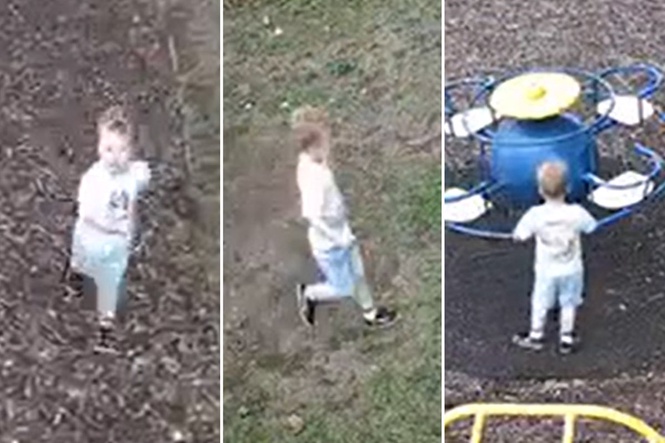
The court heard that Noah had been at the playground in Merriam Close, Brantham, in the care of relatives. DCI Connick told the hearing that Noah “was being looked after by relatives and this was part of a normal routine” that day. CCTV showed him playing in the area with a relative close by.
The sequence the court heard was as follows. Noah left the play area through a gap in the fence. He then walked into an adjoining memorial garden and left that space through an open gate. From there, he ran down a path on a new housing estate in the direction of the nearby pond.
The relative followed closely behind, attempting to catch up with him, and shouted out to Noah. He went out of sight shortly afterwards.
Another man joined the search almost immediately. Police were then called.
The Search Operation and the Recovery
What followed was a rapid escalation from a local search to a full multi-agency operation.
Suffolk Police issued an urgent appeal, making clear that Noah was non-verbal, partially deaf, and under assessment for autism. Those details were significant for the search: a child who cannot call out for help, cannot hear searchers calling his name from a distance, and may not respond to strangers presents a fundamentally different challenge to search teams than a typical missing child case.
The community response was substantial. Roughly 1,300 volunteers joined the search alongside police, fire and rescue services, and specialist search and rescue organisations. Residents of Brantham, East Bergholt, and surrounding villages turned out through the night and into the following day.
On 16 September, police dive teams from the Metropolitan Police entered Decoy Pond, focusing on the area where Noah had last been seen heading.
The court heard that Noah’s body was found approximately five metres from the edge of the pond, within submerged tree roots, at a depth of 1.8 metres.
Suffolk Police stated that the death is being treated as unexplained but not suspicious.
A Complete Timeline of Events
| Date | Event |
|---|---|
| 15 September 2026 | Noah visits the playground at Merriam Close, Brantham, with relatives as part of a normal routine |
| 15 September 2026 | He leaves the play area through a gap in the fence, crosses a memorial garden, exits through an open gate, and runs down a path towards Decoy Pond |
| 15 September 2026 | A relative follows and calls out to him; he goes out of sight; another man joins the search; police are called |
| 15–16 September 2026 | Multi-agency search launched; approximately 1,300 community volunteers join emergency services |
| 16 September 2026 | Metropolitan Police dive teams enter Decoy Pond; Noah’s body is recovered five metres from the edge at a depth of 1.8 metres, among submerged tree roots |
| Following days | Post-mortem examination carried out at Addenbrooke’s Hospital, Cambridge |
| 20 September 2026 | Everton and Ipswich Town players wear black armbands in tribute during their Premier League fixture |
| September 2026 | Community fundraiser for the family passes £100,000 |
| 24 September 2026 | Inquest opened and adjourned at Suffolk Coroner’s Court, Ipswich |
Why the Inquest Was Adjourned Without a Conclusion
The hearing this week was an opening, not a conclusion. Under the coronial system in England and Wales, an inquest is formally opened shortly after a death is reported to the coroner, primarily to establish identity and record the basic circumstances. It is then adjourned while investigations continue.
The court was told that a post-mortem examination was carried out at Addenbrooke’s Hospital in Cambridge, but that it “requires further investigation” before a final conclusion on the cause of death can be reached.
Assistant coroner Jyoti Gill opened the hearing by addressing the family directly: “I would like to express my deepest condolences to Noah’s family and friends and all those affected by Noah’s death.”
She closed it with: “The inquest is adjourned to a date to be fixed in due course. Once again, my deepest condolences.”
No date has been set for the resumed hearing. When it takes place, the coroner will be expected to determine the medical cause of death and record a conclusion on how Noah came to die.
What an opened and adjourned inquest does and does not do:
| Stage | Purpose |
|---|---|
| Opening hearing | Confirms identity, records basic circumstances, allows the death to be registered |
| Adjournment | Permits police, pathology, and any other investigations to be completed |
| Resumed hearing | Establishes medical cause of death and records a formal conclusion |
| Possible outcome | A coroner may also issue a Prevention of Future Deaths report if they identify a risk of similar deaths |
That final point is relevant here. Where a coroner believes action should be taken to prevent future deaths, they have a statutory duty to write to the organisation or authority capable of taking that action. Whether such a report is issued in this case will depend on what the resumed inquest establishes.
The Family’s Tributes and the Community Response
Noah’s father, Rhys Woods, paid tribute to his son in a message shared through a local community Facebook group. He described Noah as the “sweetest and most innocent little boy, with nothing but love to give,” and added: “We are going to miss him so very much.”
BREAKING: The family of Noah Woods have released a statement describing him as a ‘happy, cheeky, playful three-year-old boy who loved to laugh, loved to giggle and who brought joy wherever he went.’
An inquest into Noah’s death opened today at Suffolk Coroner’s Court. pic.twitter.com/ptesy7bnlZ
— Sky News (@SkyNews) September 25, 2026
He also spoke about his son’s development, noting that Noah “was saying new words all the time and had only just started finding and using his little voice.”
Noah’s mother, Charlie, shared a message following the inquest hearing. “If there is one thing we could ask of people, it is to hold their children a little tighter, cherish every moment, and never take those precious memories for granted,” she said.
The family has publicly thanked the community and emergency services for what they described as immense compassion during the search.
The response extended well beyond Suffolk. Everton and Ipswich Town players wore black armbands during their Premier League fixture as a mark of respect. A fundraiser established for the family has raised more than £100,000.
What This Case Highlights About Playground Boundary Safety
The detail that has drawn the most public attention from the inquest is the gap in the fence. It is worth setting out what current guidance says about play area boundaries, because it is the question many parents are now asking.
In the UK, playground safety is governed principally by BS EN 1176, the European standard for playground equipment and surfacing, which is adopted as a British Standard. It sets out requirements for equipment, impact-absorbing surfaces, and inspection regimes.
Critically, BS EN 1176 focuses primarily on the equipment itself rather than on site boundaries. There is no blanket legal requirement in the UK for a public playground to be fenced at all. Where fencing exists, decisions about its specification are generally made by the local authority or parish council responsible for the site, informed by a risk assessment.
Guidance from the Royal Society for the Prevention of Accidents and from Play England has long emphasised that boundary treatment should be proportionate to the specific hazards adjacent to a site. The standard risk factors that push towards secure, self-closing-gate fencing include:
- Proximity to a road, particularly one with fast-moving traffic
- Proximity to open water such as ponds, rivers, canals, or drainage features
- Steep gradients, drops, or unstable ground nearby
- Use of the site by very young children or children with additional needs
Where a play area sits near open water, the presence of a secure and well-maintained boundary carries significantly more weight in a risk assessment than it would on a site surrounded only by open grassland.
Routine inspection regimes recommended for public play areas:
| Inspection Type | Frequency | Typical Scope |
|---|---|---|
| Routine visual inspection | Weekly or more often in heavy-use sites | Litter, obvious damage, vandalism, visible gaps |
| Operational inspection | Every one to three months | Equipment wear, stability, boundary integrity |
| Annual main inspection | Yearly, by an independent qualified inspector | Full assessment against BS EN 1176, including site context and boundaries |
Boundary fencing and gates fall within the scope of operational and annual inspections, but visible gaps are the kind of defect a weekly visual check exists to catch.
It is important to state plainly that the inquest has not made any finding about the condition, ownership, maintenance, or adequacy of the fence at Merriam Close. The court heard only that Noah left through a gap in it. Any assessment of responsibility or of whether the boundary met an appropriate standard is a matter for the resumed inquest and any investigation that accompanies it.
Water Safety Near Residential Areas
The second environmental factor in this case is the presence of Decoy Pond within running distance of the play area, reached via a path on a new housing estate.
Open water in and around residential developments is a recognised risk area in UK child safety work. Ponds, balancing ponds, attenuation basins, drainage ditches, and flooded former quarries are common features on and near modern housing estates, often installed for sustainable drainage purposes.
Key risk characteristics of these water bodies, which differ from swimming pools or supervised leisure water:
- Edges are often unstable or concealed by vegetation, making the transition from bank to water sudden rather than gradual
- Depth increases sharply, with little shallow margin
- Submerged obstructions such as tree roots and debris are common and can trap a person
- Cold water shock can incapacitate even a strong swimmer within seconds, and affects small bodies faster
- There is rarely any supervision or rescue equipment present
RoSPA guidance on inland water safety recommends that developments incorporating water features assess public access, consider fencing or natural barriers where the water is close to areas used by children, and provide clear signage and rescue equipment where appropriate.
For families, the practical guidance centres on treating any open water near a play area as a live hazard rather than background scenery, and on maintaining line of sight with very young children in any outdoor space where a boundary could be crossed.
Additional Considerations for Children Who Are Non-Verbal or Autistic
Noah was non-verbal, partially deaf, and undergoing assessment for autism. These details matter for understanding both the search and the broader safety conversation, and they are relevant to a significant number of families.
Wandering, sometimes called elopement, is a recognised and well-documented behaviour among autistic children. Research published in the United States by the Interactive Autism Network found that roughly half of autistic children between the ages of four and ten had attempted to wander from a safe environment at least once, a rate substantially higher than among their non-autistic siblings.
Water holds a particular and well-documented attraction for many autistic children, which is why drowning is consistently identified as a leading cause of death following wandering incidents in this group.
The National Autistic Society and comparable organisations provide guidance for families. Commonly recommended measures include:
- Identifying and securing exit points at home and assessing boundary security in regularly visited outdoor spaces
- Carrying identification, such as a wristband or card, particularly for children who cannot communicate verbally
- Making local emergency services aware of a child’s needs in advance, so that a search can be calibrated correctly from the first minute
- Prioritising water familiarity and swimming lessons adapted to the child’s communication needs
- Informing neighbours and nearby residents, who are often the first to spot a child who has wandered
None of this shifts responsibility onto families, and it should not be read that way. Noah was with relatives, in a play area, during what the court was told was a normal routine. The point is that environmental design and emergency preparedness carry particular weight where children with these needs use a space.
Frequently Asked Questions
What happened to Noah Woods?
Noah Woods, aged three, went missing on 15 September 2026 after visiting a playground at Merriam Close in Brantham, Suffolk, with relatives. The inquest heard he left the play area through a gap in a fence, crossed a memorial garden, exited through an open gate, and ran towards a nearby pond. His body was recovered from Decoy Pond the following day.
What did the Noah Woods inquest hear?
Suffolk Coroner’s Court heard evidence from Detective Chief Inspector Matt Connick of Suffolk Police describing Noah’s movements as captured on CCTV, the pursuit by a relative, the search operation, and the recovery of his body. Assistant coroner Jyoti Gill opened and adjourned the hearing, which lasted around six minutes.
Where was Noah Woods found?
His body was recovered by Metropolitan Police dive teams on 16 September 2026 from Decoy Pond, approximately five metres from the edge of the water, within submerged tree roots, at a depth of 1.8 metres.
Is Noah Woods’ death being treated as suspicious?
No. Suffolk Police have said the death is being treated as unexplained but not suspicious. The coroner described it as a very sad and tragic death.
Why was no cause of death given at the inquest?
A post-mortem examination was carried out at Addenbrooke’s Hospital in Cambridge, but the court was told it “requires further investigation” before a final conclusion on the cause of death can be reached. This is why the inquest was adjourned.
When will the Noah Woods inquest resume?
No date has been set. The assistant coroner adjourned the inquest “to a date to be fixed in due course.”
How many people took part in the search?
Approximately 1,300 community volunteers joined the search alongside police, emergency services, and specialist search organisations during the roughly 24-hour operation.
Also Read: Caroline Nielson’s Equestrian Career and Austin Wells Engagement
Last Updated on September 25, 2026 by 247 News Around The World

