
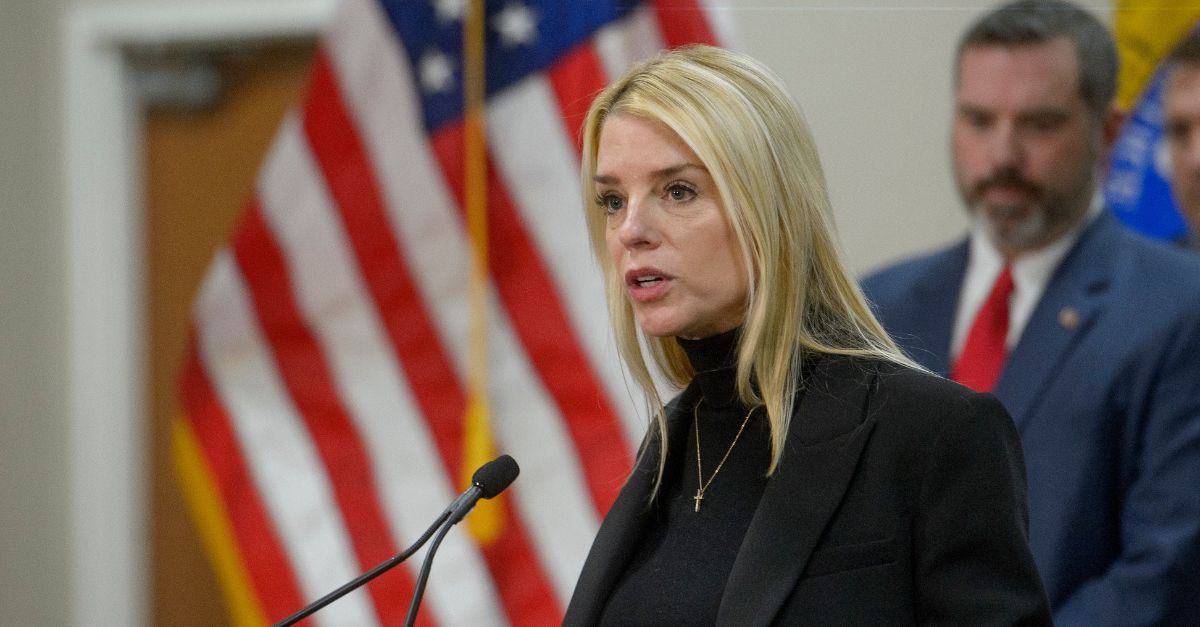
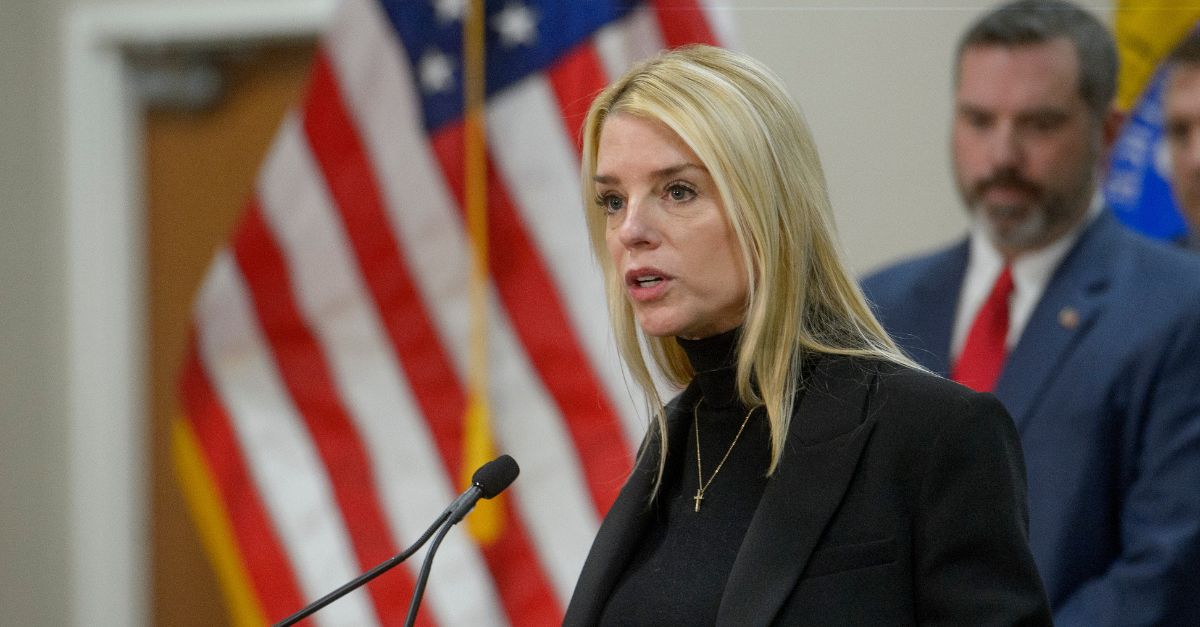
Attorney General Pam Bondi speaks about an MS-13 gang leader who was arrested in an operation by the Virginia Homeland Security Task Force, during a news conference at the Manassas FBI Field Office, Thursday, March 27, 2025, in Manassas, Va. (AP Photo/Rod Lamkey, Jr.)
The Department of Justice (DOJ) has sued six states in an attempt to force them to share information about millions of voters, in the latest push from the Trump administration to secure voter data.
Delaware, Maryland, New Mexico, Rhode Island, Vermont, and Washington are the subjects of the DOJ”s new lawsuits, which demand statewide voter registration lists (SVRL) from each. The lists would contain voters’ full names, residential addresses, and driver’s license numbers or the last four digits of their Social Security numbers.
Love true crime? Sign up for our newsletter, The Law&Crime Docket, to get the latest real-life crime stories delivered right to your inbox.
“Accurate voter rolls are the cornerstone of fair and free elections, and too many states have fallen into a pattern of noncompliance with basic voter roll maintenance,” Attorney General Pam Bondi said in a statement announcing the lawsuits. “The Department of Justice will continue filing proactive election integrity litigation until states comply with basic election safeguards.”
President Donald Trump and his allies have made “election integrity” a key part of their rhetoric dating back to his first administration. This past March, the president tried to require voters to provide documentary proof of their citizenship on their federal voter registration form, a request later shot down by a federal judge.
In September, the administration sued Maine and Oregon to try to compel them to share their voter registration lists. California, Michigan, Minnesota, New York, New Hampshire, and Pennsylvania have also been the target of the current White House’s quest for more voter data.
But privacy groups and many leaders of the states consider the requests and subsequent lawsuits to be a drastic overreach indicative of the administration actually trying to do the very thing it professes to want to eradicate.
“Trump’s DOJ is using its immense federal power to try to intimidate us into turning over protected voter data and changing our voting processes to fit President Trump’s whims,” Maine Secretary of State Shenna Bellows blasted in a September statement responding to her state being sued. “We’re not backing down because we know our hardworking state and local election officials run excellent elections here.”
Oregon Secretary of State Tobias Read called the lawsuits an attempt by Trump “to use the DOJ to go after his political opponents and undermine our elections.” The Democratic National Committee (DNC) added in an Oregon amicus brief that the lawsuit was a backdoor effort to build a “national voter file.”
The Trump administration has contended that the DOJ is charged with enforcing the National Voter Registration Act (NVRA) and the Help America Vote Act (HAVA). “The Attorney General also has the Civil Rights Act of 1960 (CRA) at her disposal to demand the production, inspection, and analysis of the statewide voter registration lists,” the department said in its recent announcement.
The DOJ further holds that the CRA “imposes a ‘sweeping’ obligation on election officials to ‘retain and preserve all records and papers which come into their possession'” relating to voting, and that the courts do not have much sway in examining the DOJ’s reasoning.
“Our federal elections laws ensure every American citizen may vote freely and fairly,” said Assistant Attorney General Harmeet Dhillon of the DOJ’s Civil Rights Division. “States that continue to defy federal voting laws interfere with our mission of ensuring that Americans have accurate voter lists as they go to the polls, that every vote counts equally, and that all voters have confidence in election results. At this Department of Justice, we will not stand for this open defiance of federal civil rights laws.”
As Democracy Docket reports, the lawsuits against the previous eight states have stalled, with no court ordering the states to release the voter information to the Trump administration.


