
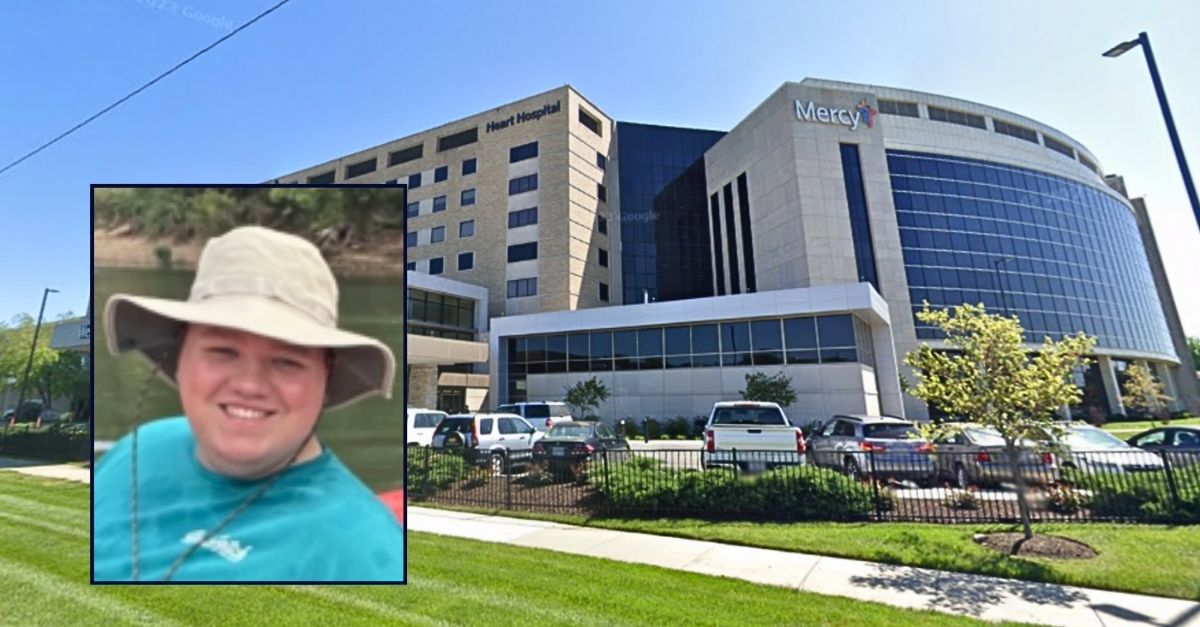
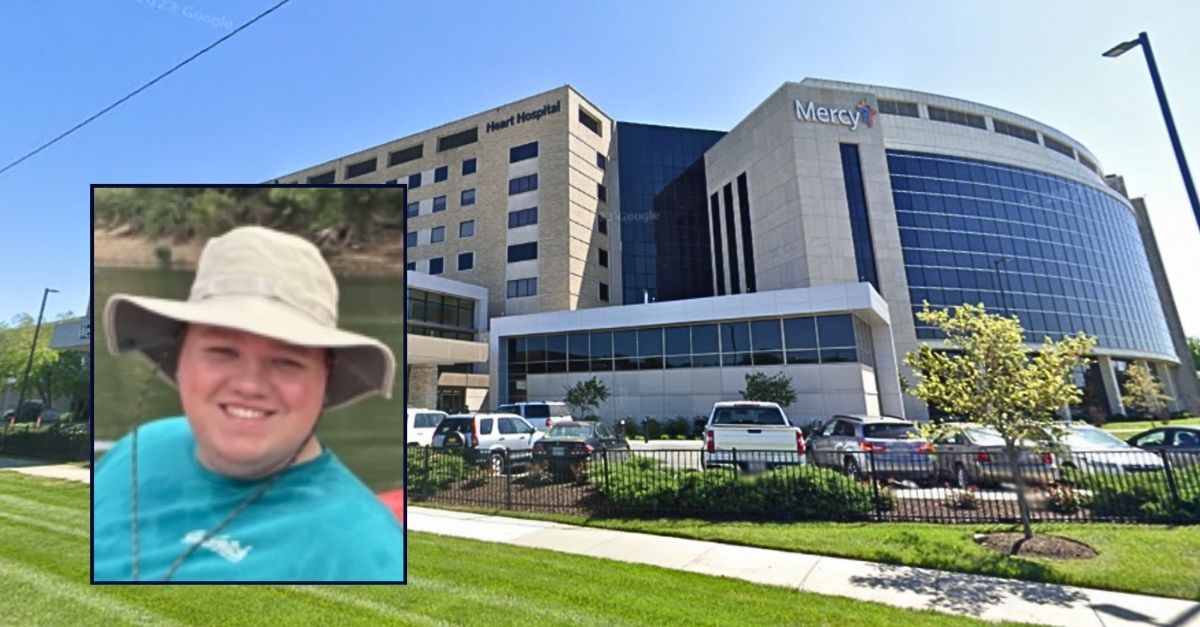
Inset: George Lubrano (Midwest Cremation and Funeral Services). Background: The Missouri hospital accused of downplaying George Lubrano’s deadly diabetic ketoacidosis symptoms as “simply hyperventilating” (Google Maps).
Staff at a Missouri hospital brushed off a diabetic man’s cries that he “could not breathe” and was feeling extremely weak as him “simply hyperventilating” until he died hours later of complications from diabetic ketoacidosis, a lawsuit says.
The parents of George Lubrano, 24, are suing Mercy Hospital in Springfield for not giving him “proper” and “timely” care after he showed up to the emergency room complaining of vomiting, lower back spasms, and a “critically high” blood sugar level over 500, according to their legal petition, which was filed last week in Greene County.
Lubrano entered the emergency room around 1:30 p.m. on Dec. 16, 2024, and died at 6:01 p.m. from “clear symptoms of diabetic ketoacidosis,” which is described by the Mayo Clinic as a “serious” health condition and complication of diabetes in which acids build up in the blood to levels that can be “life-threatening if left untreated” on account of the body not making enough insulin.
With “prompt attention,” however, diabetic ketoacidosis can be treated with “fairly non-invasive measures and reversed within hours,” the legal petition alleges. Symptoms include being short of breath, weak, and tired.
“At approximately 2:43 p.m., [Lubrano] was still in the waiting room and had not been examined by a doctor or moved to a room when he called out to nurses that he could not breathe,” the parents’ petition says. “Records indicate that at this time, a nurse assessed [Lubrano]; she found his lung sounds bilaterally clear, and she attributed the episode to hyperventilation.”
A little under an hour passed, and Lubrano was still in the waiting room and had not been examined by a doctor or moved to a room, according to the petition. He struggled to breathe for a second time around 3:30 p.m. and he was “once again deemed to be simply hyperventilating,” the petition says.
“At approximately 4:30 p.m., [Lubrano] was still in the waiting room and had not been examined by a doctor or moved to a room when he told nursing staff he was feeling weak, and his blood sugar monitor was beeping and not working properly,” the petition explains. “At approximately 4:40 p.m., [Lubrano] was still in the waiting room and had not been examined by a doctor or moved to a room when he reported that his insulin pump had not been working for more than 45 minutes. At this point, [Lubrano] was breathing rapidly, his mouth was dry, and he was having difficulty talking to nursing staff.”
Hospital records obtained by Lubrano’s lawyer allegedly indicated that his blood sugar was “over high” per glucose parameters and documented that he needed to “go back to a room as soon as possible.” Around 5:30 p.m., the young man began struggling with his breathing again and complained of a “very dry mouth,” per the legal petition.
“At approximately 5:35 p.m., [Lubrano] was still unexamined by a doctor but was brought to a treatment room,” the petition says. “[Lubrano’s] condition continued to deteriorate; he started making gurgling sounds, lost his pulse, became unresponsive, went into cardiac arrest, and the nursing staff called a code.”
A doctor “ran the code” and attempted to resuscitate Lubrano “by way of CPR, multiple rounds of IV epinephrine, and an airway intubation that was initially erroneously placed in [Lubrano’s] esophagus rather than his nasopharyngeal airway,” according to his parents.
Lubrano died from “complications” related to diabetic ketoacidosis at 6:01 p.m., his parents’ petition says.
“The standard of care required at the classic clinical signs of advanced diabetic ketoacidosis, including Kussmaul breathing (not hyperventilation), dry mouth (dehydration), and dangerously high blood sugar levels, was for [Lubrano] to be placed on a cardiac monitor immediately and have intravenous access established for fluid resuscitation,” the petition concludes. “Instead, [Lubrano] waited untreated in the waiting room for nearly five hours, despite displaying clear symptoms.”
Lubrano’s parents allege that if “good, safe, and timely medical choices” had been made by Mercy Hospital staff, he would not have suffered the events that led to his death. They have named the hospital and two staffers, a doctor and nurse practitioner who treated Lubrano, as defendants in their lawsuit.
In addition to their legal petition, Lubrano’s parents also filed a letter of merit from a doctor last week who reviewed Lubrano’s medical records in connection with the care he received in the emergency department at Mercy Hospital.
“It is my opinion that Mercy Hospital, through their physicians, assistants, nurses, technicians, and other care providers, failed to use such care as a reasonably prudent and careful health provider would have used under similar circumstances,” the letter says. “Such failure to use such reasonable care directly caused or directly contributed to cause harm and the subsequent death of George Lubrano.”
Mercy Hospital could not be reached for comment Sunday by Law&Crime. A spokesperson provided a statement to the Springfield Daily Citizen on Friday saying, “We extend our heartfelt prayers and condolences for this family’s devastating loss. We have and will continue to work with the family and their counsel to work toward a resolution.”


