
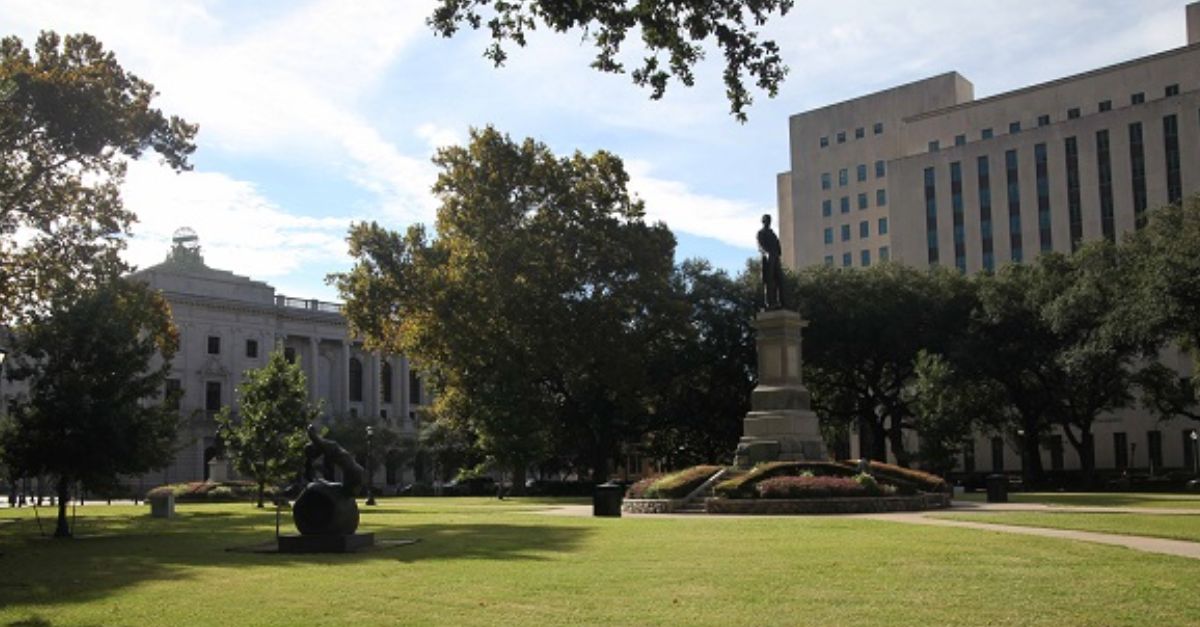
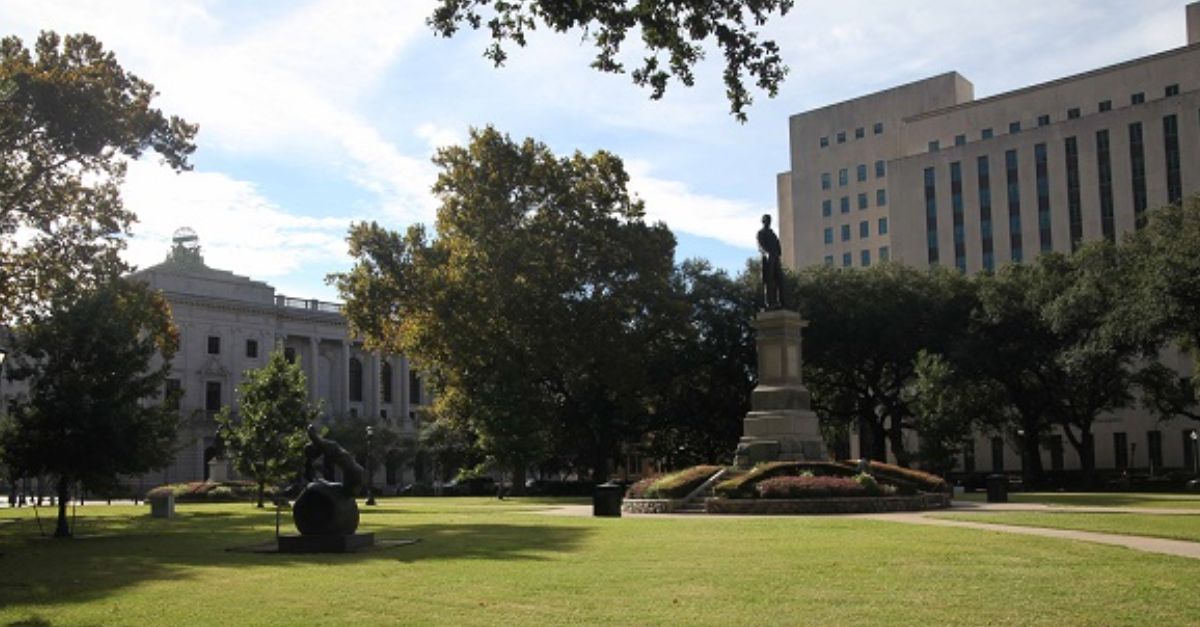
The John Minor Wisdom U.S. Court Building in New Orleans in Lafayette Square North. (U.S. Court of Appeals for the Fifth Circuit).
A Louisiana school district won a decades-in-the-making victory against federal oversight this week as a federal appellate court put an end to a desegregation order in a case dating back to 1965.
On Tuesday, in a 10-page opinion, the U.S. Court of Appeals for the 5th Circuit lifted the order on Concordia Parish School Board, taking note of the case’s lengthy pedigree.
“Few federal cases reach their seventh decade,” the opinion begins. “This one did. Then every remaining party filed the one document that ends a case without a judge’s involvement: a Rule 41(a)(1) dismissal.”
Love true crime? Sign up for our newsletter, The Law&Crime Docket, to get the latest real-life crime stories delivered right to your inbox.
Under the relevant rule of civil procedure, the plaintiff can voluntarily dismiss their own lawsuit. In this case, the plaintiff was the U.S. Department of Justice itself. But, in a politically fraught civil rights case, even voluntary dismissal is not a sure thing.
In the present case, the dismissal came slowly and only with a bit of a fight, the panel notes, since the district court “did not honor” the government’s request to end the segregation order.
“That refusal reaches us in an unusual posture,” Circuit Judge Don R. Willett, a Donald Trump appointee, writes in the opinion.
Ultimately, the appeals court short-circuits jurisdictional concerns to get to the heart of the long-litigated matter and frames the salient issue in the case as “whether a district court may go on adjudicating a case after every remaining party has dismissed it.”
“It may not,” the opinion goes on. “Once the stipulation was filed, the case was over—and nothing the district court did afterward could change that. We therefore dismiss the appeal and grant mandamus.”
Issuing a writ of mandamus — a demand issued by a court for another court, or for a government agency, to do something specific — is rare.
Here, the panel determined the school district qualified for such a “drastic and extraordinary remedy.”
“[T]his case is not about ordinary litigation cost or ordinary delay,” the opinion continues. “It is about power: whether a federal court may keep exercising jurisdiction after the parties have ended the case.”
While the majority opinion largely concerns itself with matters of procedure and the civil rules that outline such procedure, Willett does take the opportunity to briefly discuss the merits of the case in the context of a district court argument about public policy.
From the opinion:
We do not doubt the good faith behind that concern. School-desegregation decrees involve grave constitutional interests and often long institutional histories. But Rule 41…accounts for categories of cases in which dismissal requires court approval…It does not authorize a district court, in a case with no certified class and no remaining private plaintiffs, to override a signed stipulation by all remaining parties because the court believes a further public-interest inquiry would be prudent…
The rule is not hard to find: Unless one of Rule 41’s enumerated exceptions or an applicable federal statute says otherwise, a stipulation signed by all appearing parties dismisses the action without a court order.
“Article III courts are not ‘roving commissions’ charged with pronouncing constitutional questions after the case before them has been dismissed,” the opinion reads at another point. “Federal courts resolve disputes. They do not require parties to continue having them.”
The ruling is a decided victory for the Trump administration and its allies in former areas subject to decrees dating to the Civil Rights era. While the DOJ has long supported maintaining most plans, government officials have pushed for an end to such programs in recent years by framing them as an intrusion on local governance.
“These decades-old consent decrees have long outlived their usefulness, and in this case, all parties agreed it should end,” Louisiana Attorney General Liz Murrill said in a press release announcing the ruling. “The good people of Concordia Parish elected their School Board to govern their schools—not unelected federal judges. Today’s decision puts that authority back where it belongs. I’m grateful the Fifth Circuit agreed.”
The post ‘It is about power’: 5th Circuit allows dismissal of school desegregation case originally filed in 1965 first appeared on Law & Crime.


