
Nearly three decades after rap icon Tupac Shakur was gunned down on the Las Vegas Strip, a Clark County jury delivered the first and only conviction in the case. On Monday, August 31, 2026, jurors found Duane “Keffe D” Davis, 63, guilty of first-degree murder with the use of a deadly weapon for orchestrating the September 7, 1996, drive-by shooting that killed the 25-year-old hip-hop legend. The unanimous verdict came after less than three hours of deliberation, following a trial that stretched nearly two weeks and drew testimony from more than two dozen witnesses.
Davis, a former leader of the South Side Compton Crips, had pleaded not guilty and maintained his innocence throughout the proceedings. But prosecutors built their case largely around Davis’s own words, drawn from police interviews dating back to 2008 and his 2019 co-authored memoir “Compton Street Legend,” in which he described his alleged role as the man who handed over the gun used in the killing. Davis now faces the possibility of life in prison, with sentencing scheduled for October 13, 2026. His defense has indicated plans to appeal.
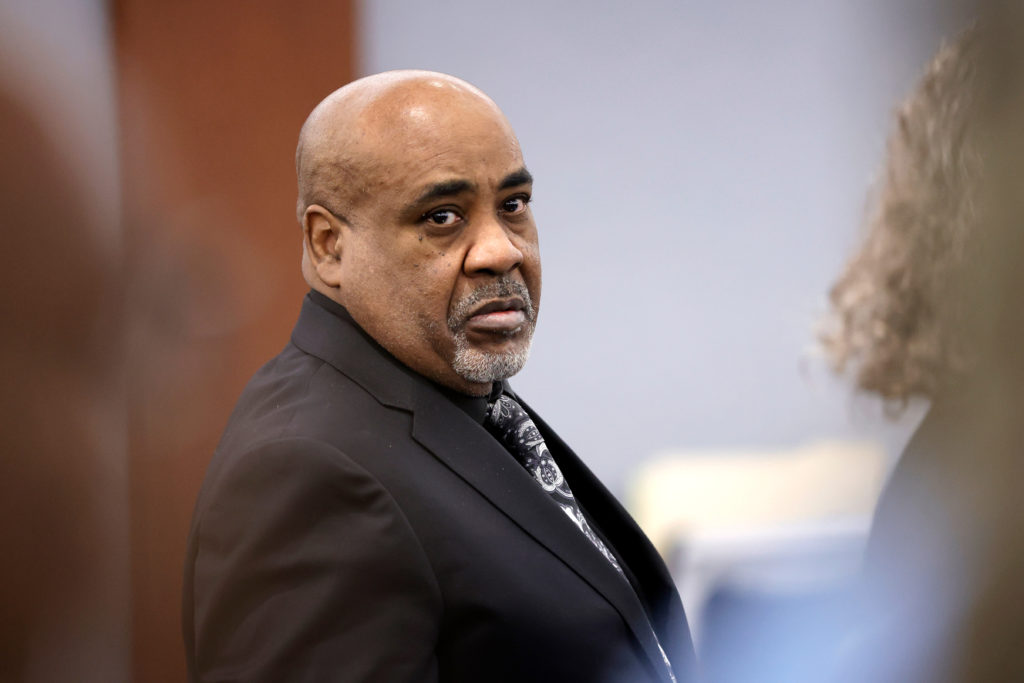
What Happened: The Verdict and the Courtroom Scene
The jury of ten women and six men reached its decision Monday afternoon after closing arguments concluded that morning in a Nevada courtroom. Davis was convicted on one count of murder with a deadly weapon, with prosecutors initially pursuing a gang enhancement that they later announced they would drop due to witness logistics.
🚨 BREAKING: Duane “Keefe D” Davis found guilty in the m*rder of Tupac Shakur https://t.co/MOXP9BRjUT
— TMZ (@TMZ) September 1, 2026
As the verdict was read, members of Tupac Shakur’s family, who had maintained a consistent presence throughout the trial, reacted with visible emotion. Sekyiwa “Set” Shakur, the rapper’s sister, cried and reached back toward supporters seated behind her. Others in attendance embraced and wiped away tears. Davis’s own son reportedly covered his face with his hand upon hearing the decision.
Jurors were polled individually following the reading of the verdict, each affirming their vote to convict. Davis, seated at the defense table with his hands clasped, showed little visible reaction as the polling concluded. District Judge Carli Kierny ordered him held without bond pending his October 13 sentencing hearing, at which he could receive a sentence of life in prison without the possibility of parole.
Background Story: How a Cold Case Finally Broke Open
Tupac Shakur’s murder had remained officially unsolved for nearly 27 years, one of the most notorious cold cases in American music history. Shakur was shot multiple times while riding as a passenger in a car driven by Death Row Records CEO Marion “Suge” Knight, following a boxing match at the MGM Grand on September 7, 1996. He died six days later at the age of 25. No one was ever criminally charged in the years that followed, despite widespread public speculation and numerous journalistic investigations.
The break in the case did not come from new forensic evidence but from Davis’s own choices. Over the years, Davis gave multiple accounts of his alleged involvement, beginning with a 2008 “proffer” interview with a federal task force investigating the unrelated murder of Biggie Smalls. Under the terms of that agreement, Davis could not be prosecuted for information he shared with federal investigators, though Las Vegas authorities were not bound by that same protection.

In 2019, Davis went further, co-authoring the memoir “Compton Street Legend,” which opened with a detailed account of the night of the shooting. According to the book, Davis claimed he obtained a gun and rode in a Cadillac with three other men, including his nephew Orlando “Baby Lane” Anderson, in search of Shakur and Knight after Anderson had been assaulted earlier that night by members of Knight’s entourage in the MGM Grand lobby.
Davis also gave numerous media interviews over the years discussing his purported role, at times seeming to boast about being one of the few living people who knew what happened that night. Those public statements, along with the memoir, ultimately formed the foundation of the prosecution’s case. Las Vegas police raided Davis’s Henderson, Nevada, home on July 17, 2023, recovering a computer, copies of his memoir, magazine issues featuring Shakur, and other documents. He was arrested outside his home on September 28, 2023, and charged with one count of murder with use of a deadly weapon. He pleaded not guilty at his arraignment weeks later and remained in custody without bail for the nearly three years leading up to trial.
Timeline of the Case
September 7, 1996 — Tupac Shakur is shot multiple times while riding in a car driven by Suge Knight near the Las Vegas Strip, following an altercation earlier that night between Knight’s entourage and Orlando “Baby Lane” Anderson at the MGM Grand.
September 13, 1996 — Shakur dies from his injuries at age 25.
2008 — Duane Davis gives a “proffer” interview to a joint federal task force investigating the murder of Notorious B.I.G., describing his alleged involvement in the Shakur shooting.
2009 — Davis reportedly discloses similar details to Las Vegas authorities, who were not party to the earlier federal proffer agreement.
2019 — Davis co-authors and releases the memoir “Compton Street Legend,” detailing his account of the night Shakur was killed.
July 17, 2023 — Las Vegas police raid Davis’s home in Henderson, Nevada, seizing computers, documents, and copies of his memoir.
September 28, 2023 — Davis is arrested outside his home and charged with one count of murder with use of a deadly weapon.
November 2, 2023 — Davis pleads not guilty at his arraignment in Clark County District Court.
2024–2025 — Pretrial proceedings continue, including a separate one-day trial in which Davis is convicted on charges related to a jail fight at the Clark County Detention Center. His defense also files a motion to dismiss the murder charge over delayed prosecution, which is unsuccessful.
March 2025 — Davis gives his first televised interview since his arrest, telling ABC News he is innocent and claims he has an alibi.
August 17, 2026 — Davis’s murder trial begins in Clark County, Nevada.
August 31, 2026 — After nearly two weeks of testimony and less than three hours of deliberation, the jury finds Davis guilty of first-degree murder with a deadly weapon.
October 13, 2026 — Sentencing is scheduled, where Davis faces a possible life sentence.
Why It Matters: A Milestone in Hip-Hop History
The conviction closes, at least partially, one of the most enduring mysteries in American popular culture. Tupac Shakur’s murder has fueled decades of documentaries, books, podcasts, and conspiracy theories, in part because no one had ever been held legally accountable. For many fans and members of the hip-hop community, the guilty verdict represents a rare moment of resolution in a case that has often felt permanently unresolved.
The case also highlights how self-incriminating public statements, made years or even decades after a crime, can eventually become the basis for prosecution. Davis was never accused of firing the fatal shots himself. Prosecutors argued instead that he was the “shot caller” who supplied the firearm to the gunman, believed by investigators to have been his nephew, Orlando Anderson, who died in an unrelated shooting in 1998 and was never charged in Shakur’s case.
The trial also reopened public conversation about the broader East Coast–West Coast rap rivalry of the mid-1990s, a cultural and commercial battle between labels like Death Row Records and Bad Boy Records that is widely believed to have contributed to the deaths of both Shakur and, six months later, Christopher Wallace, known as The Notorious B.I.G. That case remains unsolved to this day.
Industry Reaction
The verdict drew significant attention across the music and entertainment industries, with hip-hop artists, executives, and commentators weighing in on what the conviction means for a case that has shadowed the genre for thirty years.
Throughout the pretrial period and trial itself, tension flared publicly between figures connected to Death Row Records’ history. Suge Knight, who is currently serving a 28-year sentence for an unrelated voluntary manslaughter conviction, made a series of public comments from prison throughout the proceedings, at times disputing witness testimony and accusing other hip-hop figures of hidden involvement in the case. Knight specifically criticized testimony from a witness who described providing informal security at his former Las Vegas nightclub, Club 662, on the night of the shooting.
Clark County prosecutors, led by Chief Deputy District Attorney Marc DiGiacomo, characterized Davis throughout the trial as the “on-ground, on-site commander” who ordered the killing. The defense, led by attorney Michael Sanft, countered that Davis fabricated or exaggerated his involvement over the years for financial gain and public attention, pointing to the absence of physical evidence tying him directly to the crime scene.
Social Media Reaction
News of the guilty verdict spread rapidly across social media platforms within hours of the announcement on August 31, 2026. Reaction ranged from relief and validation among longtime Tupac fans to renewed calls for accountability in the still-unsolved murder of The Notorious B.I.G.
Local Las Vegas outlets captured emotional reactions from supporters gathered outside the courthouse, many of whom had followed the case since Davis’s 2023 arrest. Commentary across platforms frequently referenced the three-decade wait for any form of legal resolution, with many users expressing that the verdict offered a form of closure that once seemed unlikely given how much time had passed since the killing.
The verdict also reignited longstanding online debates about other unresolved threads in the case, including the current whereabouts and involvement of other individuals named in Davis’s own accounts over the years, as well as renewed scrutiny of Suge Knight’s public statements from prison throughout the trial.
A Case Built on Words, Not Forensics
Legal analysts following the trial noted that the prosecution’s strategy was unusual in its heavy reliance on the defendant’s own out-of-court statements rather than physical or forensic evidence. Retired law enforcement testimony presented during the trial confirmed that no cartridge casings or weapons were ever recovered from Suge Knight’s vehicle, and no gun was ever definitively linked to Davis.
Instead, prosecutors built their case around a pattern of consistent statements Davis made over nearly two decades, spanning his 2008 proffer interview, his 2019 memoir, and numerous media interviews in which he described details of the shooting. Legal experts have pointed to this approach as a notable example of how self-published content, including memoirs and interviews given for publicity or financial gain, can ultimately be used as evidence in a criminal prosecution, even years after publication.
The defense’s central argument, that Davis fabricated his account for money and notoriety, is a common strategy in cases relying on a defendant’s own prior statements. However, the jury’s swift deliberation, less than three hours after a nearly two-week trial, suggests that jurors found the consistency of Davis’s account across multiple years and formats more persuasive than the defense’s characterization of it as embellishment.
Interesting Facts About the Case
Duane Davis is the only person ever criminally charged in connection with Tupac Shakur’s murder, despite the shooting occurring nearly 30 years ago.
Davis was also one of the last living eyewitnesses to the shooting, alongside Suge Knight, who was driving the vehicle Shakur was riding in at the time of the attack.
Davis’s memoir, “Compton Street Legend,” was co-written with an author named Yusuf Jah. In later interviews, Davis claimed he never read the finished book and that its content was based only loosely on details he shared about his life.
The alleged motive behind the shooting stemmed from an altercation just hours earlier in the lobby of the MGM Grand, where members of Suge Knight’s entourage assaulted Orlando Anderson, Davis’s nephew, after recognizing him from an earlier, unrelated incident.
Davis was also investigated in connection with the unrelated 1997 murder of The Notorious B.I.G., though he was never charged in that case, which remains unsolved.
During his time in custody awaiting trial, Davis was convicted in a separate, unrelated case for a physical altercation with another inmate at the Clark County Detention Center.
Career Impact: Reframing Tupac’s Legacy and Unfinished Business
For Tupac Shakur’s family and estate, the guilty verdict does not change the scope of his musical legacy but does provide a long-sought sense of legal accountability. Shakur remains one of the most influential and commercially significant artists in hip-hop history, having released four studio albums during his lifetime and several posthumous records that have continued to shape the genre for new generations of listeners.
The verdict is unlikely to alter ongoing licensing, streaming, or catalog management decisions tied to Shakur’s estate, which has operated independently of the criminal case for decades. However, the renewed media attention surrounding the trial has already driven increased interest in Shakur’s catalog and story, a pattern common in high-profile true-crime and cold-case coverage involving deceased public figures.
For Davis, the conviction effectively ends any remaining public narrative benefit he may have drawn from his repeated public statements about the case over the years. What once functioned as a mix of confession, boast, and marketing for his memoir has now been formally used against him in a court of law.
Financial Impact
Tupac Shakur’s estate, managed for years by his mother Afeni Shakur until her death in 2016 and by designated administrators since, is estimated to be worth between $40 million and $100 million in 2026, according to various financial and industry estimates. That wealth stems almost entirely from posthumous activity: seven posthumous studio albums, extensive catalog licensing, merchandise, documentary rights, and streaming royalties. Notably, Shakur died with an estimated net worth of only around $200,000, a reflection of the restrictive recording contract he signed with Death Row Records in exchange for his 1995 bail.
The criminal case itself carries no direct financial impact on the Shakur estate, as the murder trial and any related estate management operate through entirely separate legal channels. However, high-profile true-crime coverage historically correlates with short-term spikes in streaming activity and merchandise interest for the artist involved, a pattern likely to repeat in the weeks following the verdict.
For Davis, the financial calculus is different. His now-completed sentencing process may include restitution considerations, though such rulings vary significantly by jurisdiction and case specifics. Any past earnings from his memoir and media interviews are unlikely to be affected retroactively by the conviction, though his ability to further monetize his connection to the case going forward is now effectively eliminated by his likely lifetime incarceration.
Historical Comparison: Unsolved and Solved Celebrity Murders in Hip-Hop
Duane Davis’s conviction stands out as a rare example of legal resolution in a genre with a long history of unsolved violent deaths among its biggest stars. Here is how the case compares to other prominent examples:
| Case | Year of Death | Status as of 2026 | Key Detail |
|---|---|---|---|
| Tupac Shakur | 1996 | Solved (2026 conviction) | Duane “Keffe D” Davis convicted of first-degree murder |
| The Notorious B.I.G. | 1997 | Unsolved | No arrests made despite decades of investigation |
| Jam Master Jay (Run-DMC) | 2002 | Partially solved | Two men convicted in 2024, more than 20 years after the shooting |
| Big L | 1999 | Unsolved | Case remains open with no charges filed |
| XXXTentacion | 2018 | Solved | Multiple suspects convicted within a few years of the shooting |
The gap between Tupac’s death and Davis’s conviction, nearly 30 years, stands as one of the longest spans between a high-profile hip-hop murder and a criminal conviction in the genre’s history, though it is not unprecedented, as demonstrated by the 2024 convictions in the Jam Master Jay case.
Future Predictions
With sentencing scheduled for October 13, 2026, several developments are likely in the coming weeks and months:
Sentencing outcome: Given the first-degree murder conviction, Davis faces a maximum sentence of life in prison without the possibility of parole. Given his age, 63, and the severity of the conviction, a lengthy or life sentence appears highly probable.
Appeal process: Davis has already indicated through his legal team that he intends to appeal the verdict. Appeals in cases built substantially on prior statements and testimonial evidence, rather than direct forensic evidence, can take years to resolve and may focus on evidentiary rulings made during the trial.
Renewed scrutiny of the Biggie Smalls case: The successful prosecution of Davis, built in large part on his own historical statements, may renew public and law enenforcement interest in re-examining any parallel figures or statements connected to the unsolved murder of The Notorious B.I.G., though no new charges have been announced in that case.
Continued estate and legacy activity: Tupac Shakur’s estate is expected to continue its established pattern of catalog management, licensing, and posthumous releases, independent of the outcome of Davis’s sentencing or any subsequent appeal.
Regardless of the appeal’s outcome, the guilty verdict itself marks a historic milestone, closing, in a legal sense, a case that had defined unresolved hip-hop history for three decades.
Frequently Asked Questions
Who was found guilty of killing Tupac Shakur?
Duane Keith “Keffe D” Davis, 63, was found guilty on August 31, 2026, of first-degree murder with the use of a deadly weapon for orchestrating the 1996 murder of Tupac Shakur. He is the only person ever criminally charged in connection with the case.
Did Duane Davis personally shoot Tupac Shakur?
No. Prosecutors did not accuse Davis of firing the fatal shots. Instead, they argued he was the “shot caller” who supplied the gun to the actual shooter, believed to be his nephew, Orlando “Baby Lane” Anderson, who died in 1998 and was never charged in the case.
What sentence does Duane Davis face?
Davis faces a possible sentence of life in prison without the possibility of parole. His sentencing hearing is scheduled for October 13, 2026, before Judge Carli Kierny.
Why did it take almost 30 years to charge someone in Tupac’s murder?
The case remained unsolved for decades due to a lack of direct forensic evidence and witness cooperation. The break in the case came primarily from Davis’s own public statements over the years, including a 2008 police interview and his 2019 memoir, “Compton Street Legend,” in which he described details of his alleged involvement.
Is Suge Knight connected to Duane Davis’s trial?
Suge Knight was driving the vehicle Tupac Shakur was riding in when the shooting occurred and was injured in the attack. He was not charged in the case and is currently serving an unrelated 28-year sentence for voluntary manslaughter. He made several public comments about the trial from prison during the proceedings.
Has anyone been arrested for the murder of The Notorious B.I.G.?
No. The March 1997 murder of Christopher Wallace, known as The Notorious B.I.G., remains an unsolved case as of 2026, despite decades of investigation and periodic renewed interest tied to developments in the Tupac Shakur case.
Will Duane Davis appeal his conviction?
Yes. Davis has indicated through his legal team that he plans to appeal the guilty verdict. Appeals of this nature can take years to resolve.
Read More: Lionel Richie Health Update: Singer Hospitalized for Dehydration After St. Louis Concert
Last Updated on September 1, 2026 by 247 News Around The World

