
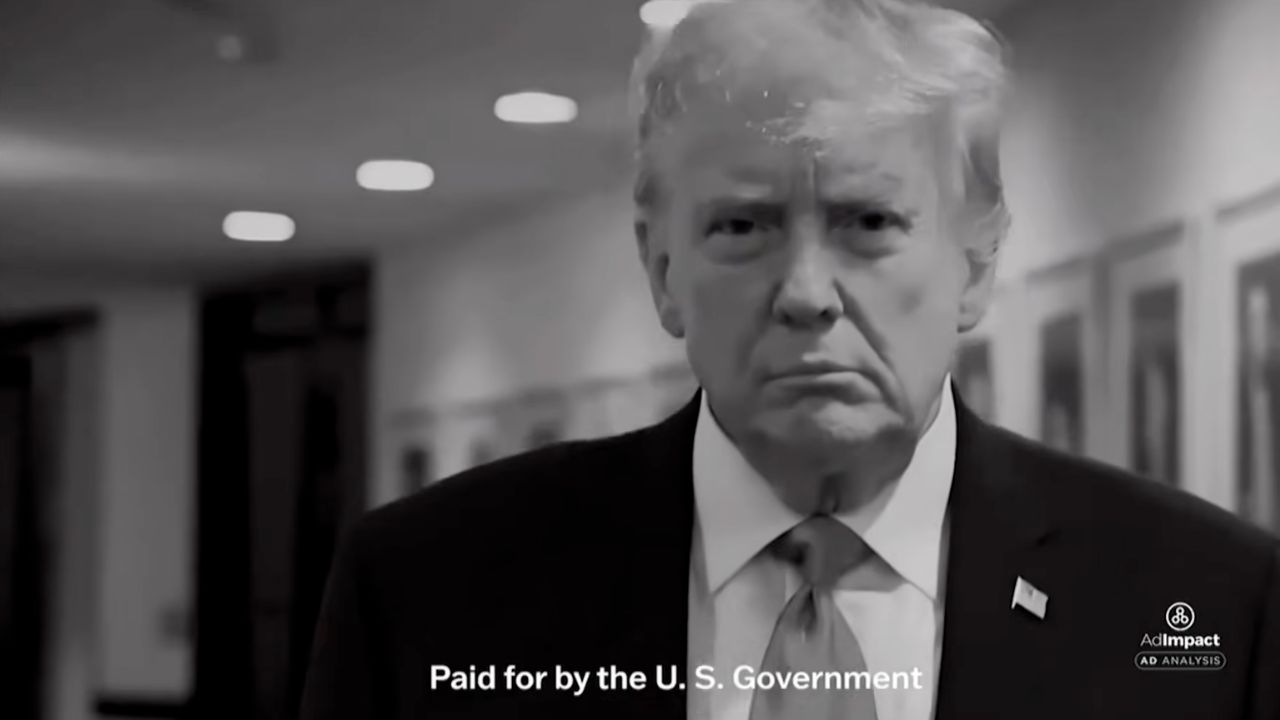
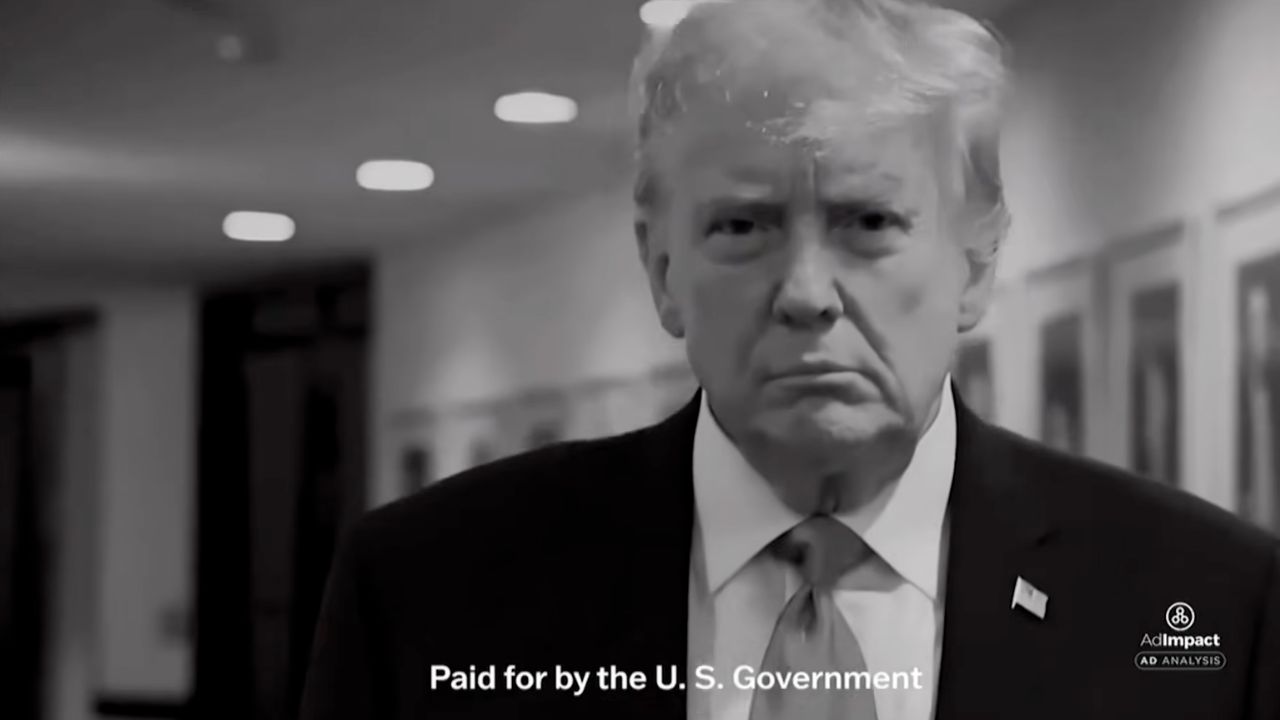
Donald Trump in a 2024 campaign ad repurposed for 2026 (AdImpact/Ad Analysis/U.S. Government).
Attorneys squared off in Washington, D.C., on Thursday to debate emergency relief in a case over President Donald Trump‘s use of taxpayer funds to run self-promoting campaign-style ads.
The session began with U.S. District Judge Loren AliKhan, a Joe Biden appointee, joking about her lack of interest in television.
“My second TV-related TRO in two weeks,” she said, referring to the possibility of entering a temporary restraining order. “As someone who doesn’t watch a lot of TV, I think I’m ill-suited for this.”
Love true crime? Sign up for our newsletter, The Law&Crime Docket, to get the latest real-life crime stories delivered right to your inbox.
The Democratic National Committee (DNC) sued earlier this month after the White House produced and aired the aforementioned ads using funds originally approved for “commemorative efforts and events related to border security.”
“Trump personally directed this illegal activity,” the 31-page complaint reads. “The White House Office crafted the partisan campaign. The Office of Management and Budget shifted $20 million to pay for it. And U.S. Customs and Border Protection (CBP) has carried it out.”
The last ad aired on Oct. 12, the plaintiffs say, but they implored the court not to let the case end just because the backlash appears to have stopped the broadcast part of the publicly subsidized campaign.
On Thursday, an attorney for the DNC said “the ads were still cut inside the White House” and argued, “the use of public funds to create the ads themselves is a violation of the propaganda ban.”
Under longstanding language used in congressional funding bills, appropriations cannot be used for “publicity or propaganda purposes.”
The DNC’s presentation began by airing two separate ads featuring the tagline “paid for by the U.S. government.”
“The ads continued for weeks, including a rebroadcast of one of President Trump’s 2024 campaign ads,” the DNC’s lawyer said.
The plaintiffs also stressed that the government’s purported “voluntary cessation proved not to be credible” because while the last ad aired on Oct. 12, the same ad continues to be featured on the White House website and on government social media feeds.
An attorney for the U.S. Department of Justice said the relevant issue, however, was whether the ads are being broadcast on TV.
“They cannot meet the standard for a TRO because the plaintiff’s alleged harm stems from the airing of the challenged ad,” the DOJ attorney argued. “That is not happening anymore.”
The government lawyer quickly amended her argument to say the last ad aired Oct. 11 or “at the very latest during the early morning hours” the next day. She argued the D.C. court should consider the matter resolved because a Manhattan court already ruled for the plaintiffs in a separate lawsuit brought by Common Cause.
The judge then pressed the DOJ attorney on a “little bit vague” assertion about the post-Oct. 11 airing. The government lawyer said, “I don’t have facts” about what happened after Oct. 11.
“What assurances do I have other than your say so?” AliKhan pressed.
The DOJ attorney replied, “Your Honor, DHS has said in their declaration that we are not making any more purchases under this purchase order, we are enjoined by the Southern District of New York.”
The government lawyer also clarified that online versions of the ads do not bear the “paid for by the U.S. government” tagline — and said third parties have offered to pay to air the ads since litigation began.
On rebuttal, the DNC attorney said there is actually no indication that any third parties have stepped up to pay for any ads.
The plaintiffs’ lawyer also argued that the same or similar events could happen again and stressed that the ads are illegal no matter where they air or who pays for them.
“They continue to cut the ads and it continues to be illegal for them to cut ads,” the DNC’s lawyer told the court. “With respect to the White House office, the harm persists.”
The plaintiffs’ lawyer said there was little to no value in the Trump administration professing, “We don’t plan to do it again.”
The DNC argues the government cannot produce political ads, distribute them in any form on TV or online, send them to third parties, or use staff time to make them.
“We believe this is all ultra vires,” the DNC’s lawyer added, referring to an action beyond the power of a given agency or official.
The DOJ dismissed that argument.
“An ultra vires claim is a Hail Mary pass that almost never succeeds,” the government lawyer said.
AliKhan suggested she did not understand the football reference, prompting the DOJ attorney to rephrase.
The judge also pressed the government on why it conceded issues in the Manhattan case but not here. When the DOJ lawyer offered no opinion on how the cases relate, the judge needled the attorney, “You profess to believe in the unitary executive theory.”
There was little levity on the plaintiffs’ side.
“They are unwilling to say these ads are not publicity and propaganda,” the DNC lawyer said. “Over 80% of Americans oppose these ads because they know the ads are publicity and propaganda.”
The plaintiffs’ attorney then reiterated the argument that the controversy was still live. He said the government choosing to cut off the ads when the litigation was filed “cannot moot this case…otherwise this would be whack-a-mole.”
“This case was fully ripe and irreparable harm was ongoing at the time the DNC filed the case and sought emergency relief,” he said. “We shouldn’t allow the government to avoid liability by turning off a spigot just to turn one on again.”
The DOJ closed by reiterating the declarations and the Manhattan ruling that already governs the ads, arguing that such a landscape means that on the question of irreparable harm, “no such finding would be possible.”
The court adjourned with AliKhan saying she would take all of the arguments under advisement and issue a ruling soon.
The post ‘I don’t have facts’: DOJ attorney demurs in 2nd case over Trump’s decision to use taxpayer money for campaign-style ads as judge jokes about ‘unitary executive theory’ first appeared on Law & Crime.


