
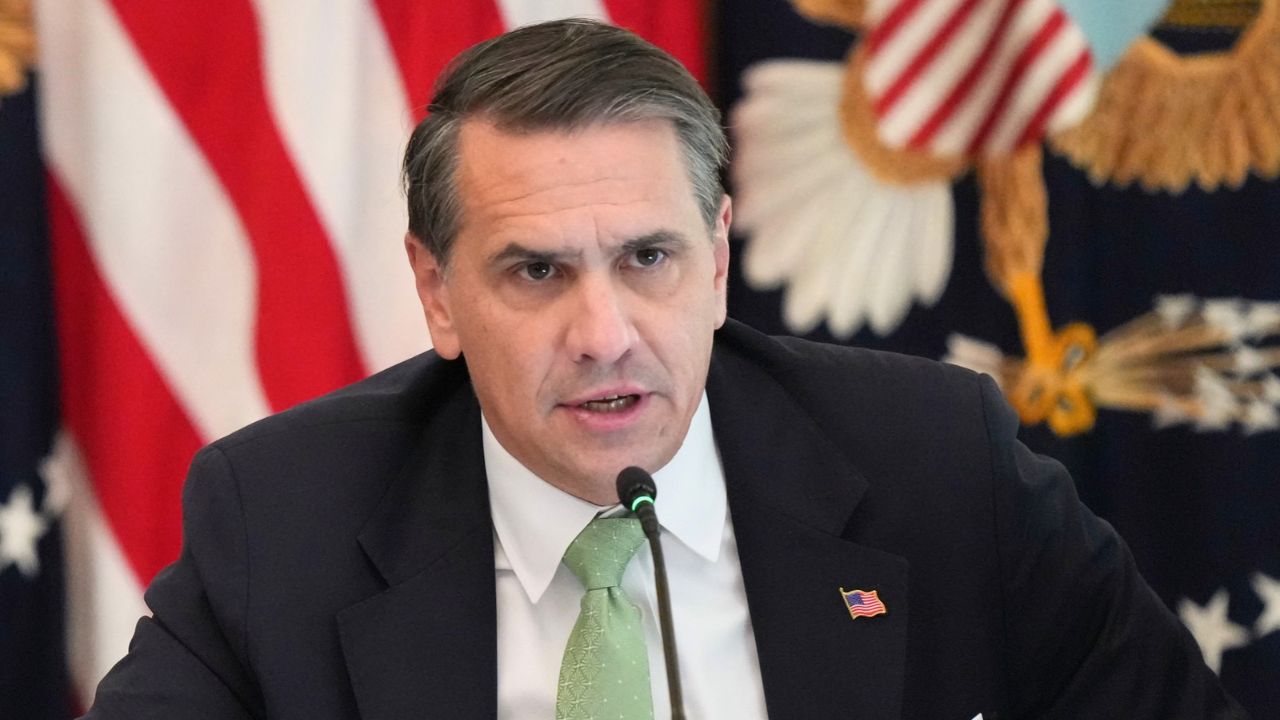
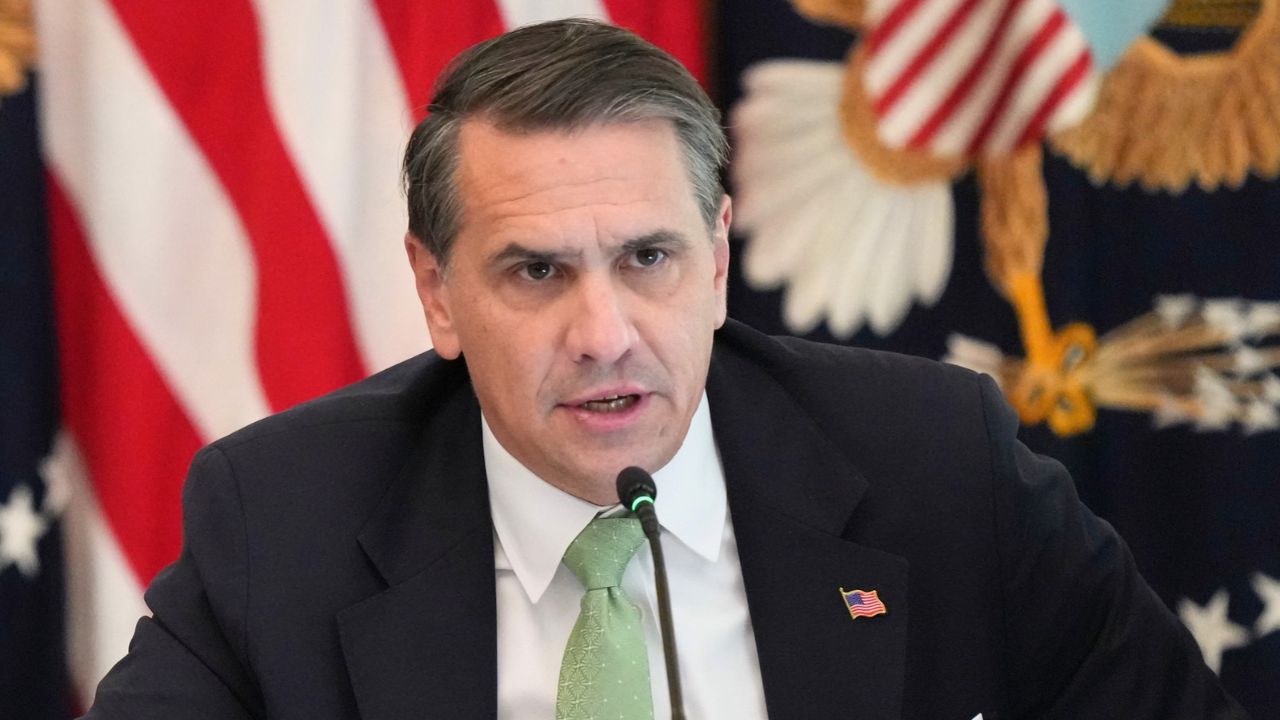
Attorney General Todd Blanche speaks at a roundtable event in the East Room of the White House, Wednesday, Oct. 21, 2026, in Washington. (AP Photo/Alex Brandon).
A subpoena from alleged victims of Jeffrey Epstein demanding that U.S. Attorney General Todd Blanche testify about the federal investigations into the disgraced financier should be thrown out, the Trump administration says.
In a nine-page motion filed on Monday, the U.S. Department of Justice (DOJ) suggests a subpoena of Blanche could “threaten the separation of powers, chill agency decision making, discourage public service, and create potential for abuse or harassment.” As such, the DOJ maintains that the subpoena should be quashed and that the U.S. District Court for the Southern District of Florida should grant a protective order barring Blanche from giving the sought-after testimony.
Love true crime? Sign up for our newsletter, The Law&Crime Docket, to get the latest real-life crime stories delivered right to your inbox.
In September 2024, a group of women alleging they were abused by Epstein filed a complaint against the U.S. government under the Federal Tort Claims Act (FTCA), which allows a party to sue the federal government for potential financial compensation. The women, referred to collectively as Jane Does, contended that agencies such as the FBI and DOJ — under different administrations in the preceding decades — did not properly handle or investigate their claims of abuse.
The Trump administration’s requests to have the case dismissed were denied by the court, and in September, U.S. District Judge David S. Leibowitz, a Joe Biden appointee, granted a 90-day window for the parties to exchange limited facts and documents, including over how FBI rules and protocols concerning child sexual abuse tips are handled. The group of women subsequently subpoenaed Blanche on Oct. 9 to show them “any and all documents pertaining to Jeffrey Epstein,” and they set a deposition date for Wednesday.
The DOJ called the subpoena “extraordinary.”
“The deposition of a sitting cabinet official in civil litigation is almost always improper, save for specific circumstances Plaintiffs come nowhere close to establishing,” the motion to quash the deposition subpoena reads. “Here, the Plaintiffs have taken a narrow jurisdictional grant of discovery and attempted to convert it into an excuse to probe the highest-ranking official of the Department of Justice – something the limited discovery order did not permit.”
The Trump administration maintains there is no evidence that Blanche has any “unique personal knowledge” about what is being requested. The DOJ concedes that, yes, the attorney general “is ultimately responsible for all policies and procedures” that the FBI adopts. “But that cannot possibly be a basis to compel his deposition on those topics.”
Furthermore, the Jane Does have not shown that options other than deposing Blanche would fail to yield their desired answers, such as through “tailored document requests, or other written discovery,” according to the DOJ. Because those alternatives have not been exhausted, “[p]ermitting this deposition of the sitting Attorney General in this case would be an extraordinary order without precedent in modern history.”
The DOJ also suggests that the court allowing a high-level executive branch official to be deposed would threaten the balance between the executive and judicial branches of government.
The Trump administration and former Attorney General Pam Bondi were harshly criticized as more details into the investigation of Epstein came out. People across the political spectrum have called out the administration over its handling of records dubbed the “Epstein files.”
The post Trump admin asks court to toss out subpoena ordering Todd Blanche to testify about investigations into Jeffrey Epstein first appeared on Law & Crime.


