
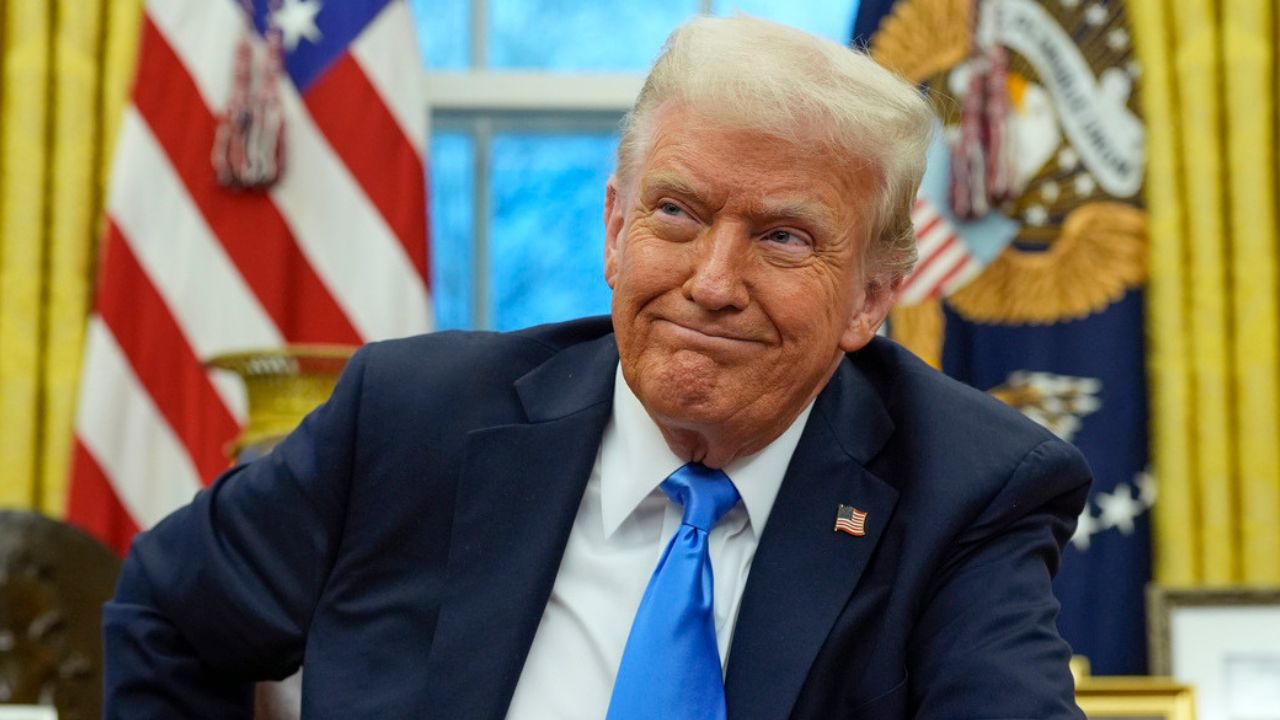
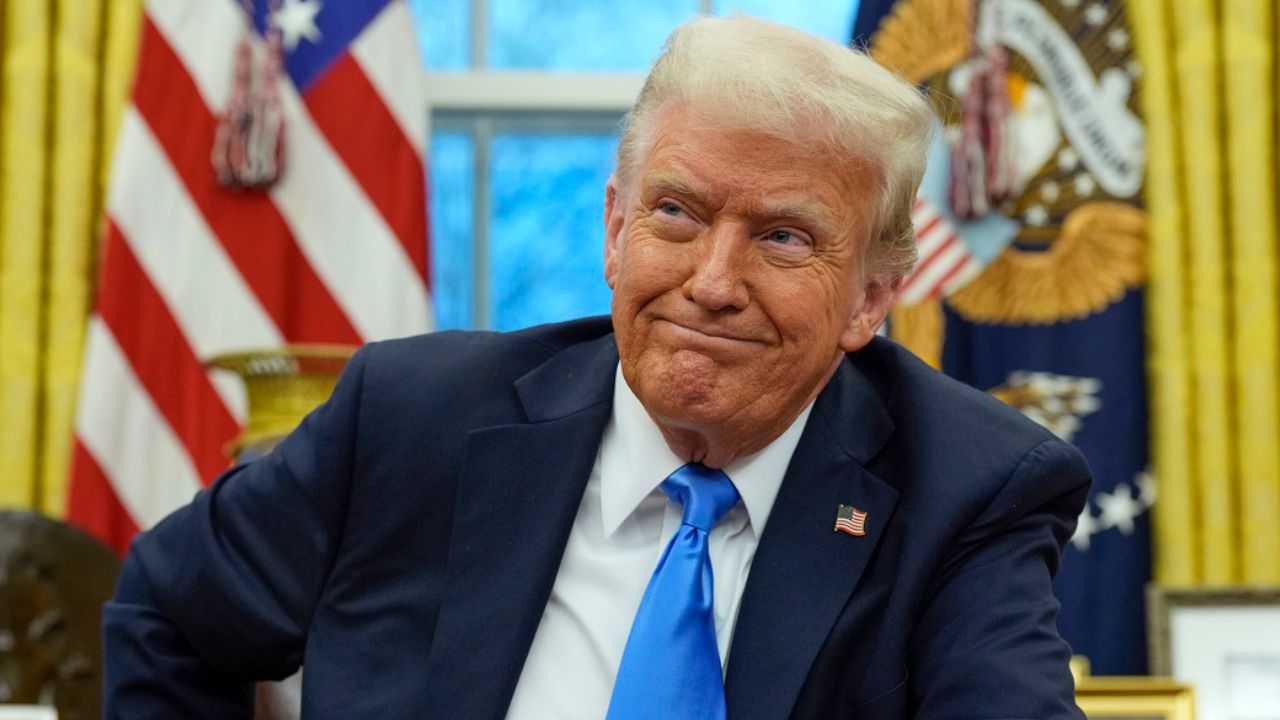
President Donald Trump speaks with reporters in the Oval Office at the White House, Tuesday, Feb. 11, 2025, in Washington, D.C. (Photo/Alex Brandon).
The U.S. Department of Justice has announced that it will effectively decline to defend the government in most courtroom disputes over immigration detention in the Seattle area and far beyond.
In a two-page letter sent to Chief U.S. District Judge David S. Estudillo, a Joe Biden appointee, Acting U.S. Attorney Charles Floyd said there will be “many” cases in which the DOJ “will no longer assume responsibility for providing a defense on behalf of the respondents.”
The prosecutor cited an “influx” of habeas corpus petitions that have hit the district’s dockets since the summer, after the court itself instituted a specialized case management process “intended to significantly improve and streamline the resolution” of such cases.
Love true crime? Sign up for our newsletter, The Law&Crime Docket, to get the latest real-life crime stories delivered right to your inbox.
The DOJ says the court’s standing order has “for the most part” helped with the “expedition and uniformity with which habeas petitions are being resolved to the benefit of petitioners, the government, and the public interest.” But, Floyd also notes, the number of such petitions has “continued to increase.”
“The large volumes of petitions that are being filed, often copying from other petitions, has severely impacted the government’s ability to respond to specific petitions that require appreciable attorney time from the [U.S. Attorney’s Office] to investigate and analyze,” the letter reads.
With such time spent on immigration cases, the DOJ says, its workforce in the district has had its “ability to respond to other civil litigation” filed against the government “negatively impacted.”
The letter at first suggests, then outright admits, that the government’s time spent on habeas cases in the district is “in response to the Court’s issuance of a standard scheduling order.”
“Entering AUSA appearances in each and every such case, however, often initiates protracted litigation and consumes substantial AUSA time, even after the petitioner has been released or received a bond hearing,” the letter goes on.
The DOJ elaborates on what such legal work entails:
For example, AUSAs often are required to prepare and file status reports, supplemental briefing, and oppose [Equal Access to Justice Act] motions. More recently, we have all too frequently been required to respond to motions and orders to show cause stemming from what are often technical violations of the scheduling order.
Now, the Trump administration says, its cupboard is basically bare in the Western District of Washington.
“The [U.S. Attorney’s Office] unfortunately does not have the available resources, at this juncture, to continue entering [DOJ] appearances in every one of the dozens of §2241 Immigration Petitions filed each week,” the letter continues. “Thus, going forward, in order to conserve resources, there will be many habeas cases in which the [U.S. Attorney’s Office] will no longer assume responsibility for providing a defense on behalf of the respondents.”
Specifically, the letter notes that the respondents who have been represented by the DOJ to this point have included Immigration and Customs Enforcement (ICE) as an agency, as well as ICE agents “named in their official capacity.” Going forward, the agency and its agents will not always have such counsel.
But the letter offers two caveats to this stand-down decision.
“[F]or the time being, the [U.S. Attorney’s Office] will continue to review Petitions and scheduling orders as they are filed, will transmit the scheduling order to the appropriate persons at ICE, and will enter [DOJ] appearances and file returns to specific petitions as the [U.S. Attorney’s Office] determines appropriate,” Floyd explains.
In other words, the DOJ will take a hands-off approach but will still monitor the habeas caseload in the district. At least for a while.
The DOJ also says it “reserves the right to enter an appearance in a case on behalf of the government at any time as it deems necessary,” according to Floyd’s letter.
Time is key going forward.
“However, henceforth, if the [U.S. Attorney’s Office] does not file a Notice of Appearance in a case within seven court days of the issuance of a standard scheduling order, the Court may assume that the [DOJ] will not be filing a response to the Petition and the Court may proceed to rule on the merits of the petition based on the papers filed by the petitioner,” the letter goes on.
Floyd makes clear that this means the government “will take no responsibility for facilitating the processing of the case through the District Court nor will it serve as a conduit for communications between the District Court and respondents in the case.”
“This change is expected to significantly streamline and expedite the resolution of most habeas petitions, providing more discretion to the District Court,” the letter concludes.
The geographical reach of the decision encompasses the Western District of Washington, where more than 6 million people live. Other major cities in the region include Tacoma and Olympia. The letter was sent in late October.
The post ‘Will take no responsibility’: Trump admin will stand down in ‘many’ immigration habeas cases in Washington, says DOJ does not have ‘available resources’ to defend ICE anymore first appeared on Law & Crime.


