
Gloria Steinem, the writer and activist who became the most recognizable face of American second-wave feminism, has died at age 92. Steinem passed away Wednesday, September 2, 2026, at her home in New York City, according to a statement posted to her verified Instagram account. “Gloria Steinem passed away peacefully at her home in New York City, surrounded by some of the many who loved her,” the statement read, adding that “Gloria’s near-century on earth were years well-lived, and she continued working for equality until the very end.” A specific cause of death has not been disclosed.
As tributes and retrospectives on her decades of activism circulate widely, one chapter of her early life has resurfaced in public conversation: her documented, and openly acknowledged, work with a CIA-funded organization during the late 1950s and early 1960s. Was Gloria Steinem in the CIA? The historical record shows a nuanced answer. Here is a complete look at that chapter of her life, how it came to light, how she addressed it publicly, and the broader activist legacy she leaves behind.
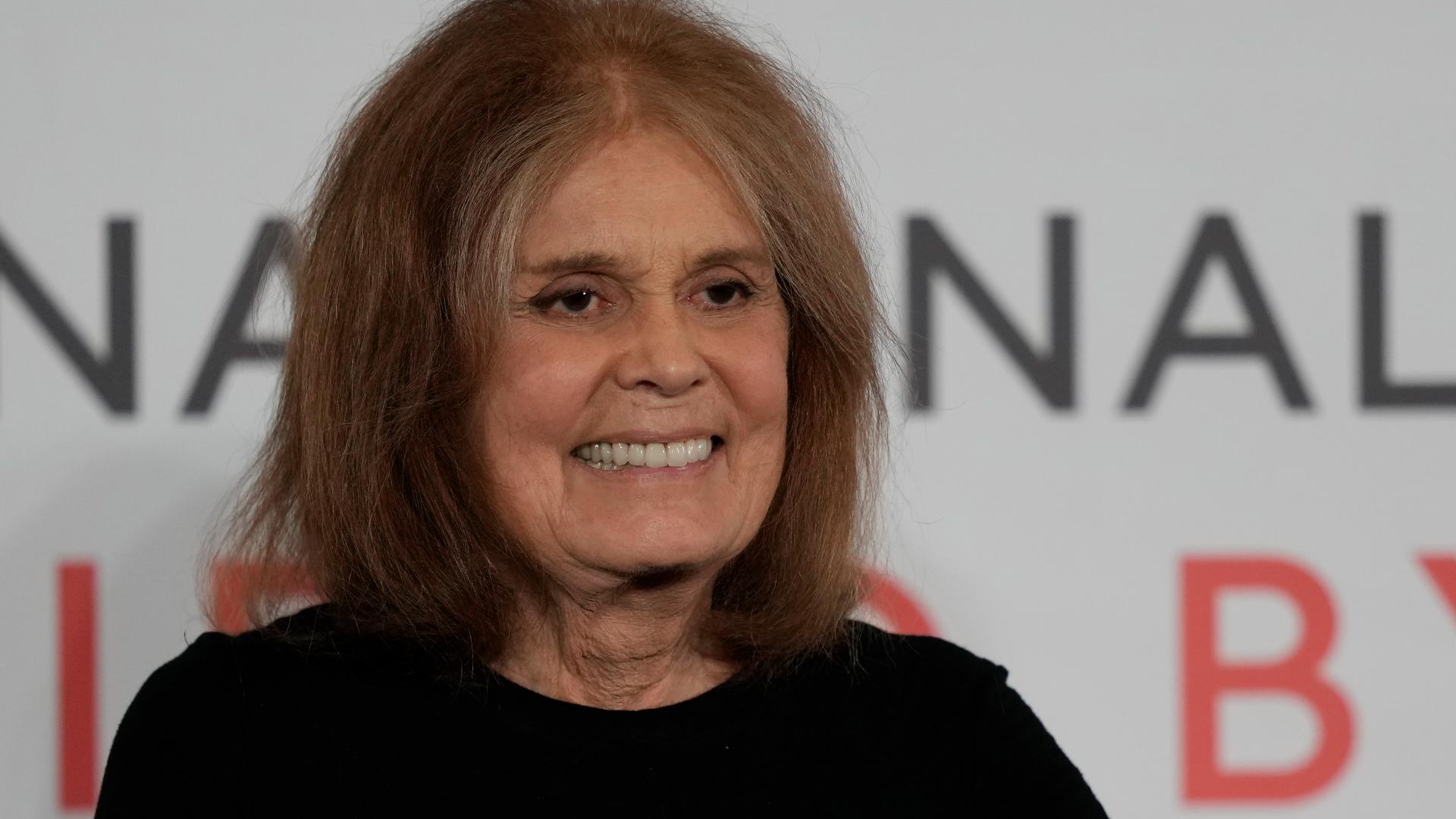
Was Gloria Steinem in the CIA: What the Historical Record Shows
Gloria Steinem was never a covert CIA agent or operative in the traditional sense of the term, but she did knowingly work with and receive funding through a CIA-backed front organization earlier in her career, a connection she openly acknowledged and defended for the rest of her life. After graduating from Smith College in 1956 and spending two years in India on a Chester Bowles Fellowship, Steinem returned to the United States and became involved with an organization called the Independent Research Service, which she founded and directed from roughly 1958 to 1962.
The Independent Research Service organized American delegations to attend the World Youth Festivals, large international gatherings held in Soviet-aligned cities during the Cold War and designed, according to Soviet organizers, to spread communist ideology among young people worldwide. Steinem’s organization sent several hundred young Americans to the 1959 festival in Vienna and the 1962 festival in Helsinki, where delegates distributed pro-American and anti-communist materials and engaged festival attendees in ideological discussions. According to reporting from the time, the group’s budget for the Helsinki festival alone exceeded $100,000, though Steinem declined at the time to specify precisely how much of that funding came from the CIA.
The connection first became public in 1967, when Ramparts magazine published an investigative report exposing the Independent Research Service, along with the National Student Association, as organizations that had received covert CIA funding as part of a broader Cold War program to counter Soviet influence among student and youth groups worldwide.
Women’s liberation icon Gloria Steinem has died at 92.
Read more: https://t.co/FgDV9zgwNF pic.twitter.com/tT2kFT7CW3
— ABC News (@ABC) September 3, 2026
How Gloria Steinem Responded to the CIA Revelations
Rather than deny or distance herself from the connection once it became public, Steinem addressed it directly and unapologetically in interviews with both The New York Times and The Washington Post shortly after the Ramparts story broke. “I found them liberal and farsighted and open to an exchange of ideas,” she said of the CIA officials she had worked with. “I never felt I was being dictated to at all.”
She went further in describing her overall view of the arrangement, later stating that she was “happy to find some liberals in government who were farsighted and cared enough to get Americans of all political views to attend” the festivals. Steinem maintained throughout her life that she had taken the initiative to seek out government support for sending American students abroad, rather than being recruited or directed by intelligence officials, and she consistently described the CIA figures she worked with during that period as “liberal, nonviolent and honorable.”
Gloria Steinem was in the DSA and worked for the CIA! pic.twitter.com/rKtccnihfn
— The Kevin Downey, Jr. Show Mon- Fri. 9-11 am EST! (@KDJRadioShow) September 3, 2026
Steinem’s account of her own agency in the arrangement was later challenged by some historical researchers. Karen M. Paget’s 2015 book “Patriotic Betrayal,” published by Yale University Press, presented archival research suggesting that CIA officer Harry Lunn had actively encouraged Steinem to take on a public leadership role within the Independent Research Service, rather than the effort originating entirely from her own initiative. The book’s research also detailed the scope of activity at the 1959 Vienna festival, where Steinem’s delegation of roughly 100 Americans engaged directly with an estimated 17,000 attendees from around the world.
The controversy resurfaced publicly on multiple occasions throughout Steinem’s later life, including in a 2016 New York Times profile that stated she had “started her career as a C.I.A. operative,” a characterization Steinem promptly and publicly disputed, maintaining her long-held position that her role had been limited to organizing youth delegations rather than intelligence work in any traditional sense.
From Toledo, Ohio, to the Face of American Feminism
Gloria Marie Steinem was born March 25, 1934, in Toledo, Ohio, to Leo and Ruth Steinem. Her father worked as a traveling antiques salesman, and the family spent much of Steinem’s early childhood moving frequently before her parents divorced in 1944. Steinem did not attend school regularly until she was 11 years old. Following the divorce, she moved back to Ohio with her mother, who struggled with mental health problems that Steinem later said profoundly shaped her worldview and her eventual activism. Watching doctors dismiss her mother’s needs, she said, contributed directly to her lifelong commitment to giving women a greater voice within institutions that had historically ignored them.
Steinem attended Smith College in Massachusetts, graduating magna cum laude in 1956 with a degree in government studies. She then spent two years in India on a Chester Bowles Fellowship, an experience that exposed her to grassroots organizing against caste-based violence and shaped her later approach to activism in the United States. It was after returning from India that she became involved with the Independent Research Service and the CIA-linked youth festival programs.
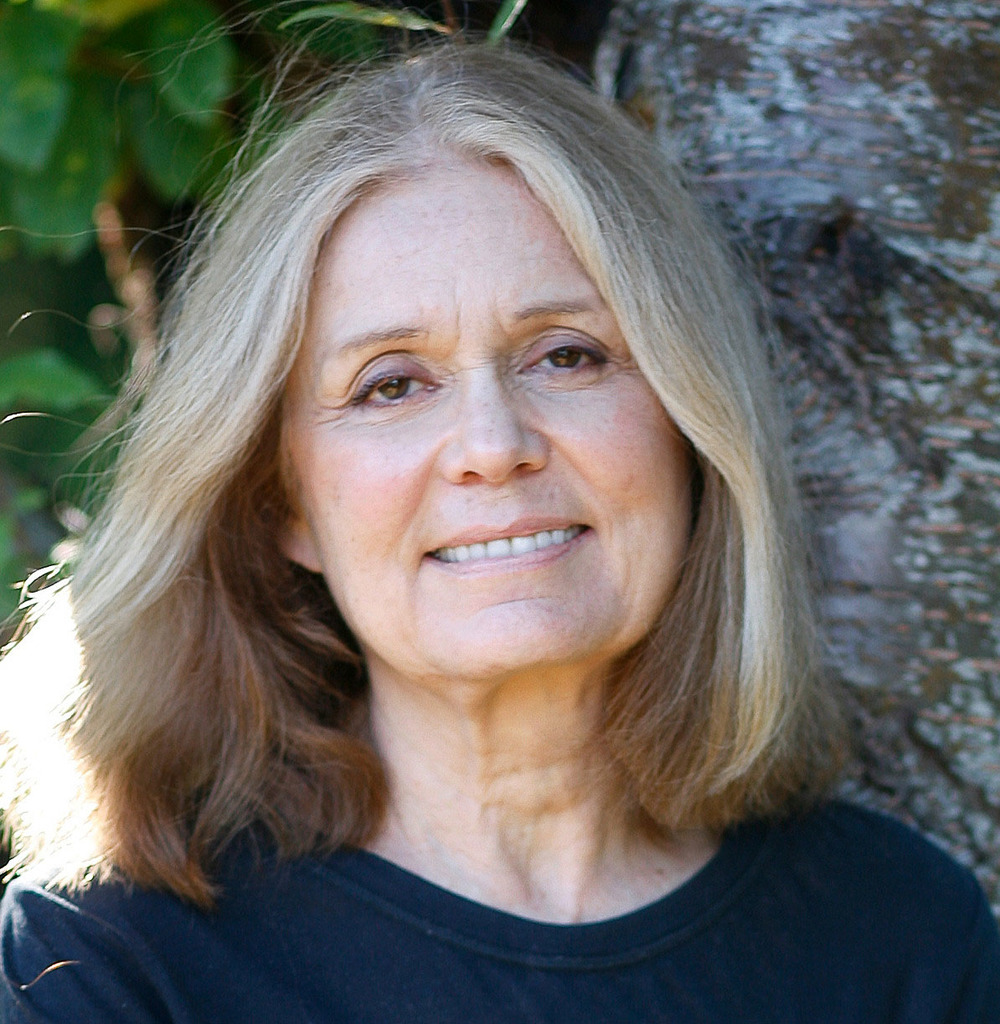
Steinem’s transition into feminist organizing began in earnest around 1969 and 1970. Within a remarkably short period, she became one of the most visible and recognizable leaders of the American women’s liberation movement. In 1971, she helped found the Women’s Action Alliance, an organization promoting non-sexist, multiracial children’s education. That same year, she joined Congresswoman Bella Abzug, Congresswoman Shirley Chisholm, and fellow feminist Betty Friedan to establish the National Women’s Political Caucus, formed after Congress failed to pass the Equal Rights Amendment. Her speech at the caucus’s founding event helped cement her status as a household name, with Steinem declaring that society was “really talking about humanism” rather than fixed roles based on sex or race.
In 1972, Steinem partnered with child care advocate Dorothy Pitman Hughes to co-found Ms. magazine, one of the first mainstream American publications created explicitly for and about women’s liberation. The magazine became a defining vehicle for feminist thought and cultural commentary for decades. Steinem went on to found or co-found numerous additional organizations throughout her career, including Voters for Choice in 1977, a pro-choice political action committee, and the Women’s Media Center in 2004, which promoted more accurate and positive representations of women in media.
Also Read: AOC Opens Up About Dating Preferences and Baby Plans After Split
Timeline of Key Events
March 25, 1934 — Gloria Marie Steinem is born in Toledo, Ohio.
1944 — Steinem’s parents divorce, and she moves back to Ohio with her mother.
1956 — Steinem graduates magna cum laude from Smith College with a degree in government studies.
1956 to 1958 — Steinem spends two years in India on a Chester Bowles Fellowship.
1958 to 1962 — Steinem founds and directs the Independent Research Service, which sends American delegations to the CIA-linked World Youth Festivals in Vienna (1959) and Helsinki (1962).
1967 — Ramparts magazine publicly exposes the Independent Research Service and the National Student Association as CIA-funded front organizations. Steinem defends her involvement in interviews with The New York Times and The Washington Post.
1969 to 1970 — Steinem transitions into feminist organizing and activism.
1971 — Steinem co-founds the Women’s Action Alliance and, alongside Bella Abzug, Shirley Chisholm, and Betty Friedan, the National Women’s Political Caucus.
1972 — Steinem co-founds Ms. magazine with Dorothy Pitman Hughes.
1977 — Steinem founds Voters for Choice, a pro-choice political action committee.
2000 — At age 66, Steinem marries for the first time, wedding entrepreneur and activist David Bale, the father of actor Christian Bale, in a Cherokee ceremony in Oklahoma.
2003 — David Bale dies of lymphoma, roughly three years after the couple’s marriage.
2004 — Steinem co-founds the Women’s Media Center.
2013 — President Barack Obama awards Steinem the Presidential Medal of Freedom for her decades of activism.
2016 — A New York Times profile describes Steinem as having “started her career as a C.I.A. operative,” a characterization she publicly disputes.
September 2, 2026 — Gloria Steinem dies at her home in New York City at age 92.
September 22, 2026 — Steinem’s previously announced memoir, “An Unexpected Life,” is scheduled for posthumous release.
A Complicated Chapter in an Otherwise Celebrated Legacy
Steinem’s CIA-linked work during the late 1950s and early 1960s represents an unusual and complicated chapter in the life of a figure who became, decades later, one of the most trusted and celebrated voices in American progressive activism. The episode illustrates the extent to which Cold War era intelligence funding quietly touched a wide range of civil society organizations, from student groups to labor unions to cultural institutions, often without full awareness from the participants involved.
That Steinem chose to address the connection directly rather than deny it once it became public also reflects a broader pattern in how she managed her public image throughout her career, generally favoring transparency and direct engagement with criticism over evasion. The controversy nonetheless became a recurring talking point for critics of her feminist legacy over the decades, with some arguing the CIA connection cast doubt on her broader political motivations, while others viewed it as a minor and fully disclosed episode from early in a career defined far more significantly by her subsequent decades of activism.
Industry Reaction
Tributes to Steinem following her death emphasized her decades of activism far more prominently than the CIA controversy from earlier in her career. Her foundation’s official statement praised her ability to “listen to others” and to “make others feel seen and heard,” while numerous feminist organizations and former colleagues issued statements honoring her role in shaping the modern women’s rights movement.
Media obituaries from outlets including NPR, CNN, and Variety consistently acknowledged the CIA-linked chapter of her early career as part of a complete and balanced account of her life, generally framing it as a historical footnote addressed openly by Steinem herself rather than a central element of her legacy. Her 2013 Presidential Medal of Freedom, awarded by President Barack Obama, was frequently cited across tributes as recognition of the broader impact of her activism, with Obama stating at the time that “because of her work, across America and around the world, more women are afforded the respect and opportunities that they deserve.”
Social Media Reaction
Following news of her death, social media platforms saw an outpouring of tributes from feminist organizations, politicians, celebrities, and everyday users reflecting on Steinem’s influence on their lives and the broader culture. Alongside these tributes, renewed public discussion of her CIA-linked history also circulated, with some users sharing archival interviews and historical reporting on the Independent Research Service and the Ramparts exposure, reflecting a common pattern in which complex or controversial chapters of a public figure’s life resurface for renewed scrutiny following their death.
Long-form commentary and historical retrospectives on the CIA connection, including references to Karen Paget’s “Patriotic Betrayal,” also gained fresh attention online, with some framing the story as an important piece of Cold War history and others using it to raise broader questions about the intersection of government influence and prominent social movements during that era.
Interesting Facts About Gloria Steinem
Steinem did not attend school regularly until she was 11 years old, following years of her family traveling extensively for her father’s work as an antiques salesman.
She remained unmarried until age 66, when she married entrepreneur and activist David Bale in a Cherokee ceremony in Oklahoma, having long been publicly critical of marriage as an institution she viewed as historically rooted in gender inequality.
In the 1990s, Steinem helped establish Take Our Daughters to Work Day, one of the first major national initiatives designed to expose young girls to career opportunities.
She was awarded the Presidential Medal of Freedom by President Barack Obama in 2013 in recognition of her decades of activism on behalf of women’s rights.
Frequently Asked Questions
Was Gloria Steinem in CIA?
Gloria Steinem was not a covert intelligence operative, but she did knowingly direct an organization, the Independent Research Service, that received CIA funding between roughly 1958 and 1962. The organization sent American student delegations to CIA-linked World Youth Festivals in Vienna and Helsinki, and Steinem publicly acknowledged and defended this work throughout her life.
What did Gloria Steinem say about her CIA involvement?
Steinem consistently described the CIA officials she worked with as “liberal, nonviolent and honorable” and said she was “happy to find some liberals in government who were farsighted.” She maintained that she had taken the initiative to seek government support for sending American students abroad, rather than being recruited by intelligence officials.
How did Gloria Steinem die?
Gloria Steinem died on September 2, 2026, at her home in New York City at age 92. A specific cause of death has not been publicly disclosed. Her foundation stated she passed away peacefully, surrounded by loved ones.
What did Gloria Steinem accomplish?
Steinem co-founded Ms. magazine in 1972, helped establish the National Women’s Political Caucus in 1971, and was a central public figure in the American second-wave feminist movement. She was awarded the Presidential Medal of Freedom in 2013 for her decades of activism on behalf of women’s rights.
Was Gloria Steinem married?
Yes. Steinem remained unmarried until age 66, when she married entrepreneur and activist David Bale in 2000. Bale, the father of actor Christian Bale, died of lymphoma in 2003, roughly three years into their marriage.
Who exposed Gloria Steinem’s CIA connection?
Ramparts magazine first exposed the Independent Research Service, the organization Steinem directed, as a CIA-funded front group in a 1967 investigative report that also revealed similar funding connections to the National Student Association and other civil society organizations.
Also Read: James Harris and Mark Lane Sued by ‘Obsession’ Producer Over Profits
Last Updated on September 3, 2026 by 247 News Around The World

