
The music industry woke up to a jolt this week after BTS, the seven-member South Korean supergroup that has redefined global pop, announced they would not submit their comeback album ARIRANG for consideration at the 2027 Grammy Awards. Within hours, Recording Academy CEO Harvey Mason Jr. issued a lengthy public statement calling the decision one that saddened him, while defending the Academy’s newly introduced Best Asian Pop Music Performance category that many believe triggered the withdrawal.
For an act that has been nominated five times, performed on the Grammy stage, and helped push the ceremony’s global viewership to record highs, the decision is more than a headline. It represents a philosophical stand about how international artists should be judged, what “global music” really means at the world’s most prestigious music awards, and whether new genre categories genuinely include artists or quietly sideline them.
This article examines every angle of the story: what happened, why it happened, how the Recording Academy responded, what it means for BTS, for K-pop, and for the future of the Grammys. Readers will find the full timeline, the historical context of BTS at the Grammys, expert analysis of the controversy, and answers to every question fans are asking.
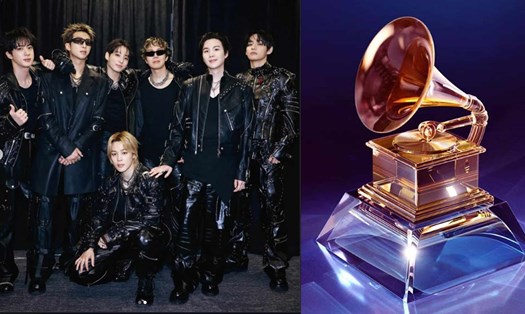
What Happened: BTS Withdraws From 2027 Grammy Consideration
On Wednesday, July 29, 2026, all seven members of BTS-RM, Jin, Suga, J-Hope, Jimin, V, and Jungkook posted identical statements on their individual Instagram accounts announcing that the group would not submit any music for the 69th Annual Grammy Awards, which are scheduled for February 2027.
The translated Korean-language statement read: “We have decided not to submit for Grammy consideration this year. We hope our music can be heard and loved for what it is, rather than being divided by region or language. We thank ARMY and everyone who has always stood by us.”
The message was brief, deliberate, and coordinated across seven of the most-followed accounts in music. It did not mention the Recording Academy’s new Best Asian Pop Music Performance category by name, but the reference to being “divided by region or language” left little doubt about the trigger. According to Rolling Stone, industry observers immediately read the withdrawal as a formal protest against the new genre-specific award, which was introduced weeks earlier.
Hours later, Recording Academy CEO Harvey Mason Jr. issued his own statement addressing the withdrawal. He said he was saddened by the decision but understood and respected it, and he used the platform to defend the intent behind the new Asian Pop category.
The Grammys CEO Response: Harvey Mason Jr.’s Full Statement Explained
Harvey Mason Jr., who has led the Recording Academy since 2021, took to social media on the evening of July 29 with a carefully worded response that many public relations analysts described as measured and non-defensive.
Mason Jr. said he was saddened to learn BTS had chosen not to participate in the Grammy Awards process this year, but as a music creator himself, he understood and respected their decision. He then pivoted to what he called a clarification of something that he felt was getting lost in the conversation.
He explained that the Asian Pop category was created to celebrate the depth, diversity, and extraordinary growth of pop artistry coming out of Asia. Harvey stressed that the spirit of the new category was to shine a dedicated spotlight on important artists in that space, and he pushed back on the idea that the category was designed to divide.
Mason Jr. emphasized a critical technical point: submitting music in a genre category such as Asian Pop does not disqualify an artist from also being considered in the General Field, which includes the most coveted categories at the show, such as Record of the Year, Album of the Year, and Song of the Year. He closed by saying the Grammy organization exists to serve music and all the people who make it, and pledged that the Academy would continue to listen to the global music community.
The response was widely covered by Billboard, Variety, The Hollywood Reporter, and ABC News, and stood out for what it did not include: any hint of walking back the new category or reconsidering the eligibility rules.
View this post on Instagram
Background: The Best Asian Pop Music Performance Category
To understand the boycott, readers need to understand the category at the center of it.
On June 16, 2026, the Recording Academy announced five new Grammy categories for the 2027 ceremony:
- Best Asian Pop Music Performance
- Best R&B Collaboration or Duo/Group Performance
- Best Traditional Pop Vocal Performance
- Best Traditional Folk Album
- Best Latin Song
The Asian Pop category was described as recognizing artistic excellence in Asian pop music performances originating from or widely recognized within Asian markets, including but not limited to K-pop, J-pop, and C-pop. The rules require meaningful use of one or more Asian languages, and recordings performed entirely in English are not eligible.
That linguistic requirement created an immediate contradiction for BTS. Much of their most commercially successful recent music, including the ARIRANG lead single “Swim” which reached No. 1 on the Billboard Hot 100, is performed in English. Under the new rules, “Swim” could not even qualify for the Asian Pop category, meaning the group would be competing on the same general terms as before regardless of the new addition.
Critics of the category, including some music journalists and industry insiders, have argued that even though the rules technically permit dual submission in General Field categories, in practice voters may steer Asian artists toward the genre bucket and away from Album of the Year, Record of the Year, and Song of the Year contention.
How the Latin Category Comparison Cuts Both Ways
Supporters of the new Asian Pop award point to the Latin Grammy structure and the fact that Bad Bunny made history at the 2026 Grammys by becoming the first artist to win Album of the Year with a predominantly Spanish-language album. That result, they argue, proves the General Field is genuinely open to non-English music and that genre categories do not create a ceiling.
Skeptics counter that the Latin Grammys are a separate awards ceremony operated by the Latin Recording Academy, and that the Recording Academy has not proposed spinning off Asian pop into its own show. Instead, the new category sits inside the existing Pop & Dance/Electronic Field, which some fear will function as a designated lane rather than an added opportunity.
BTS at the Grammys: A Complete History
BTS entered the Grammy conversation as trailblazers. They were the only K-pop group to have earned a Grammy nomination for years, and remained the standard-bearer for Korean pop at the Recording Academy until the 2026 ceremony, when several other K-pop artists received nominations in top categories.
Here is the full record of BTS at the Grammys:
| Year | Nomination | Category | Result |
|---|---|---|---|
| 2021 | “Dynamite” | Best Pop Duo/Group Performance | Lost |
| 2022 | “Butter” | Best Pop Duo/Group Performance | Lost |
| 2023 | “My Universe” (with Coldplay) | Best Pop Duo/Group Performance | Lost |
| 2023 | Music of the Spheres (as featured artist on Coldplay’s album) | Album of the Year | Lost |
| 2023 | “Yet to Come” | Best Music Video | Lost |
Five nominations. Zero wins. That is the record the group carries into the ARIRANG era, and it is a record that has long frustrated the fan base known as ARMY. The 2024 ceremony passed without a single BTS-related nomination, despite a string of critically praised solo albums from members during their hiatus, including Jack in the Box, Layover, D-DAY, FACE, and Indigo.
An interesting parallel emerged in coverage from Billboard: Harvey Mason Jr. himself has been nominated for exactly five Grammys without winning, as a producer on Justin Timberlake’s Justified and on the Dreamgirls, Pitch Perfect 2, and Jesus Christ Superstar Live in Concert soundtracks, plus a songwriter nomination for Toni Braxton’s “He Wasn’t Man Enough.”
The ARIRANG Album That Won’t Compete
The album now removed from Grammy contention is arguably the biggest release of BTS’s career, and possibly the biggest lost Grammy opportunity of the year for the Recording Academy.
ARIRANG is the group’s fifth studio album, released on March 20, 2026, after all seven members completed South Korea’s mandatory military service. The album debuted at No. 1 on the Billboard 200 with 641,000 equivalent units, marking the biggest opening week for a group album in more than a decade. It also debuted at No. 1 on South Korea’s Circle Chart, Japan’s Oricon Charts, and the UK Official Albums Chart.
Metacritic scored the album at 83, indicating universal acclaim, and it moved 110 million Spotify streams on its first day. The lead single “Swim” topped the Billboard Hot 100. A second track, “Normal,” was also considered a strong Grammy contender.
Before the withdrawal, Gold Derby had ARIRANG projected as the favorite for Best Asian Pop Music Performance and a serious contender in Album of the Year and Best Pop Duo/Group Performance. That entire projection has now been wiped off the board.
Fact Box: ARIRANG by the Numbers
- Release date: March 20, 2026
- Billboard 200 debut: No. 1 with 641,000 units
- Spotify first-day streams: 110 million
- Metacritic score: 83
- Lead single: “Swim” (No. 1 Billboard Hot 100)
- Grammy submissions from this album: Zero
Why It Matters: The Industry Stakes
The withdrawal matters for reasons that go beyond one album cycle.
First, it removes what would likely have been the biggest global draw from the 2027 telecast at a moment when the Grammys, like all major American awards shows, have been fighting for younger and more international audiences. BTS delivers a level of social media engagement and global viewership that few acts can match.
Second, it puts the Recording Academy in the difficult position of defending a diversity initiative that a leading diverse act has publicly rejected. The optics are complicated: an award created to celebrate Asian pop artistry is now associated with the biggest Asian pop act declining to participate at all.
Third, it forces a conversation the industry has largely avoided. Should genre-specific categories be additive or exclusive? Should artists whose commercial reach is global be evaluated by regional filters? Is language a fair proxy for genre?
Career and Financial Impact for BTS
For BTS as a business, the immediate financial cost is essentially zero. The group is signed to HYBE, one of the largest entertainment companies in the world, and ARIRANG has already generated massive revenue through streaming, physical sales, and the ongoing world tour. A Grammy win would have added prestige but not materially changed the group’s earnings.
The reputational impact is more complicated. Winning a competitive General Field Grammy would have been historic. Walking away from the process on principle may build long-term credibility with fans who value artistic integrity, while costing the group a shot at a trophy that has eluded them for five straight years.
For the Grammys, however, the financial and prestige stakes are real. Losing a headline performance and a top-tier nominee affects broadcast negotiations, sponsor conversations, and the show’s positioning as truly international.
Industry Reaction and Expert Commentary
Reaction across the music industry was swift and split.
Publications including Rolling Stone, Variety, and The Hollywood Reporter framed the decision as a significant rebuke of the Recording Academy’s approach to international artists, while Forbes contributor Hugh McIntyre, who had earlier predicted ARIRANG could deliver BTS its biggest Grammy year yet, noted that the new category had been widely read as being tailored for the group.
Gold Derby‘s analysis called BTS’s decision a shift that “completely explodes the Grammy landscape” in what was shaping up as a historic year for Asian representation. Other K-pop acts, including Blackpink’s Jennie and the collaborative “Iconic by Mistake” project featuring Le Sserafim, Illit, and Katseye, are still expected to remain in contention.
BTS is not the first major act to opt out of Grammy consideration. Drake, The Weeknd, and Morgan Wallen have all withdrawn from the process at various points, largely in response to what they perceived as prior snubs. What distinguishes the BTS decision is that it appears to be a principled objection to a category structure rather than a reaction to a specific past loss.
Notably, all seven BTS members have served as Recording Academy voting members since 2019, meaning they remain part of the same institution they are stepping back from as nominees.
Social Media Reaction: What ARMY Is Saying
Reaction from ARMY was overwhelmingly supportive of the group’s stance. Fans took to X, Instagram, and Weverse to praise BTS for what they described as principled resistance to a category they felt was designed to bracket the group into a lesser tier.
Common themes in the fan response included:
- Applauding the group for prioritizing artistic identity over trophies
- Criticizing the Recording Academy for what many called a decade of overlooked nominations
- Highlighting the irony that “Swim,” an English-language hit, would not have qualified for the new Asian Pop category anyway
- Renewed frustration over the fact that despite five nominations, the group has never won a Grammy
Some fans expressed disappointment, arguing that a Grammy win for ARIRANG would have been a historic milestone worth pursuing on the group’s own terms. The overall sentiment, however, leaned strongly toward viewing the withdrawal as a moment of collective self-respect.
Historical Comparison: Boycotts and Withdrawals at the Grammys
Grammy withdrawals are rare enough to be newsworthy, but they are not unprecedented. A brief comparison:
The Weeknd (2021 onward): Boycotted the Grammys after After Hours received zero nominations, calling the process “corrupt.” He has continued to opt out in subsequent years.
Drake (multiple years): Publicly criticized the Grammys and pulled submissions on several occasions, arguing the show does not accurately reflect popular music.
Morgan Wallen: Has not submitted for Grammy consideration in recent cycles.
BTS (2027): Differs from the above because the group’s stated reason is not a personal snub but a structural objection to a new category designed in part with their genre in mind.
The BTS withdrawal is closer in spirit to broader industry protests over category design than to the individual grievances of previous boycotting artists.
Timeline: How the Story Unfolded
- March 20, 2026: BTS releases ARIRANG, their first group album after military service
- March 2026: Album debuts at No. 1 on Billboard 200 with 641,000 units
- June 16, 2026: Recording Academy announces five new Grammy categories, including Best Asian Pop Music Performance
- July 23, 2026: Forbes publishes analysis suggesting ARIRANG could deliver BTS its biggest Grammy year yet
- July 29, 2026: All seven BTS members announce via Instagram that they will not submit music for the 2027 Grammys
- July 29, 2026 (evening): Recording Academy CEO Harvey Mason Jr. issues public response saying he is saddened but respectful of the decision
- July 30, 2026: Global media coverage intensifies, with commentary from Rolling Stone, Variety, Billboard, Hollywood Reporter, Forbes, ABC News, and international outlets
Future Predictions: What Comes Next
Several plausible scenarios are worth watching in the months ahead.
The Recording Academy is unlikely to rescind the new Asian Pop category outright, but may quietly revisit the language requirement or clarify submission guidelines to reduce the appearance of segregation.
Other K-pop and Asian pop acts will now face pressure to decide whether to follow BTS’s lead or engage with the category as designed. Their decisions will shape whether the boycott remains an isolated act or becomes a movement.
BTS itself has left the door open for future participation. The wording of the statement referred specifically to “this year,” not to a permanent break with the Grammys. If the eligibility rules evolve, or if the group releases new music in a different context, a return to the process is entirely possible.
For the 2027 telecast, producers now face the challenge of building a global tentpole show without one of the world’s most-watched acts on the nominee list. Expect increased focus on other international nominees and potentially new performance slots designed to fill the visibility gap.
Frequently Asked Questions
Why did BTS decide not to submit for the 2027 Grammy Awards?
BTS said they hope their music can be heard and loved for what it is, rather than being divided by region or language. The statement is widely understood as an objection to the Recording Academy’s new Best Asian Pop Music Performance category.
What did the Grammys CEO say in response?
Harvey Mason Jr. said he was saddened by the decision but understood and respected it. He defended the new Asian Pop category as an effort to expand recognition, not to divide artists, and clarified that submitting in a genre category does not exclude an artist from General Field consideration.
What is the Best Asian Pop Music Performance category?
It is a new Grammy category introduced in June 2026 for the 2027 ceremony. It recognizes pop performances originating from or widely recognized within Asian markets, including K-pop, J-pop, and C-pop, and requires meaningful use of one or more Asian languages.
Has BTS ever won a Grammy?
No. BTS has received five Grammy nominations and has never won a competitive Grammy as a performing act.
Which BTS album was expected to be a Grammy contender?
ARIRANG, released in March 2026, was expected to compete for Album of the Year, Best Pop Duo/Group Performance for the single “Swim,” and Best Asian Pop Music Performance.
Are BTS members still part of the Recording Academy?
Yes. All seven members have served as voting members of the Recording Academy since 2019, which is a separate role from submitting their own music for nomination.
Have other artists boycotted the Grammys before?
Yes. Drake, The Weeknd, and Morgan Wallen have all opted out of Grammy submission in previous years, though generally in response to perceived snubs rather than category design.
Could BTS return to the Grammys in future years?
The group’s statement referenced only “this year,” leaving open the possibility of future participation. Their return would likely depend on how the Recording Academy evolves its category rules and eligibility guidelines.
When will the 2027 Grammy Awards take place?
The 69th Annual Grammy Awards are scheduled for February 2027.
Does the new category exclude English-language songs by Asian artists?
Yes. The Asian Pop category rules require meaningful use of an Asian language. BTS’s lead ARIRANG single “Swim,” which is primarily in English, would not have been eligible for the new category regardless.
Also Read | Anthony Smith Family: Wife, Kids, and Personal Life Explained
Last Updated on July 30, 2026 by 247 News Around The World

