
The Professional Bowlers Association confirmed on Friday, August 1, 2026, that eight-time PBA Tour champion Jakob Butturff died unexpectedly on July 31, 2026, at the age of 32. No official cause of death has been released by the PBA or the Butturff family.
PBA Commissioner Tom Clark issued a public tribute, calling Butturff one of the most singular competitors in the sport’s history. Within hours, fellow professionals, sponsors, and fans across the globe began sharing their grief on social media, underscoring just how deeply Butturff’s presence on and off the lanes had shaped modern professional bowling.
His passing marks the loss of a generational talent who had already accumulated an extraordinary list of achievements, including a major championship title, 27 PBA Regional Tour victories, international gold medals with Team USA, and an ESPY Award nomination.
What Happened: How the Bowling World Learned of Butturff’s Death
The PBA broke the news on its official website and through a statement posted on X (formerly Twitter) on August 1, 2026. The announcement confirmed that Butturff had died unexpectedly the day before, on July 31, in Arizona. No cause of death was given.
Commissioner Tom Clark’s official statement described Butturff’s impact on the sport in unambiguous terms. He noted that fans had marveled at Butturff’s delivery and that he was capable of winning at any time, in any event. Clark also highlighted his kindness and his respect for the people around him.
The PBA’s announcement read, in part, that the organization’s thoughts and condolences were with his family and loved ones.
Some unconfirmed social media posts suggested a heart attack, but as of this writing, no official source has verified that claim. Out of respect for the family, the focus here remains on what has been confirmed.
The PBA is deeply saddened by the sudden passing of Jakob Butturff.
Our thoughts and condolences are with his family and loved ones. pic.twitter.com/2m4ZjAgXUM
— PBA Tour (@PBATour) August 1, 2026
Who Was Jakob Butturff? Background and Early Life
Jakob Butturff was born on April 28, 1994, and grew up in the Las Vegas metropolitan area. He attended Foothill High School in Henderson, Nevada, before moving to Arizona, where he attended Arizona State University. His Team USA biography listed Tempe, Arizona, as his hometown, though he was also associated with Chandler, Arizona, and Binghamton, New York, at various stages of his career.
Butturff’s love for bowling started early. He competed in Junior Bowlers Tour (JBT) events throughout his teenage years, primarily in the Southwest Conference, where he won multiple titles. Among those early accolades, he claimed his ninth JBT championship in 2012 at Uptown Alley and took the singles title at the 2012 JBT Main Event in Las Vegas. He also won the 2013 Las Vegas Main Event championship with a 218-202 stepladder final victory.
By the time he transitioned to collegiate bowling at Arizona State, Butturff had already logged a perfect 300 game in JBT competition, establishing himself as one of the most dominant youth bowlers in the region.
He joined the PBA in 2015 and turned professional at just 21 years old.
The Career That Made Him a Legend: A Complete Timeline
Butturff’s professional career spanned just over a decade, but in that time, he compiled a record that few bowlers of his generation could match.
2015: The Professional Debut
Butturff competed in seven PBA Tour events during his rookie year, earning four cashes and $18,400 in prize money. He also won his first PBA Regional title at the New Mexico Open, a tournament he later described as his breakthrough moment.
2016: The Breakout Season
This was the year that put Butturff on the national map. He won his first two PBA Tour titles at the Southwest Open and the Las Vegas Open. On the PBA Regional Tour, he set a record that still stands: nine regional wins in a single season. That performance earned him both the West Region and Northwest Region Player of the Year awards.
2017: World Cup Champion
Butturff won the QubicaAMF World Cup in Hermosillo, Mexico, representing the United States on the international stage. He also earned a team gold medal at the 2017 World Bowling Championships. He repeated as Northwest Region Player of the Year for the second consecutive season.
2018: Continued Dominance
A third consecutive Northwest Region Player of the Year award followed. Butturff continued to rack up regional titles and established himself as a permanent fixture among the top players on tour.
2019: The Peak Year
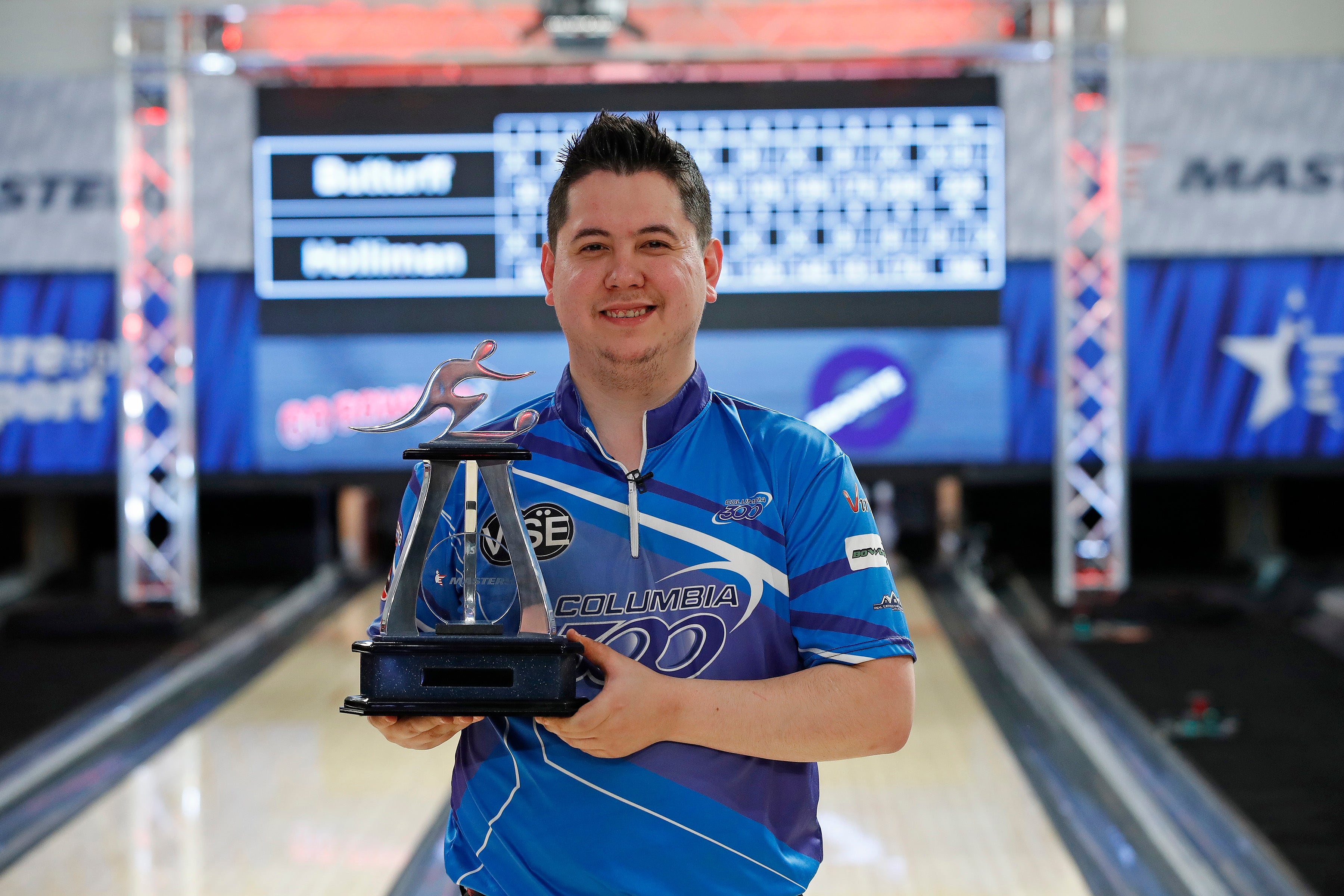
By any measure, 2019 was the defining season of Butturff’s career. He won the USBC Masters, one of professional bowling’s most prestigious major championships, qualifying as the No. 1 seed and defeating Mykel Holliman in the final. He also captured the PBA Oklahoma Open, the PBA Lubbock Sports Shootout, and the PBA Clash.
That season, he finished as the runner-up to Jason Belmonte in both points and earnings on the PBA Tour, and he placed second in the Chris Schenkel PBA Player of the Year voting. He also earned an ESPY Award nomination for Best Bowler. His career earnings for the year totaled $204,380, second only to Belmonte.
Butturff also joined PBA Hall of Famer Earl Anthony as one of only two bowlers in the modern era (since 1971) to be the top qualifier at back-to-back U.S. Opens. He was additionally one of only four players in PBA history to be the No. 1 seed in three consecutive PBA Tour events, joining Johnny Petraglia, Anthony, and Walter Ray Williams Jr.
2020: The Televised Perfect Game
During the PBA Tour Finals, Butturff bowled the 28th televised 300 game in PBA history. This rare achievement added another landmark moment to a career already full of them.
2021 to 2026: Continued Competition
Butturff remained a consistent competitor on the PBA Tour, finishing with a career total of eight national PBA Tour titles (including one major), 27 PBA Regional Tour titles, 19 career perfect 300 games, and more than $1 million in official career tournament earnings.
In early 2026, he signed with Hammer Bowling (a division of Brunswick), after previously being sponsored by the Columbia 300 division of Ebonite.
Also Read | Linda Blair Dog Raid and Rick Springfield Relationship Explored
What Made Butturff Different: The Corkscrew Release
While his statistics tell one story, the way Butturff bowled told another.
His signature technique was a corkscrew-style release built around extreme wrist flexibility. Most one-handed bowlers use a relatively standard wrist motion when releasing the ball, but Butturff’s hypermobile joints allowed him to start with a deeply cupped wrist position that most bowlers physically cannot replicate.
At the point of release, he would rotate the ball dramatically, with his thumb and fingers moving through a wide arc. The result was an exceptionally high revolution rate on the ball, producing heavy ball motion and a sharp, powerful hook into the pins.
Bowling coach and author Bill Spigner once described Butturff’s starting wrist position as nearly impossible for a bowler with typical flexibility to achieve. His technique was so unusual that it generated conversation among fans and analysts every time he stepped to the lane. He favored older urethane equipment over more modern reactive balls throughout much of his career, an unconventional choice that further distinguished his approach.
In an era when two-handed bowling was becoming increasingly popular, Butturff proved that a one-handed delivery could still generate comparable power and movement. His style inspired a generation of young bowlers to develop their own techniques rather than simply copying conventional form.
PBA Commissioner Tom Clark’s Tribute
Commissioner Clark’s full statement honored Butturff’s career, his character, and his connection with fans. He described Butturff as one of the most unique players in PBA history, praised the way fans responded to his delivery, and called him kind, respectful, and a champion.
Clark’s closing remarks stated that the PBA’s hearts were with everyone Butturff had touched on his one-of-a-kind journey.
The statement is significant because PBA commissioners rarely issue tributes of this length and personal tone for individual players. The wording reflected both an institutional appreciation for Butturff’s competitive contributions and a personal acknowledgment of who he was off the lanes.
How Fellow Bowlers Reacted
The response from the professional bowling community was immediate and emotional.
EJ Tackett, one of the PBA Tour’s top competitors, posted a tribute on social media describing the loss as devastating. He remembered Butturff as someone who would do anything for anyone in need and said the bowling world would never be the same.
AJ Johnson shared a personal message, recalling Butturff’s warmth, humor, and his habit of giving everyone around him a big hug. Johnson ended his tribute by telling Butturff to go give his mom the biggest hug.
Jason Belmonte, often considered one of the greatest bowlers of all time, kept his message brief, writing that the PBA had lost one of its kindest figures.
H5G BRANDS, a bowling apparel company, issued a statement saying the bowling community had lost one of its own far too soon and that Butturff’s talent, passion, and impact would never be forgotten.
The Mesa Metro USBC Association also released a statement highlighting Butturff’s passion for the sport and emphasizing that his legacy would live on through the people he touched and the memories he created.
Why It Matters: Butturff’s Place in Bowling History
Butturff’s career ended just short of the traditional PBA Hall of Fame threshold, which requires either 10 PBA Tour titles or five titles including two majors, along with 20 years of PBA membership. With eight titles and one major, he was one additional major or two more regular-season wins from reaching title eligibility.
However, bowling historian Eric Hartman noted that Butturff had already accumulated enough international medals with Team USA to make him eligible for the USBC Hall of Fame in the Outstanding USBC Performance category. His 2017 World Cup championship, team gold at the 2017 World Bowling Championships, and multiple additional international medals form a strong case.
His death at 32 means the bowling world lost a competitor who, by all accounts, was still in his prime and capable of adding to his career totals for years to come.
Career at a Glance
| Category | Achievement |
|---|---|
| PBA Tour Titles | 8 (including 1 major) |
| PBA Regional Tour Titles | 27 |
| Major Championship | 2019 USBC Masters |
| Career Perfect 300 Games | 19 |
| Televised 300 Games | 1 (28th in PBA history, 2020 Tour Finals) |
| Team USA Appearances | 7 |
| QubicaAMF World Cup | 2017 Champion |
| Regional Records | 9 wins in single season (2016, still stands) |
| PBA Player of the Year Voting | Runner-up, 2019 |
| ESPY Award | Nominated for Best Bowler, 2019 |
| Career Tournament Earnings | Over $1 million |
| Sponsors | Hammer Bowling (2026), Columbia 300 (through 2025), Vise Grips |
What His Legacy Means for the Sport Going Forward
Butturff’s impact will be measured in ways that extend beyond his win totals.
His unconventional technique challenged the assumption that there is one correct way to bowl at the professional level. In a sport where mechanics and form are heavily coached, he proved that natural physical gifts, combined with hard work, could produce a championship-level career built on a style that nobody else could replicate.
For young bowlers watching him on television or on the PBA’s streaming platforms, he represented possibility. He showed that standing out did not mean losing, and that an unorthodox approach could take you to the top of the world.
His kindness off the lanes also set a standard. Across every tribute shared after his death, a consistent theme emerged: Butturff was generous, warm, funny, and deeply respected. In professional sports, where ego and self-promotion are often rewarded, his reputation as one of the nicest people in the sport is a legacy in itself.
Frequently Asked Questions
How did Jakob Butturff die?
The PBA confirmed that Butturff died unexpectedly on July 31, 2026, at the age of 32. No official cause of death has been released by the PBA or by his family.
How old was Jakob Butturff when he died?
Butturff was 32 years old. He was born on April 28, 1994.
How many PBA Tour titles did Jakob Butturff win?
He won eight PBA Tour titles over the course of his career, including one major championship at the 2019 USBC Masters.
What was Jakob Butturff’s bowling style?
Butturff was known for his left-handed corkscrew release, a technique built on extreme wrist flexibility. His delivery generated an unusually high revolution rate on the ball, producing powerful hook shots that few other one-handed bowlers could match.
Was Jakob Butturff eligible for the PBA Hall of Fame?
Not under the standard title criteria, which requires either 10 PBA Tour titles or five titles including two majors. With eight titles and one major, he was two regular titles or one major short. However, bowling historian Eric Hartman noted that Butturff’s international medals with Team USA may have made him eligible for the USBC Hall of Fame in the Outstanding USBC Performance category.
What was the PBA Commissioner’s tribute to Jakob Butturff?
PBA Commissioner Tom Clark called Butturff one of the most unique players in PBA history, praised his ability to win at any time in any event, and described him as kind, respectful, and a champion.
Where was Jakob Butturff from?
He was born and raised in Las Vegas, Nevada. He also lived in the Phoenix, Arizona area (with ties to both Tempe and Chandler) and in Binghamton, New York.
Did Jakob Butturff represent Team USA?
Yes. He was a seven-time member of Team USA, winning the 2017 QubicaAMF World Cup in Mexico and earning a team gold medal at the 2017 World Bowling Championships, among other international honors.
Also Read | Rebecca DePaula NYPD Dies After Breast Implant Removal Surgery
Last Updated on August 4, 2026 by 247 News Around The World

