
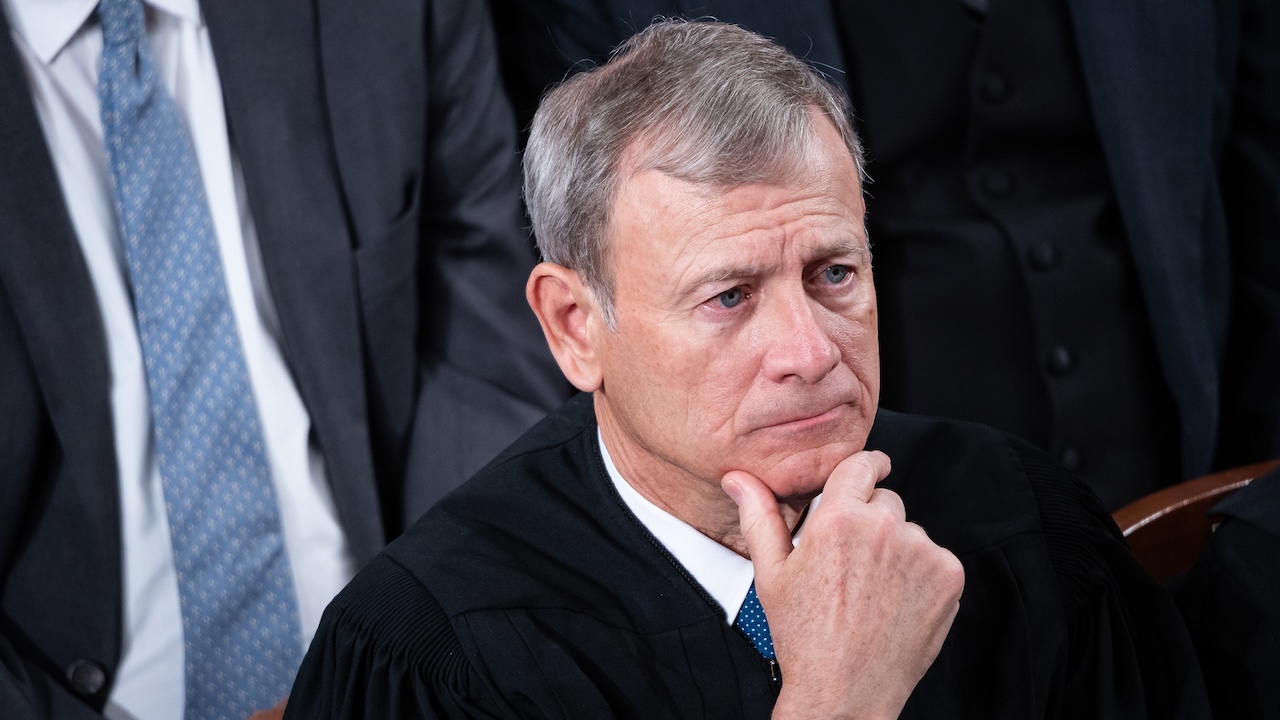
Supreme Court Chief Justice John Roberts looks on during the State of the Union address in the House chamber at the U.S. Capitol in Washington, on Feb. 24, 2026 (Francis Chung/POLITICO via AP Images).
Like the architectural historian who tried to block President Donald Trump’s ballroom from being built, Jan. 6 police officers were “not ‘just any person'” when they sued to force the installation of an “honorific plaque” — but that wasn’t enough to establish standing, a federal judge ruled.
U.S. District Judge Dabney Friedrich on Wednesday prominently cited Chief Justice John Roberts’ dissent in the ballroom case to explain why she sided against former U.S. Capitol Police Officer Harry Dunn and Metropolitan Police Officer Daniel Hodges and their claims of “psychic injuries,” even though they had an “unusually strong interest” as some of the “very officers Congress sought to honor” for protecting the Capitol.
The plaintiffs sued late last year to force the architect of the Capitol to install the plaque as Congress mandated in 2022, asserting “psychic injuries caused by the government’s failure to follow the law” for three years. Court documents said that the plaque is currently “displayed in the non-public Senate wing until the plaque can be placed in its permanent location” without “list[ing] the names of all of the officers.”
Love true crime? Sign up for our newsletter, The Law&Crime Docket, to get the latest real-life crime stories delivered right to your inbox.
A Trump-appointed judge who handled Jan. 6 cases and a number of other high-profile matters over the years, Friedrich found on Wednesday that “[d]istress resulting from what the officers perceive as the government’s failure adequately to honor or recognize their service is precisely the kind of psychological consequence arising from disagreement with government conduct that, standing alone, does not constitute a concrete injury under Article III.”
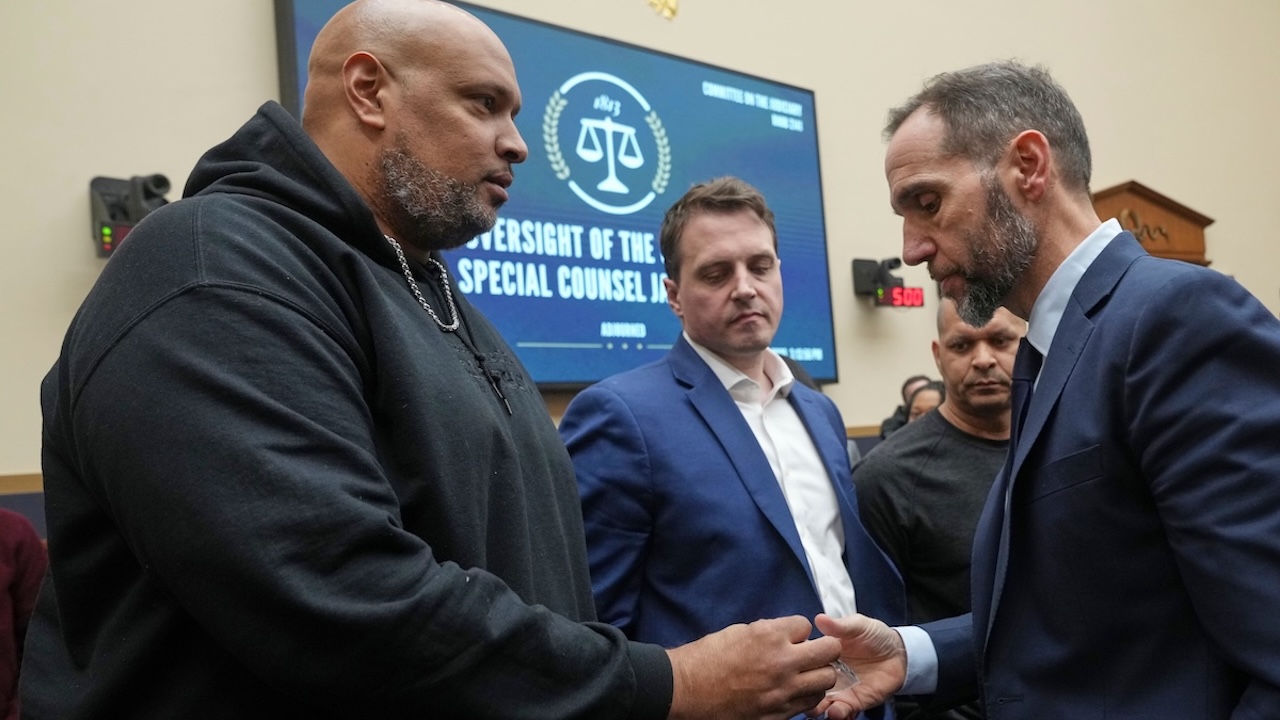
Former U.S. Capitol Police Sgt. Harry Dunn hands former Justice Department special counsel Jack Smith a police patch after the House Judiciary Committee hearing about his investigations into President Donald Trump at the Capitol in Washington, on Jan. 22, 2026. Looking on at center is Washington Metropolitan Police officer Daniel Hodges. (AP Photo/Jacquelyn Martin).
Then came the direct citation to Roberts’ dissent:
Nor does the officers’ unusually strong interest in the challenged government action transform that interest into a concrete injury. To be sure, the officers have a far more personal connection to the plaque than the public at large. They are not “just any person,” Nat’l Trust (Roberts, C.J., dissenting); they are among the very officers Congress sought to honor. That gives them an understandable and deeply personal interest in whether the government recognizes their service in the manner Congress prescribed. But Article III standing “is not measured by the intensity of the litigant’s interest.”
The judge again emphasized that Dunn and Hodges’ “especially compelling personal stake in receiving […] recognition” wasn’t enough because they “have not alleged facts showing that the challenged conduct caused or materially exacerbated their mental-health conditions.”
“Although the complaint links the failure to install the plaque to public perceptions of January 6 and of the plaintiff officers, it does not allege that the Architect’s failure to install the plaque worsened those perceptions. At most, the complaint suggests that the uninstalled plaque failed to improve an already unfavorable public perception,” Friedrich added.
Read the full opinion here.
The post Judge shouts out Chief Justice Roberts’ ballroom dissent as she turns away Jan. 6 cops who claimed ‘psychic injuries’ first appeared on Law & Crime.


