
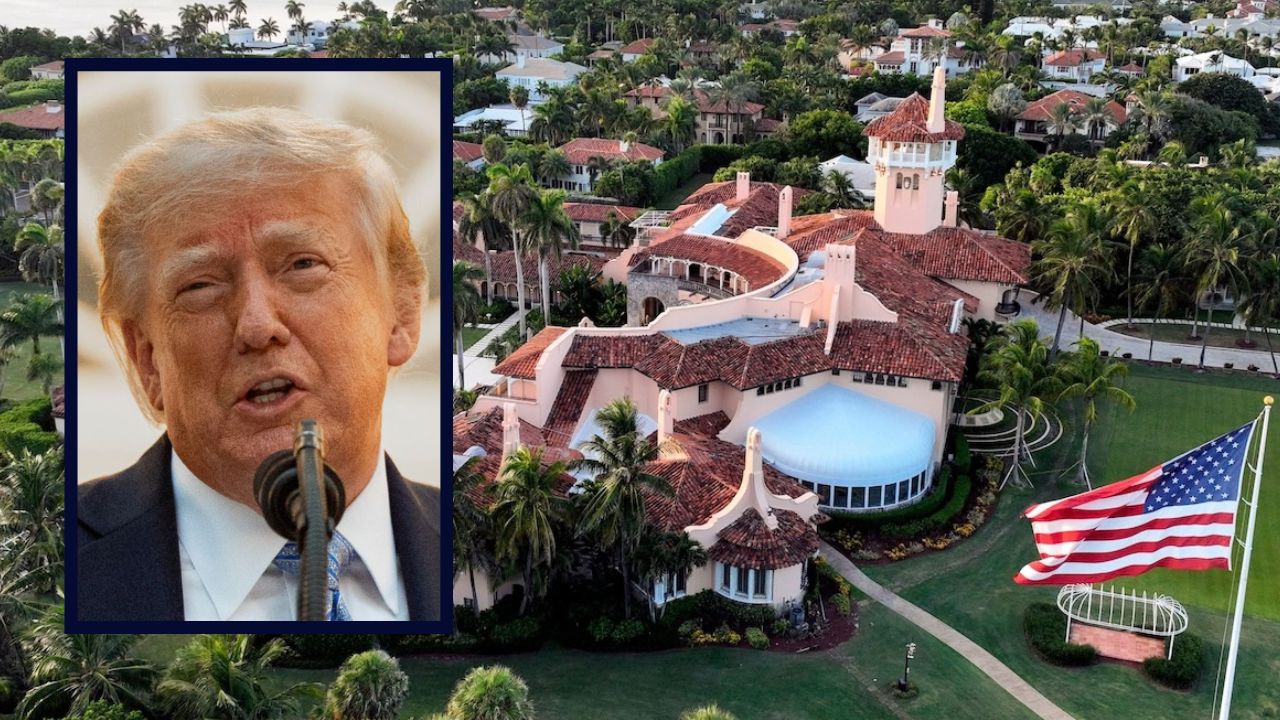
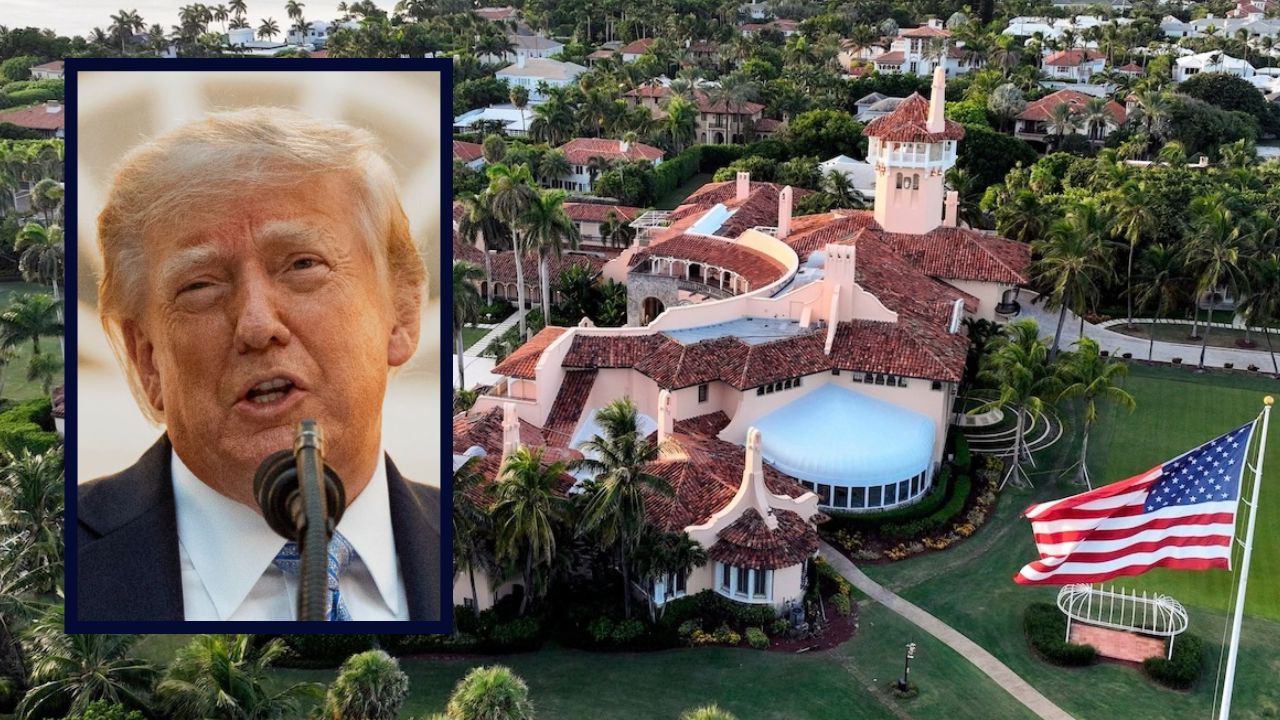
Main: An aerial view of President Donald Trump’s Mar-a-Lago estate is pictured, Aug. 10, 2022, in Palm Beach, Fla. (AP Photo/Steve Helber, File). Left inset: President Donald Trump speaks during a dinner in the Rose Garden of the White House, Thursday, Sept. 17, 2026, in Washington (AP Photo/Alex Brandon).
The DOJ asked a federal judge in Maryland to dismiss a prominent YouTuber’s quest for “allegedly-lost” records from the FBI’s 2022 search for classified documents at Mar-a-Lago, claiming the litigation might “perversely incentivize” others to sue.
LegalEagle — the YouTube channel of attorney and legal commentator Devin Stone — and the law firm National Security Counselors have brought several Freedom of Information Act (FOIA) lawsuits against the National Archives (NARA) asserting a “legal right” to the documents or FBI photocopies of them.
The plaintiff noted that President Donald Trump posted in February 2025 that the FBI had “returned” the Mar-a-Lago materials to Florida to “someday be part of the Trump Presidential Library.”
Love true crime? Sign up for our newsletter, The Law&Crime Docket, to get the latest real-life crime stories delivered right to your inbox.
More recently, U.S. District Judge Theodore Chuang issued a preservation order after the plaintiff sounded the alarm on a DOJ Office of Legal Counsel opinion from April Fools’ Day — which gave the president a green light to ignore the post-Richard Nixon administration Presidential Records Act (PRA).
Along the way, the Barack Obama appointed judge allowed the plaintiff to use “alternative” means to serve a subpoena on the president.
But now the DOJ is arguing that NARA is “making substantial progress processing public records requests for materials from President Trump’s first term” and there is “no basis for any court to disturb the usual FOIA processing principles.”
“The PRA imposes no duty to seize Presidential records, and the question of whether to refer the loss of presidential records to DOJ for ‘action’ is committed to NARA’s sole and unreviewable discretion,” the government’s reply in support of the motion to dismiss reads.
The DOJ claimed that, if LegalEagle’s “theory of the case” is accepted, it “would perversely incentivize overzealous FOIA litigants to sue NARA before it can possibly satisfy a request for presidential records.”
“[I]t makes little sense to compel a referral to DOJ in preparation for a future records request under the PRA—a bank-shot legal theory at best—when FOIA litigation against the FBI for records from President Trump’s first term has been underway for nearly two years,” the government said. “Plaintiffs’ brief guts its own demands for NARA to refer the President to the Department of Justice (Counts 3 and 4) and for DOJ to send NARA presidential records (Counts 5 and 6).”
The DOJ motion goes on like this:
Plaintiffs concede, as they must, that this Court may not compel NARA to refer an alleged loss of presidential records. Such a referral is the only recovery mechanism available by statute, and is committed to agency discretion. Plaintiffs offer no authority to the contrary—just policy.
LegalEagle’s attorney Kel McClanahan said in a comment to Law&Crime that “each part” of the DOJ’s brief “appears to make sense at first glance” but that the “arguments disintegrate” upon a closer look.
“This brief is emblematic of the rot at the heart of Trump’s DOJ: superficially logical arguments that have never been made before due to their underlying core fallacies, and that are only being made now to satisfy the whims of an amoral and desperately insecure would-be dictator,” he said.
The post ‘This Court may not compel’: DOJ fears case seeking recovery of ‘allegedly-lost’ Mar-a-Lago records will ‘perversely incentivize’ lawsuits first appeared on Law & Crime.


