
What To Know
- Time Season 3 (and the series) ended on a hopeful note for Mary-Louise; Bailey’s a different story despite a major decision.
- Creator Jimmy McGovern explained the ending, a shocking death, and what could be next for Siobhan Finneran and David Tennant’s characters.
Time Season 3, starring Siobhan Finneran and David Tennant, concludes with an episode that leaves one character happy and the other’s future very uncertain. TV Insider spoke with creator and writer Jimmy McGovern about the finale and more. (Find out why there won’t be a Season 4 here.) Warning: Spoilers for the Time Season 3 finale ahead!
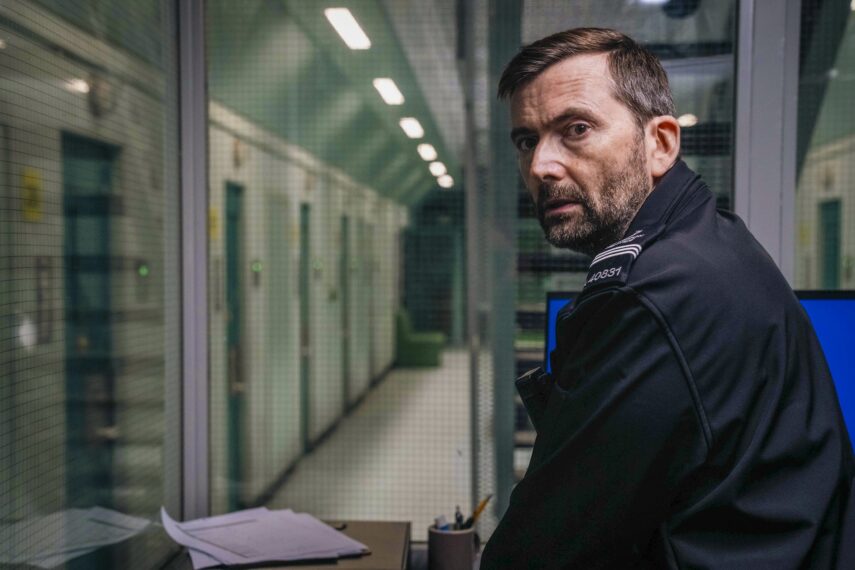
After Jennings’ (Daniel Ryan) reconciliation meeting between Ushindi (Chukwubuikem Molokwu) and Patsy (Louis Shelton) results in the latter young offender killing the former, Bailey’s (Tennant) the only one who can speak to the fact that he’d warned the other man it was a bad idea. Though at first he refuses to since it would mean losing a promotion and especially once his new girlfriend, Nicola (Jo Joyner), dies when she’s suddenly hit by a car (being seen as a better man in her eyes would’ve been something he got out of it), he does take the stand and tell the truth. Jennings ignored his warning, and that’s why Ushindi died. Bailey even talks about the bribe from the governor (the promotion) to keep quiet so it wouldn’t reflect badly on the institute.
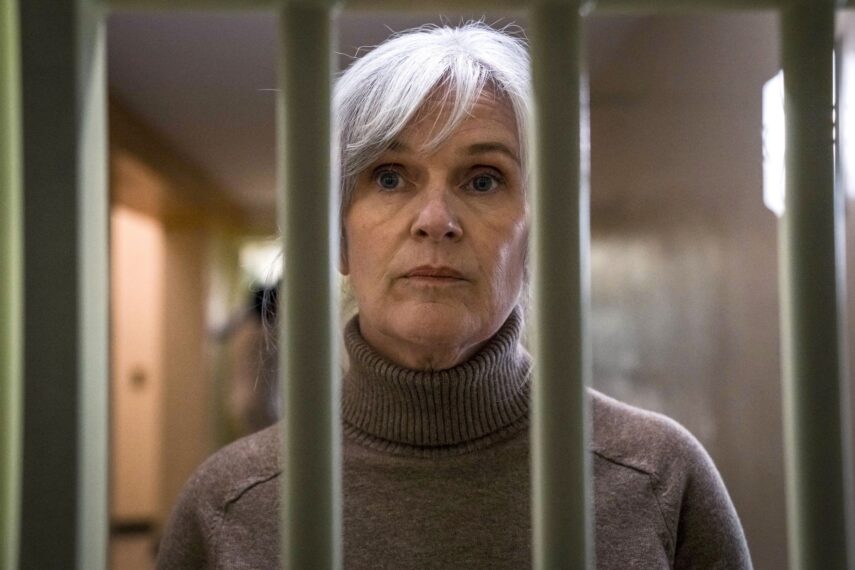
Meanwhile, Mary-Louise (Finneran), in the final scene of the series, reconnects with the priest with whom she’d been involved, Michael (David Wilmot) and who was sent away. She tells him she doesn’t want an explanation, for him to say he’s a priest and he can’t throw that all away for “a bit of aging skirt,” even if he wouldn’t use those words. Rather, she wants to hear him say they’ll stick together, open food banks, and do God’s work together, to hell with the bishop. He does just that, telling her about a place that looks after asylum seekers and is looking for a couple, preferably married, to run it. He was thinking they’d do it. The series ends with the two walking away together.
Below, creator Jimmy McGovern breaks down the finale.
Talk about telling the story of Mary-Louise having lost her faith this season.
Jimmy McGovern: I was into that myself. I’m into all things Catholic; I’m not a practicing Catholic at all, but I’m just fascinated by the faith. I’ve always been fascinated by the way the Catholic church treats men versus the way they treat women. And if you are a priest within the Catholic church, you are very, very, very, very valuable because it’s hard work trying to get priests. It’s a lot easier getting women and it’s much more costly to train priests than it is to train nuns. Anyway, so all the mechanics, all the logistics suggests what is the truth, that a bishop will go far easier on a priest than he ever will on a nun. You can afford to lose nuns, you can’t afford to lose priests. So that was part of it.
Courtesy of BritBox
But I was also interested in what is God’s work. And I think at the end of this drama series, she will start to do God’s work — no, sorry, that’s not true. She’s always done God’s work, but she’ll be freer to do God’s work now than she’s ever been away from the institution. So I think it’s a good story for her, but I have been reprimanded and will again be reprimanded by nuns who insist that allowing her to have the sexual relationship with the priest was a bit of a cop out. I don’t think it was.
Speaking of that, what did you want to do with her this season to get her to the point where she’s able to look ahead at the end to the finding a new faith and with Michael?
I think the story always propelled her there. We didn’t know this at the beginning. I don’t think we knew it in Series 2, but when we set about writing Series 3, that’s when we knew what we were going to do with her. So I just think it’s a really well told story and there’s absolutely no plot in that story, is there? It’s just a woman we come to know doing the things that we would want her to do. Being heroic, being heroic, it’s a hell of a lot for a woman even these days to take on the Catholic church and the orthodoxy of the Catholic church. She’s brave.
So how early on in the process of writing Season 3 did you know that the last scene would be the two of them walking away together and looking ahead and her getting that part of her life back?
Yeah. I’m not sure I wrote the scene along the beach. It was just a wonderful day, which is unusual for the — in fact, it was even more unusual because we shot this one in Belfast, which is even wetter and rainier than it is in Liverpool and Manchester. So I think that was just pure look and a great director, Paul Whittington is a tremendously gifted director, a great director using that to do that shot. I don’t think I wrote that, but I certainly wrote all the dialogue in that cafe. In hindsight, it looks as though it was inevitable. That’s the way she was always going to go. I think that’s the sign of a good story that when you watched it, you say to yourself, “That was never predictable, but having watched it, I now see it was inevitable, but at no time did I predict that.” I think her story is a very good story, well told and brilliantly acted. She’s a tremendously gifted actress, isn’t she?
So good. So when you wrote it then, did it just kind of end with them walking out of the cafe or what was it? Was it just them in the cafe?
If I had the script here, I’d be able to tell you, but I can’t remember. But I tend not to write that kind of scene. So I wouldn’t be surprised if I didn’t write it. It would be Paul’s idea, but I’m claiming it anyway. [Laughs]
Bailey, meanwhile, had his own crisis to contend with. What was the story that you wanted to tell with him this season?
We didn’t set out to tell that story at all. We set out to tell a story, a story which we will find inside a young offenders institution. That’s all we had at the very beginning of the research. We didn’t have a specific story. Apart from Mary-Louise, who was always going to be in that position of having lost her faith, that’s the only story we had. And our researcher found a story about a mother who comes in to see her son and they cannot speak the same language. I just said, “That’s brilliant. That’s it.” It all started from there. The boy attempts to get his mother into an ordinary visits room, but can’t manage it, has to go for a reconciliation meeting, in the course of the reconciliation meeting, dies, the two prison officers cover it up, so Bailey gets involved in it and so that’s how the story progresses. It was just a story we found in the course of research. But it was a great story, absolutely great story.
Courtesy of BritBox
So moving. Why kill off Nicola when you did and how you did?
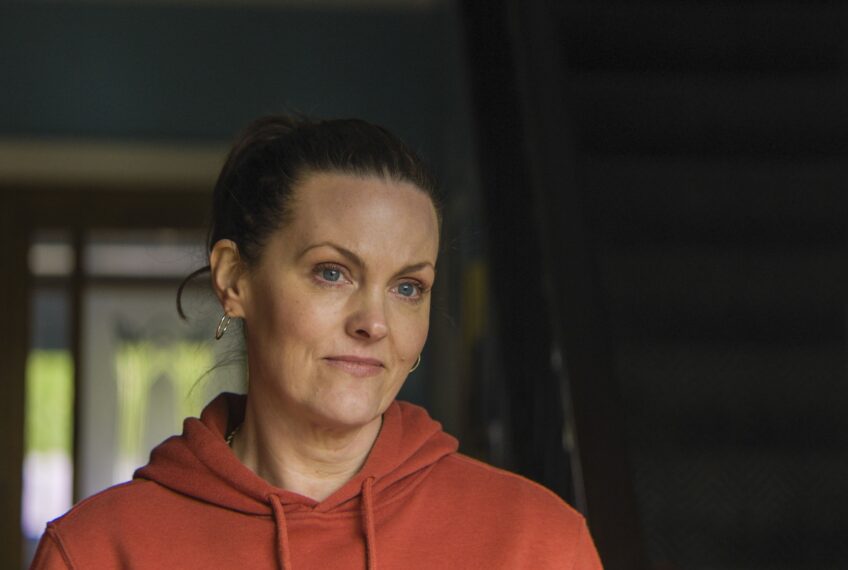
I know. I didn’t at first. I didn’t. I promise you I didn’t… Sorry, in the first draft — I needed her out the way so that Bailey could tell the truth for the sake of telling the truth, so that Bailey could tell the truth without gaining anything from it. And if she’s around, he tells the truth to gain her whom he’s besotted with. So we had to get her out of the way. In the first draft, we had that, a sudden bang. I wanted hands and arms to lift down from heaven and just snatch her away. That’s how sudden it had to be. It’s almost Greek, or obviously wouldn’t be fast speeding vehicles. It’s Greek or Roman or God’s reached down and snatch her away.
Then in the subsequent drafts, I said, “No, it’s too much. We’re punishing Bailey too much.” So I had her move away, but totally disappear, never to be seen again. That had two problems. The first one is nobody would ever be sure she’s not going to come back again. They’ll be waiting for her to come back. And the second is the BBC loved the death. So we came under pressure on both those counts and I succumbed, I succumbed. So I went back to the killing, which has its strengths, but it’s probably a wee bit too much, but I don’t know.
No, it’s just so shocking because then it does lead to Bailey saying, “Well, I had something to gain. Now I don’t.” And you wonder, what’s he going to do? So then it does lead to the surprise when on the stand, he does tell the truth. Speaking of that moment, how surprised was Mary-Louise when Bailey did that, when he actually did tell the truth on the stand? Because that was after that conversation he had between the two of them, which was so great, by the way.
Yes. Oh, lovely. Thank you. Yeah. I think she’d have been very pleasantly surprised, and I don’t think she was expecting it. I’m sure she’d have been very, very pleasantly surprised by him.
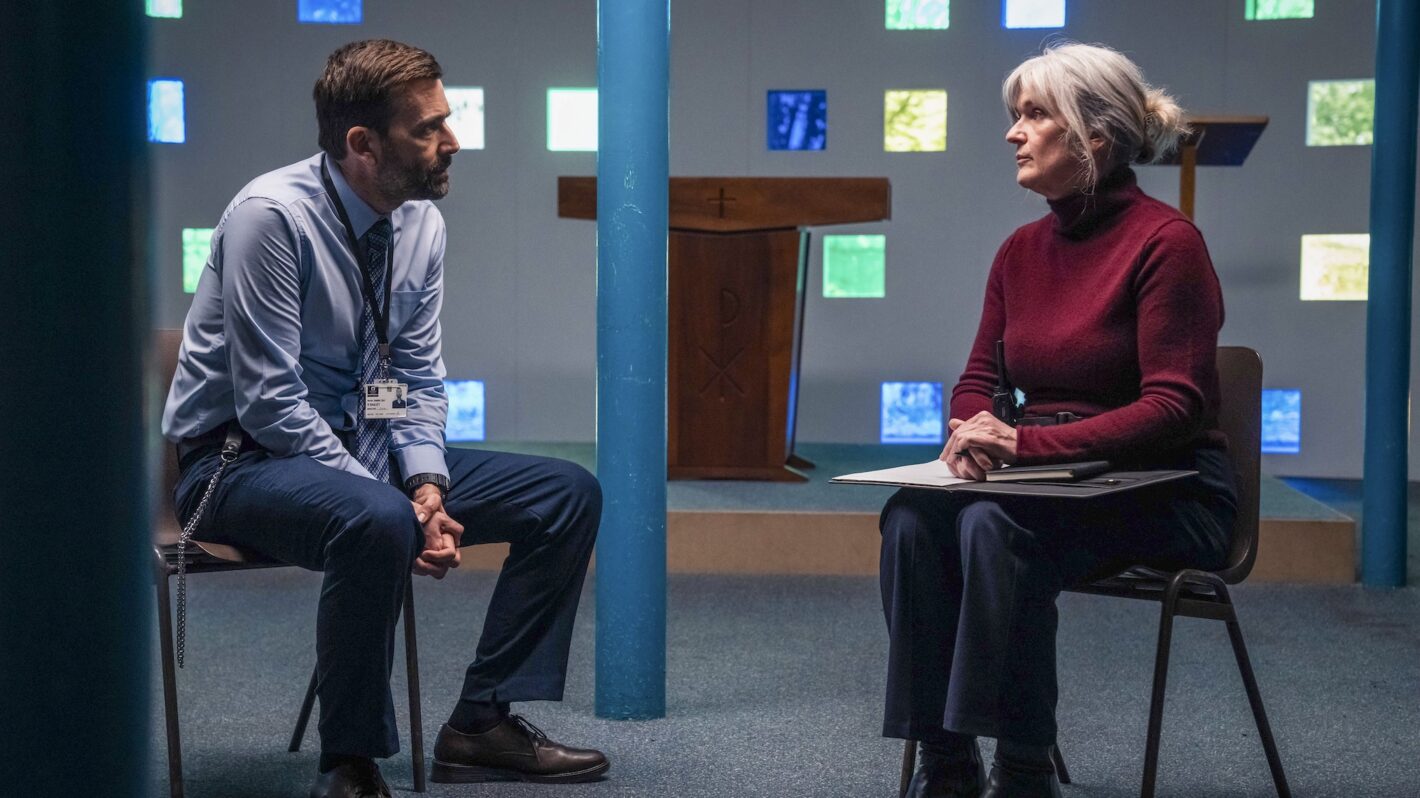
Going back to that scene with Mary-Louise and Bailey, what had you wanted to do with that? Just the two of them sitting there talking to each other was just great television.
Yeah, I like that scene. Is that the one where he establishes he can trust her?
Yeah, he’s like, “I need to know something about you.”
“I know you’ll never repeat this, but I want to know you’ll understand. Have you ever been with a man?” And it’s a lovely scene because it touches upon her story then, and it is nice for that. And he’s a brilliant actor. He’s a brilliant actor. And the way he does that scene, the way he lays out the case, the way… Often that kind of stuff stinks, doesn’t it? The scene setting and the preamble and all that. But it didn’t with him. He needed to do it. He needs to establish the situation as it is, and he established it and then gave her what the problem was. “I intend to tell the truth, but I’ll be doing it for her. I want that woman back.”
Courtesy of BritBox
You have two great actors in this scene where it’s just like all you want is more of it. You just want more of the two of them sitting there and just talking. And that’s great writing, that’s great acting, and that’s just a great show when you have things like that.
Yeah. I love television like that where just two people talking to each other and the camera stays almost still on them. It’s lovely television, it is, isn’t it?
It’s almost something you could see in a play. You just sit there and you just watch them and you watch them do what they do.
Yes. Yeah, it is.
What could be next for both Mary-Louise and Bailey? What do you think is next for these two characters?
I think she’s going to be very, very happy with that priest. I actually know that there’s a kind of known asylum… It’s a place called Asylum Link over here on Merseyside, and I’ve seen the work they do, and the work they do is fantastic. It’s phenomenally good. They get asylum seekers from all over the world, and these people are not what you’d imagine them to be. These people are bloody doctors and scientists and wonderful, wonderful people who cannot do the work that they are adept at because of rules and regulations, et cetera. But at Asylum Link, they are helped in a massively important way. So I think she would be perfect for that kind of work. I think she’ll be great.
Bailey, I don’t know. He will find something, I’m sure. I don’t think he’ll ever go back to prison life though.
Yeah, but he talked about how he didn’t have anything else, that’s the thing, too. So that’s the big question is what this does to him. I will say I’m happy to hear you say that Mary-Louise is going to be happy because everything we saw with it the season and what you explored with her father, too…
Oh, lovely. Yeah. I love that scene about how we all prepare for the death of our parents, how we all rehearse for it. We all do it, but nobody ever confesses to doing it.
What made Peter (Ollie McNulty) the right person to be the one who did get out and have that moment with Mary-Louise at the end? That was a nice exchange between the two of them.
Yeah. He was a decent character there. He was played by a very good young boy, wasn’t he? He’s a very, very good actor, that boy, but he was obviously innocent. Inside that story, there’s a hell of a scandal. It’s probably the same over in the States, but we have a law. It’s not really a law. It’s never been passed by Parliament, but it’s been passed by laws of precedence. When a judge rules on something, it becomes part of our law because there’s been a previous ruling by the judge and it’s called joint enterprise. And because of joint enterprise, if there are three or four people involved in a murder and they can all be proven to have played some role, however small, in that murder, they all get the same sentence, even though one boy wielded the knife. The other three who did not wield the knife will still get life. They will all get life. And it’s the principle of joint enterprise, and it’s a scandal because even of those four boys, one boy was totally innocent, in fact, tried to help. The other two were more innocent than the guy who wielded the knife, but they all got life. It’s a scandal really. But we wanted the good boy to get off, obviously, and he did.
Yeah. And then there’s James’ (Louis McCartney) story where there was just never any happy ending possible for that one, right?
I know. Again, a really good actor, a really good young actor. And if you asked me why he killed his brother, I would have to say I don’t really know. He never really tells us, but I would probably guess he couldn’t take it anymore. He just couldn’t bear looking at him in that wheelchair, and that’s why he did it. But I don’t know. I don’t know. He gives many reasons himself, doesn’t he?
Time, Streaming Now, BritBox


