
President Donald Trump said over the weekend that NBC News anchor Kristen Welker will be reported to the Federal Communications Commission after she described his midterm primary endorsement record as having produced mixed results.
The threat, posted to Truth Social on Sunday, August 30, is one of the most direct efforts Trump has made yet to point the FCC at an individual journalist rather than a network as a whole, and it drew an immediate rebuke from inside the commission, along with reaction from Congress and press freedom groups.
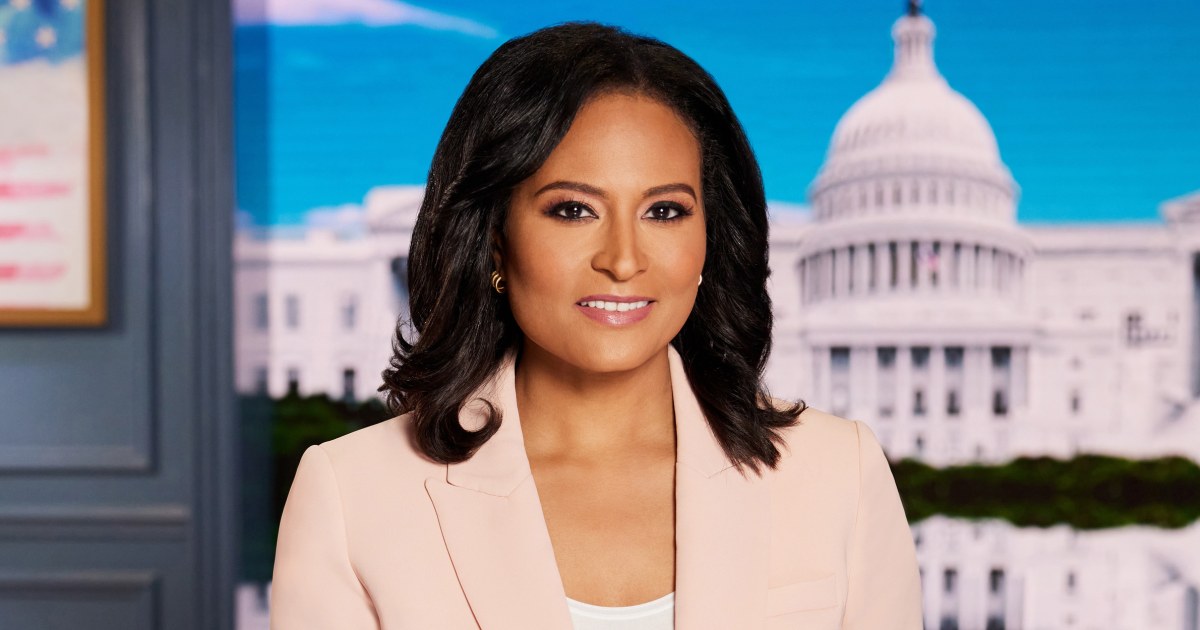
What Did Kristen Welker Actually Say?
The comment that set off Trump’s post did not air during NBC’s national Sunday broadcast of Meet the Press. Instead, according to reporting from CNN and several other outlets, Kristen Welker made the remark during a pre-show live segment on NBC’s Washington, D.C. affiliate, WRC, while previewing that day’s episode. In the segment, she said Trump had experienced mixed results with the candidates he endorsed this election cycle, noting that some had lost their primary races, while also saying Trump would still loom large over the broader midterm elections.
Here’s Kristen Welker ending her career by saying Trump has “mixed results” with his endorsements. => https://t.co/KLoNuUgJsC pic.twitter.com/YQAkNRa7pM
— Mark Kaye (@markkayeshow) August 31, 2026
Trump’s Truth Social post did not specify where he had seen or heard the comment, and a transcript of that day’s actual Meet the Press broadcast shows Welker did not repeat the phrase on the national program itself.
Her framing was not without factual grounding. NBC’s own reporting this year had tracked several Trump-endorsed candidates who lost their primaries, including Tennessee congressman Andy Ogles and Iowa gubernatorial hopeful Randy Feenstra. Trump, for his part, has pointed to a far higher overall success rate. According to Ballotpedia, which tracks endorsements nationally, Trump had made roughly 313 endorsements this cycle with a success rate around 96 percent, a number that sits between his own claimed figures and the specific losses that prompted Welker’s “mixed” description.
Trump’s Response on Truth Social
Trump’s post was lengthy and pointed. He wrote that Welker, whom he referred to as the “Unpopular ‘Hostess’ of the once great Meet the Press, now considered Meet the Fake Press,” had made a “purposeful inaccuracy” by describing his endorsement record as mixed. He cited two specific recent wins, Darline Graham’s South Carolina Senate primary victory and Mike Mazzei’s win in the Oklahoma governor’s race, as proof that his endorsement success rate stood at 100 percent for Senate races and 98 percent for House races.

He then escalated the complaint into a call for regulatory action. “Because of this purposeful inaccuracy, she will be reported to the FCC for rebuke or punishment,” Trump wrote, adding that Welker was “not the only one” facing similar scrutiny. In a separate post the same day, Trump complained about polling he considers unfavorable, writing in capital letters that the situation was out of control before adding, “FCC to the rescue!” He closed his original post by calling on FCC Chairman Brendan Carr and the rest of the commission to take what he called a “threat to our country” seriously.
NBC News and an FCC Commissioner Respond
NBC News defended its anchor within hours. “Kristen is one of the best in the business, and we stand by her,” a network spokesperson said in a statement issued Sunday afternoon.
The more consequential response came from inside the FCC itself. Commissioner Anna Gomez, the lone Democrat on the five-member commission, posted on X that the agency has no legal authority to punish a journalist simply because an administration dislikes their coverage. “These threats to press freedom are dangerous,” Gomez wrote, adding that they undermine the foundation of American democracy.
FCC Chairman Brendan Carr, a Trump appointee, did not respond to requests for comment from CNN or other outlets following the president’s post. The White House also did not immediately respond to press inquiries about the matter.
Bernie Sanders and Other Political Reaction
Vermont Senator Bernie Sanders was among the most prominent lawmakers to weigh in. “Trump, like all authoritarians, wants to silence those who disagree with him,” Sanders wrote on X, framing the episode as an attempt to punish a journalist for accurate reporting and invoking the First Amendment directly in his response.
Reaction on social media was largely critical of the president’s post, with many users echoing Gomez’s characterization of the threat as an overreach. Supporters of the president, meanwhile, have generally sided with his broader argument that mainstream outlets consistently understate the strength of his political standing.
What Authority Does the FCC Actually Have Over Journalists?
The Federal Communications Commission’s own consumer guidance states plainly that the agency cannot prevent the broadcast of any particular point of view and has limited legal authority to act on complaints about program content. That limitation traces back to Section 326 of the Communications Act, which explicitly bars the commission from exercising any power of censorship over broadcast communications or interfering with free speech carried over the airwaves.
In practice, the FCC’s authority runs to the individual television and radio stations that hold broadcast licenses, not to national networks or the journalists they employ. Anyone can file a complaint with the agency, but there is no formal mechanism for objecting to how a news anchor characterized a set of facts. The commission does maintain a narrow news distortion policy, but it applies only to deliberate falsification of news, not to disagreements over interpretation or emphasis, and historically requires strong direct evidence of intentional deception before the agency acts.
That does not mean the threat is entirely without teeth. While the FCC cannot fine or silence Welker personally, it holds real leverage over the broadcast licenses that NBC’s local owned-and-operated stations depend on, along with any pending mergers or transactions the network’s parent company might need approved. Legal scholars who study the commission describe this as the practical pressure point: even when a formal punishment is legally implausible, the mere threat of scrutiny tied to a station’s license can shape how a network handles coverage going forward.
A History of Tension Between Trump and Welker
This was not the first clash between the two. In June 2026, Trump sat for a nearly hour-long Meet the Press interview with Welker, recorded on a farm in Chippewa Falls, Wisconsin, that ended abruptly after a tense exchange. Welker pressed Trump on his campaign pledge to avoid new wars, asking directly whether the military conflict with Iran meant he had broken that promise. Trump denied ever making the guarantee, telling her, “I didn’t guarantee no war,” despite having made that pledge repeatedly on the campaign trail in 2024.
The interview also covered Trump’s unsubstantiated claims that California’s slower vote-counting procedures were evidence of a “rigged” election. When Welker asked him to provide evidence, the conversation grew combative, with Trump questioning her objectivity directly before the interview came to an early end. NBC’s own fact-check of the broadcast, along with an independent review from FactCheck.org, found that several of the claims Trump made or repeated during the interview were false or unsupported.
Part of a Broader Pattern With the FCC and the Press
The Welker threat lands amid a year of escalating friction between the Trump administration and major broadcasters. In August 2026, Disney and ABC filed a First Amendment lawsuit against the FCC after the commission ordered all eight of ABC’s owned-and-operated stations to file for license renewal years ahead of schedule, a move the companies called a retaliatory response to ABC’s news and entertainment programming. Carr has described that lawsuit as meritless and said the early license review was tied to an ongoing investigation into Disney’s diversity and inclusion practices rather than to the content of ABC’s news coverage.
CBS faced its own reckoning the year before. Paramount Global, CBS’s parent company, agreed in July 2025 to pay $16 million to settle a lawsuit Trump filed over how “60 Minutes” edited an interview with then-Vice President Kamala Harris, a settlement that came together while the FCC was separately reviewing Paramount’s merger with Skydance Media. ABC had settled a similar defamation claim in December 2024 for $15 million. Disney also briefly pulled late-night host Jimmy Kimmel off the air in September 2025 after Carr publicly criticized comments Kimmel made on his show.
Commissioner Gomez has pointed to this pattern repeatedly, telling reporters this year that she is glad to see companies like Disney pushing back rather than settling, and describing the broader trend as an attempt to weaponize the commission against unfavorable coverage. Carr and the administration have consistently framed each individual action as a legitimate exercise of regulatory authority rather than retaliation for critical coverage.
Frequently Asked Questions
What did Kristen Welker say about Trump’s endorsements?
During a pre-show segment on NBC’s Washington, D.C. affiliate, Welker said Trump had experienced mixed results with candidates he endorsed this primary season, noting some losses while also saying he would still loom large over the midterms.
Can President Trump actually get the FCC to punish Kristen Welker?
Legally, the path is narrow. The FCC’s own guidance states it cannot police a broadcaster’s point of view, and its authority applies to station licenses rather than individual journalists. Commissioner Anna Gomez has publicly said the agency has no authority to punish a journalist over coverage the administration dislikes.
What did NBC News say in response to Trump?
NBC issued a short statement defending its anchor, saying, “Kristen is one of the best in the business, and we stand by her.”
Has Trump clashed with Kristen Welker before?
Yes. In June 2026, Trump ended a Meet the Press interview with Welker early after a tense exchange over his “no new wars” campaign pledge and unsubstantiated claims about a “rigged” California primary.
What authority does the FCC have over NBC?
The FCC licenses individual local broadcast stations, including those owned by NBC, rather than the national network itself. It can review or delay license renewals and weigh in on mergers, but Section 326 of the Communications Act bars it from censoring program content or punishing a station for a particular viewpoint.
Who is Anna Gomez?
Anna Gomez is the sole Democratic commissioner on the five-member FCC, appointed by President Biden in 2023. She has repeatedly criticized what she describes as the commission’s use of its authority to pressure broadcasters over coverage critical of the Trump administration.
Also Read: Novak Djokovic Reveals Wife Jelena Dated Tennis Rival, Calls It Uncomfortable
Last Updated on August 31, 2026 by 247 News Around The World

