
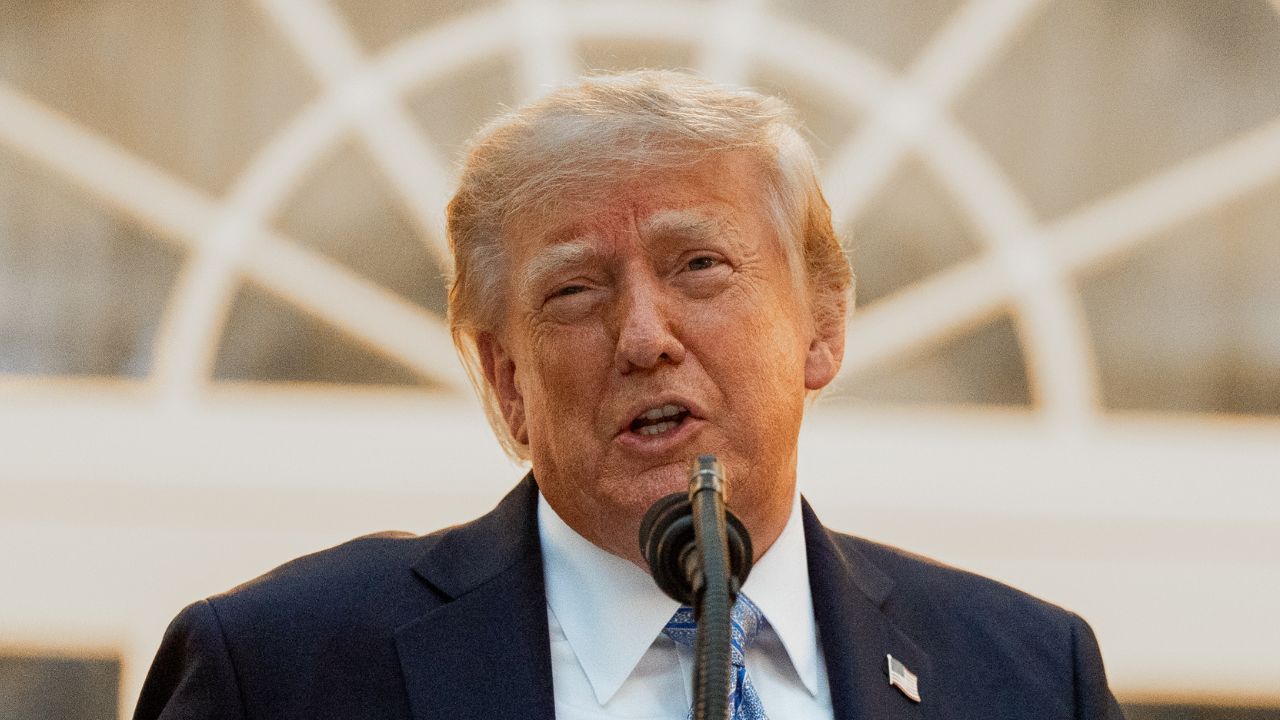
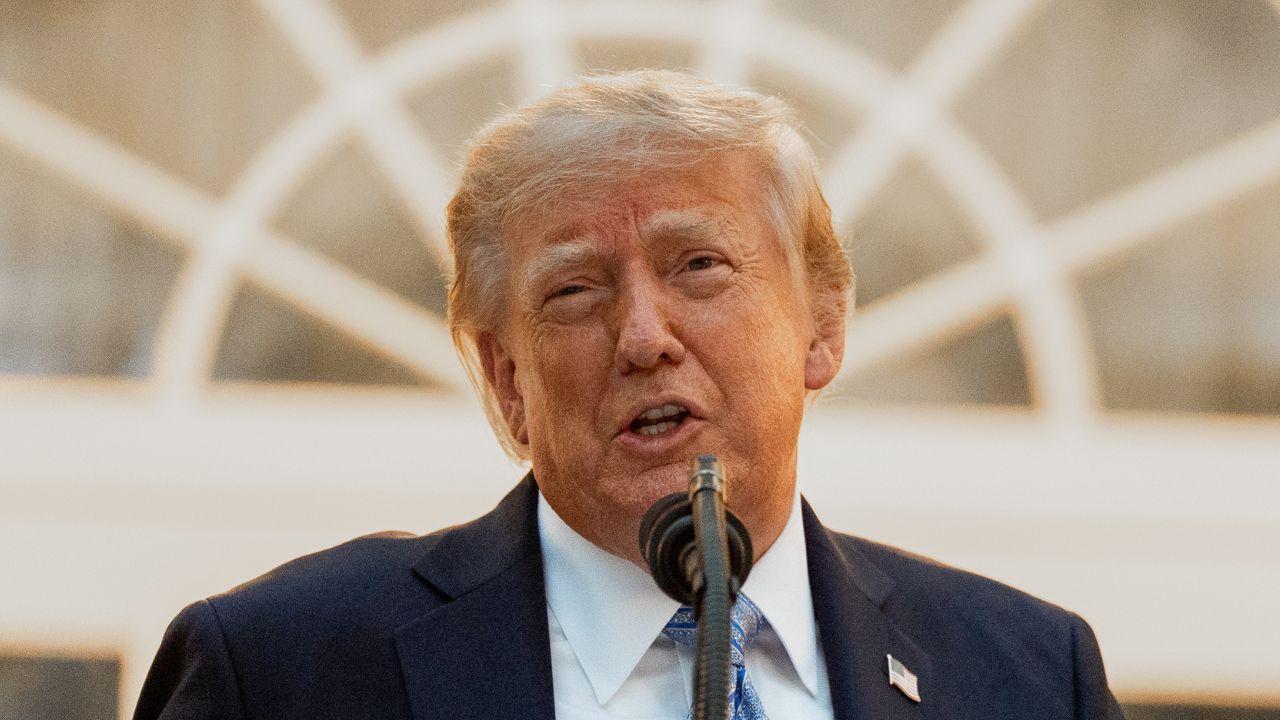
President Donald Trump speaks during a dinner in the Rose Garden of the White House, Thursday, Sept. 17, 2026, in Washington (AP Photo/Alex Brandon).
The U.S. Department of Justice on Thursday asked a federal court of appeals to effectively reverse itself and remove the U.S. register of copyrights from her job for the second time in two years.
From October 2020 until early May 2025, Shira Perlmutter, an attorney, served as the register of copyrights and director of the U.S. Copyright Office within the Library of Congress.
On May 8, 2025, in one fell swoop, President Donald Trump fired the librarian of Congress and Perlmutter as well. The librarian was replaced with Todd Blanche, Trump’s onetime criminal defense attorney, and the current U.S. attorney general. Blanche tried to replace Perlmutter with a DOJ official, but Perlmutter sued.
Love true crime? Sign up for our newsletter, The Law&Crime Docket, to get the latest real-life crime stories delivered right to your inbox.
Perlmutter’s path back to her position was not guaranteed or easy.
In July 2025, U.S. District Judge Timothy J. Kelly, a Trump appointee, denied Perlmutter’s requested injunction “because she has not shown that she will be irreparably harmed without this relief.”
In September 2025, however, the U.S. Court of Appeals for the District of Columbia Circuit issued an injunction pending appeal restoring Perlmutter to her office based on the notion that the position she holds is legislative in nature. Therefore, the president’s effort to remove such an officer violated the separation of powers, the divided panel found.
Now, the DOJ is imploring the D.C. Circuit to affirm the district court’s denial of an injunction and allow the Trump administration to remove Perlmutter from the Copyright Office and replace her as it sees fit.
“The decision cannot be reconciled with decisions of this Court and the Supreme Court, which make clear that the librarian and register exercise executive power and thus must be components of the Executive Branch for constitutional purposes,” the government’s 71-page appellate brief reads.
The DOJ says any prior analysis on the matter is invalidated by a series of U.S. Supreme Court decisions that affirmed the president’s authority to fire political appointees without cause — unless they happen to sit on the Federal Reserve Board of Governors.
To hear the government tell it, the elimination of for-cause removal protections has rendered Perlmutter’s purported firing a fait accompli.
“[I]n Slaughter, the Court confirmed that the President’s removal power applies to all ‘[s]ubordinates who exercise the President’s power’—’the lowest officers, the middle grade, and the highest,'” the brief argues, citing the high court case.
The DOJ also claims that Perlmutter has shifted her argument in the months following the appellate reprieve she won.
“Now at the merits stage, plaintiff has essentially abandoned the panel majority’s reasoning, and for good reason,” the brief goes on.
The plaintiff’s 72-page opening brief, however, strongly maintains her argument that the Library of Congress is a legislative agency, but offers an alternative argument that the Federal Vacancies Reform Act (FVRA) would bar the president from appointing Blanche to head that agency in the first place.
Perlmutter also maintains that since the president lacks the ability to directly hire the copyright register, an inferior officer, he lacks the ability to directly fire whoever holds any such position as well.
The DOJ rejected those arguments as contradictory.
“The upshot of plaintiff’s position—and the effect of the injunction pending appeal—is that the President may neither designate an Acting Librarian who can remove plaintiff, nor remove her himself,” the DOJ’s brief goes on. “Plaintiff is thus exercising executive power outside the control and supervision of the President in whom such power is vested.”
The DOJ also says this state of affairs could create a different kind of problem for the separation of powers.
From the government’s brief, at length:
[I]f the President may neither designate an Acting Librarian nor remove plaintiff directly, he may achieve her removal only by appointing a new Librarian with the Senate’s advice and consent. And if the Senate does not consent to a new appointment, plaintiff could continue serving as Register indefinitely. This would hand the Senate an effective veto on the President’s removal of the Register, violating the basic rule that Congress may not “draw to itself, or to either [House], the power to remove or the right to participate in the exercise of that power.”
The DOJ argues for unvarnished executive power to close its brief.
“[E]ven if the panel majority were correct that the Register exercises only some executive power, that still would counsel against the issuance of a preliminary injunction,” the filing goes on. “Article II vests the entire executive power—not just ‘considerable or substantial; parts of it—in the President alone.”
The post Trump admin argues for vast presidential firing power in bid to remove copyright official for the 2nd time in 2 years after DC Circuit reversed lower court and defied Todd Blanche first appeared on Law & Crime.


