
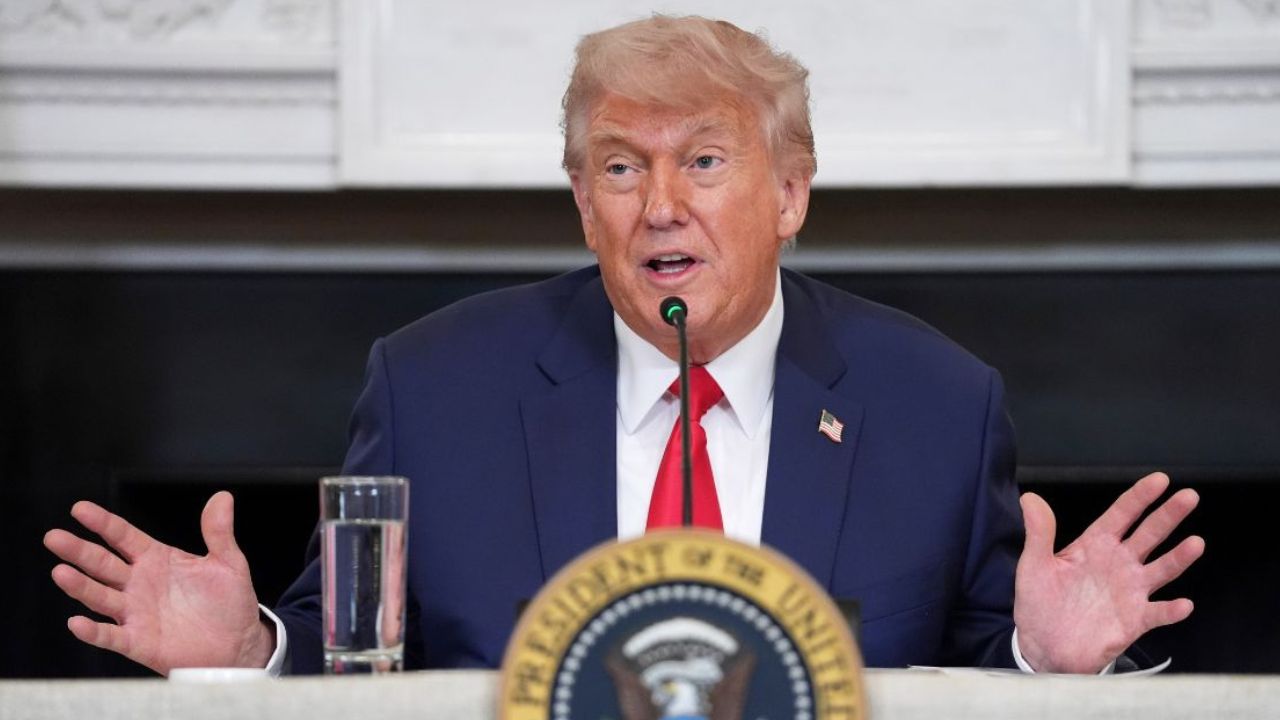
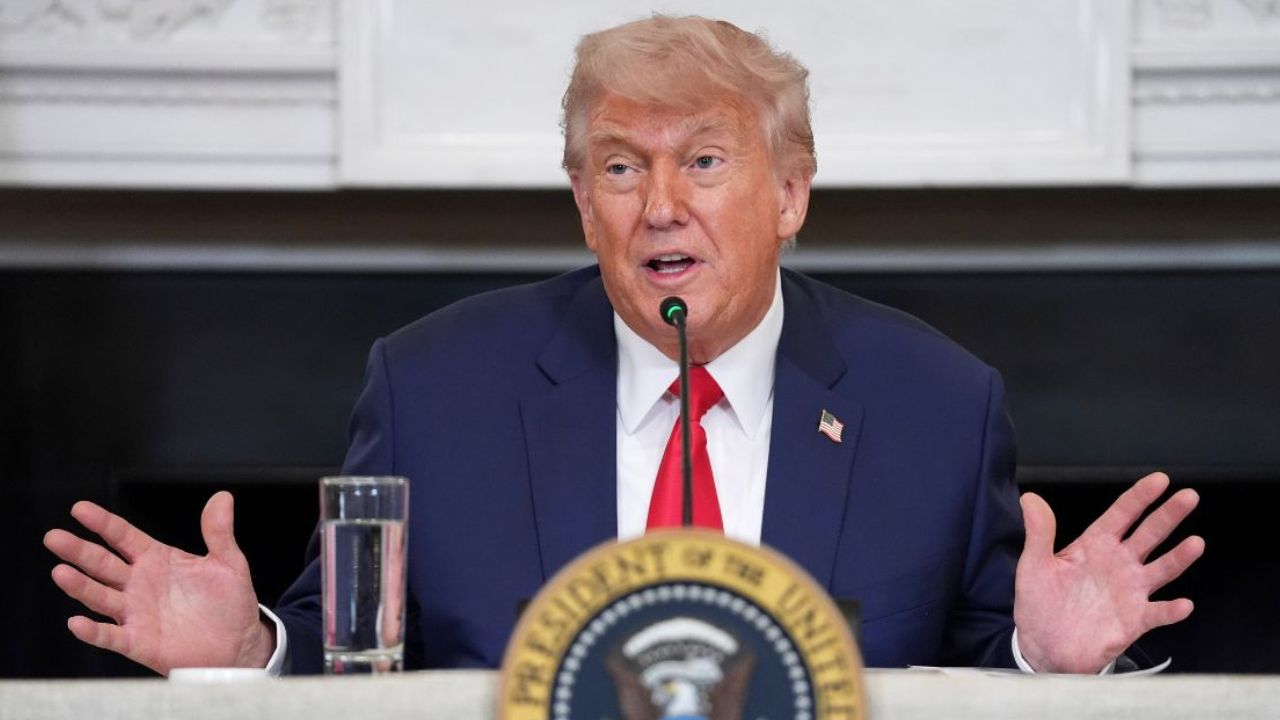
President Donald Trump speaks during an “Invest in America” roundtable with business leaders at the White House, Monday, June 9, 2025, in Washington (AP Photo/Evan Vucci).
The U.S. Department of Justice on Monday asked the 11th U.S. Circuit Court of Appeals to reverse a lower court order and allow the Trump administration to access the names of election workers and volunteers in Fulton County during the 2020 election.
In the underlying case, the DOJ obtained a subpoena for the records from an out-of-state grand jury in North Carolina in April.
The Fulton County Board of Registration and Elections complained the subpoena was an “unprecedented” effort to “target and harass the President’s perceived political enemies” due to lingering bitterness over his loss to Joe Biden in the Peach State.
Love true crime? Sign up for our newsletter, The Law&Crime Docket, to get the latest real-life crime stories delivered right to your inbox.
In June, U.S. District Judge William M. Ray II, who was appointed by President Donald Trump during his first term in office, quashed a subpoena issued for those records, characterizing the breadth of the request as “staggering” and the necessity as “questionable, at best.”
The district court contrasted the burden on the county with the need asserted by the Trump administration and found the government’s reasons substantially lacking due to the lapse in the statute of limitations “on any alleged crime related to the 2020 Election.”
Now, the DOJ insists the district court overplayed a “premature reliance on the statute of limitations” which “erroneously understated the government interests in obtaining” the records in question.
“The court was mistaken on multiple levels,” the government’s 66-page opening brief reads. “A future defendant’s (waivable) statute-of-limitations defense is not a valid basis to quash a subpoena served on a grand-jury witness.”
To hear the government tell it, when the district court admitted the statute of limitations was not an absolute defense, but quashed the subpoena anyway, the result was “a threshold legal error.”
Ray did concede a “subpoena is not objectionable merely because it seeks documents beyond the period of the statute of limitations,” but took that civil procedure axiom further by applying a balancing test to consider the DOJ’s need and the election board’s burden.
In other words, the court took the idea of the statute of limitations as the first step in its analysis and then took several other steps.
The DOJ says that first step never should have been taken in this case.
“That was error because the statute of limitations is an affirmative defense to be raised following the return of an indictment, not the basis for a witness served with a subpoena to avoid compliance with it,” the Trump administration’s appellate brief goes on.
The filing elaborates:
[E]ven following indictment, the statute of limitations is an affirmative defense that is subject to principles of waiver and forfeiture and that becomes part of a federal criminal case only if timely raised by a particular defendant. The statute of limitations’ status as a defense personal to a defendant and unique to the trial stage makes it an unsuitable ground for objecting to a grand-jury subpoena served on a mere witness such as the Board here.
The government also points to a decided lack of precedential support for the kind of analysis the district court performed.
“In light of these considerations, it is unsurprising that neither the Board nor the district court cited any appellate authority approving the quashing of a grand-jury subpoena based on the asserted expiration of the limitations period,” the brief continues. “Case law is uniformly to the contrary.”
Ray, however, anticipated at least some of this criticism, the DOJ says.
“The district court, for its part, acknowledged some of the principles reflected in the above cases, including that the statute of limitations is an affirmative defense to be raised ‘after prosecution has already begun,'” the government’s brief goes on. “The court nonetheless believed the limitations period pertinent to assessing the government’s need for subpoenaed information at the grand-jury stage on the theory that any defendant would inevitably ‘bring up a statute of limitations bar.'”
The DOJ also says the district court got the remaining steps wrong.
“The district court’s limitations analysis was mistaken in any event,” the government argues. “The court deemed the government’s need for the information to be minimal, however, by focusing solely on whether the subpoena sought information likely to result in a ‘prosecutable’ offense. The court abused its discretion in so concluding.”
Specifically, the lower court said the government had a “low” need for the records because the only crimes related to the 2020 election possibly remaining statutorily viable are misdemeanor record-keeping offenses that do not require a grand jury presentation.
Here, the DOJ says the judge confused matters.
“[T]he recipient of a grand jury subpoena, not the proponent, bears the burden of persuasion and must make a ‘strong showing’ that compliance would be unreasonable or oppressive,” the filing continues. “The government, however, is under no obligation to defend a subpoena by predicting what eventual criminal charges might result from it, if any.”
The post Trump admin asks 11th Circuit to reverse ‘mistaken’ Trump-appointed judge and resuscitate ‘staggering’ subpoena for names of 2020 election workers in Fulton County first appeared on Law & Crime.


