
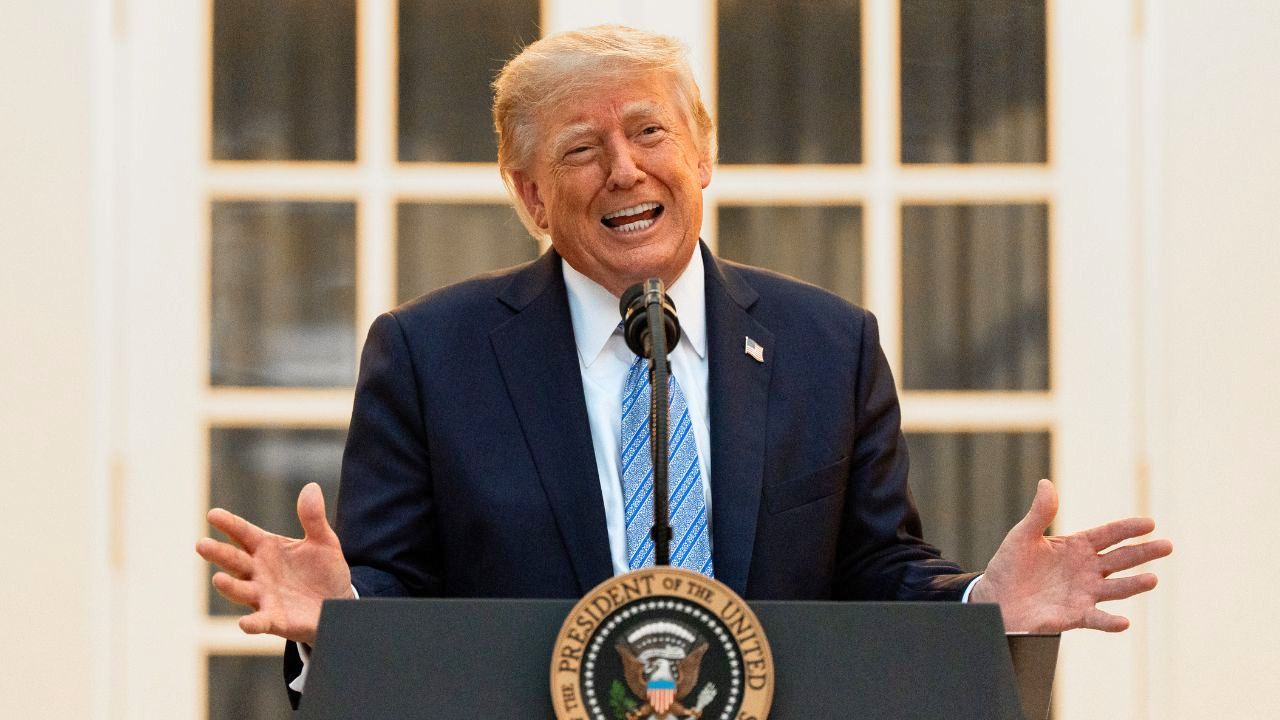
President Donald Trump speaks during a dinner in the Rose Garden of the White House, Thursday, Sept. 17, 2026, in Washington (AP Photo/Alex Brandon).
For the second time in two weeks, the Trump administration suffered an appeals court loss over an 11th-hour request to segregate vote-by-mail ballots that may be cast by some 20,000 Californians.
The U.S. Department of Justice said it provided Los Angeles elections officials a list of people the government refers to as “likely noncitizens,” many of whom live in Los Angeles County. Local officials declined the federal push to have those names removed from voting rolls and, two days later, the DOJ sued, alleging the state was “knowingly” facilitating “unlawful voting.”
The ensuing litigation has necessarily been fast-paced due to the approaching midterm election, with Golden State counties beginning to mail ballots to voters weeks before the lawsuit was filed. Many of those ballots have already been returned.
Love true crime? Sign up for our newsletter, The Law&Crime Docket, to get the latest real-life crime stories delivered right to your inbox.
Last week, the DOJ pressed U.S. District Judge David O. Carter, a Bill Clinton appointee, to rule on an emergency request for a temporary restraining order (TRO) “by noon” on Oct. 22.
When that unilateral deadline passed, the Trump administration went to the U.S. Court of Appeals for the 9th Circuit. In turn, the 9th Circuit rejected the request, saying the government “failed to allow the district court adequate opportunity to consider its application.”
So, back down the ladder the case went.
During a hearing on the injunction request earlier this week, the district judge expressed grave doubts about the government’s proposal to throw out or set aside the ballots of voters on the list. The next day, Carter denied the TRO request in exceedingly strong terms.
“This case is about the right of every American citizen to vote in a free and fair election,” the lower court order begins. “Never before in American history has the federal government, on the eve of an election, sought to coerce a state and local government to abandon their own Constitutional elections procedures and bend to the will of the Executive Branch. In bringing this lawsuit, the Executive would have this Court believe that it reigns as a sole sovereign. But California and its people are sovereign, too.”
So, with an actual — as opposed to “constructive” — denial from the district court in hand, the Trump administration appealed again.
Again, the 9th Circuit was not convinced.
At the outset, the appellate panel frames the request as seeking “substantially the same relief” and asking the court to “sequester the relevant ballots and establish a process to verify the citizenship status of those voters before counting them.”
The 9th Circuit also dispenses with standing and jurisdiction, finding that all the parties are properly before the right court.
On the merits, the panel found that since the dispute “focuses on California’s procedures for administering its elections, the Elections Clause of the U.S. Constitution is directly implicated.”
The appeals court highlights the relevant language:
The Times, Places and Manner of holding Elections for Senators and Representatives, shall be prescribed in each State by the Legislature thereof; but the Congress may at any time by Law make or alter such Regulations, except as to the Places of chusing Senators.
Here, the panel says, the “clause expressly dictates” that California, as is the case with all states, “has the authority to prescribe the manner by which congressional elections are conducted.”
The only real question, the 9th Circuit says, is “whether California’s procedures for enforcing election requirements, such as the State’s statutory scheme for citizenship-based ballot challenges, have been preempted by Congress.”
Relying on the DOJ’s claimed statutory authority in its appellate briefs, the court finds the Trump administration comes up short.
“Noticeably absent from the statute is an express preemption provision or any language setting forth regulations for how a state deals with citizenship challenges to vote-by-mail ballots,” the appellate court order reads. “Nor is there any provision authorizing the Department of Justice to take charge of or intervene in a state’s administration of an ongoing election.”
The order goes on like this:
Exercising the power endowed to it by the Constitution, California comprehensively administers its elections, including by regulating voter eligibility. California law, like federal law, plainly prohibits voting by noncitizens…
Because Congress has not exercised the specific power granted to it under the Elections Clause to override California’s established laws for challenging ballots or removing ineligible voters, the State Legislature’s statutory scheme remains the only method to do so.
“We decline the United States’s invitation to contravene the Elections Clause by undermining the Constitution’s plain text,” the order goes on.
The post ‘Undermining the Constitution’s plain text’: 9th Circuit rejects Trump admin request to remove names from California’s voter rolls for 2nd time in 2 weeks first appeared on Law & Crime.


